Most people prepare for Goethe B1 by studying more German. That is the wrong instinct.
B1 is a performance exam with a published format. The best preparation is not more vocabulary — it is targeted rehearsal of the exact tasks you will be asked to perform, measured against real scoring criteria.
What you will get from this guide
- Why a diagnostic mock must come first
- A weekly preparation template you can follow exactly
- Which resources are actually worth your time
- A final-week protocol that protects your score
Step One: Sit a Diagnostic Mock Before Anything Else
This is the step everyone skips, and it is the only step that tells you where to spend your hours.
Download an official Modellsatz from the Goethe-Institut, sit it under exam conditions — timed, no dictionary, no pauses — and score it honestly.
Candidates with the second pattern — good German, no speaking practice — are the single largest group who fail. They have been consuming German for a year and producing almost none.
The Weekly Preparation Template
This is 8–10 hours a week, which is realistic alongside work or study.
The Thursday recording is non-negotiable and the step most learners avoid. Recording yourself is uncomfortable, which is exactly why it works.
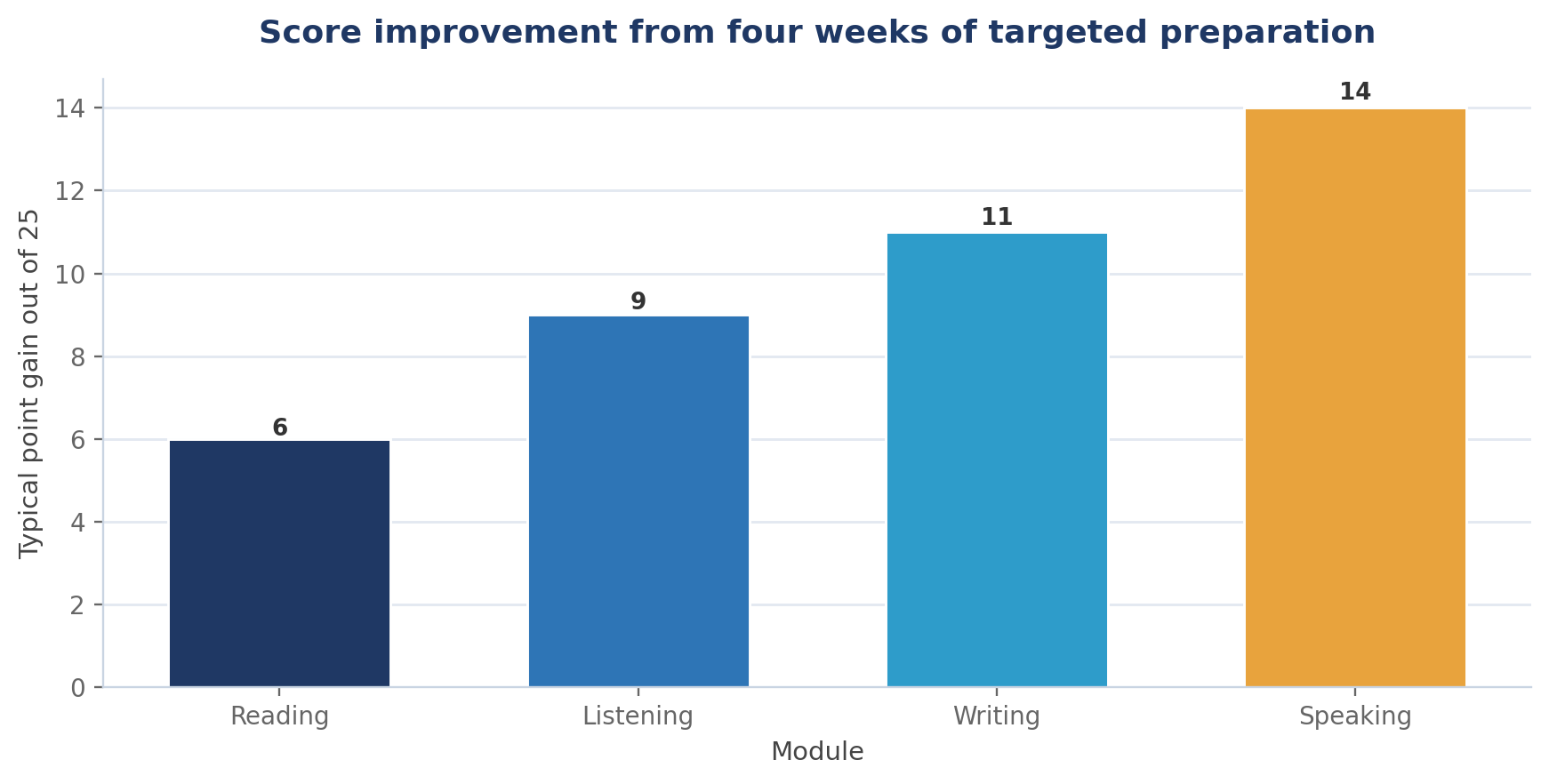
Speaking gains the most, because it usually starts lowest. If your diagnostic speaking score was 12 out of 25, that module is where the remaining 13 points are hiding.
Resources Worth Your Time
The first five are free and genuinely good. Note what they have in common: none of them can tell you that your writing is disorganised or that your pronunciation is drifting. That is the gap a tutor fills.
Two thirds of your score depends on being corrected
Writing and speaking are 50 of the 100 points, and both are invisible without feedback. LanguageSkills.net B1 preparation pairs a personal AI voice tutor with annotated marking on every text and recording you submit.
Start Goethe B1 preparation →Create a free accountBuild an Error Log, Not a Vocabulary List
The highest-return artefact in your preparation is one notebook with three columns.
Review it every Sunday. By week six you will see the same two or three patterns repeating — and those are worth more than any new vocabulary list.
The Final Week Protocol
The last row matters more than it sounds. Candidates who compare answers in the waiting room walk in rattled. Arrive, sit down, breathe, and trust the six weeks behind you.
Prepare with a plan, not with panic
Our B1 track gives you a diagnostic, a weekly structure, corrected writing, recorded speaking feedback and guided practice with the exam format. You walk in having already rehearsed the tasks.
Get your German B1 Course Pass →Create a free accountThe Mistakes That Cost the Most
- Studying German generally instead of rehearsing B1 tasks specifically.
- Skipping the diagnostic mock, and spending weeks on a strength instead of a weakness.
- Never recording yourself speaking. You cannot fix what you have never heard.
- Writing practice without correction, which quietly perfects your errors.
- Leaving the formal writing task and the Sprechen module to the final fortnight.
Frequently Asked Questions
How long does it take to prepare for Goethe B1? From a solid A2, eight to twelve weeks of structured preparation is realistic. The diagnostic mock tells you which end of that range you are on.
Are free resources enough to pass? For reading and listening, often yes. For writing and speaking — half your total score — you need a tutor correcting you.
Should I take the exam modules separately? If you have a weak module, taking it separately reduces pressure and lets you focus your preparation on one format.
What is the single most effective preparation activity? A full timed practice exercises followed by a written error log. Nothing else combines format familiarity, time pressure and diagnostic feedback in one activity.
References & Further Reading
- Goethe-Institut — Goethe-Zertifikat B1 Modellsatz, Übungssatz and examination regulations: https://www.goethe.de
- Goethe-Institut — B1 Wortliste: https://www.goethe.de
- Deutsche Welle — Deutsch lernen B1 and Langsam gesprochene Nachrichten: https://learngerman.dw.com
- Council of Europe — CEFR Companion Volume, B1 descriptors: https://www.coe.int
- telc gGmbH — telc Deutsch B1 specifications for comparison: https://www.telc.net
- LanguageSkills.net — German B1 exam preparation courses: https://languageskills.net/german
The Takeaway
The best way to prepare for Goethe B1 is diagnostic first, targeted second. Sit a full mock under exam conditions, find the module where your missing points actually live, and spend your hours there. Then get your writing and speaking corrected by a tutor, because those are 50 of your 100 points and the only ones you cannot mark yourself.