So you've decided to prepare for Goethe-Zertifikat B2. Buckle up — this is the level where German stops being a puzzle and starts being a power tool. B2 unlocks university applications, skilled-worker visas, and jobs where you actually talk to people instead of nodding politely. The good news: it is absolutely passable. The better news: there's a smarter route than drowning in random clips at 2 a.m.
The best way to prepare for Goethe-Zertifikat B2 is a structured 12-week plan that trains all four modules, leans on official practice material, and gets you speaking out loud every single day. Let's build that plan right now.
Know Exactly What You're Facing
The Goethe-Zertifikat B2 is a modular exam. You can sit one module at a time, which means a bad day in listening does not sink your whole certificate. According to the Goethe-Institut, each module is scored out of 100 and you generally need 60 points to pass that module. Here's the landscape:
Because the modules are independent, your study plan should be too — but never lopsided. Weak listening quietly ruins speaking, and shaky vocabulary ruins everything.
Build a 12-Week German B2 Study Plan
Twelve weeks is the sweet spot: long enough to grow, short enough to stay sharp. Split it into three phases and protect the schedule like a dentist appointment.
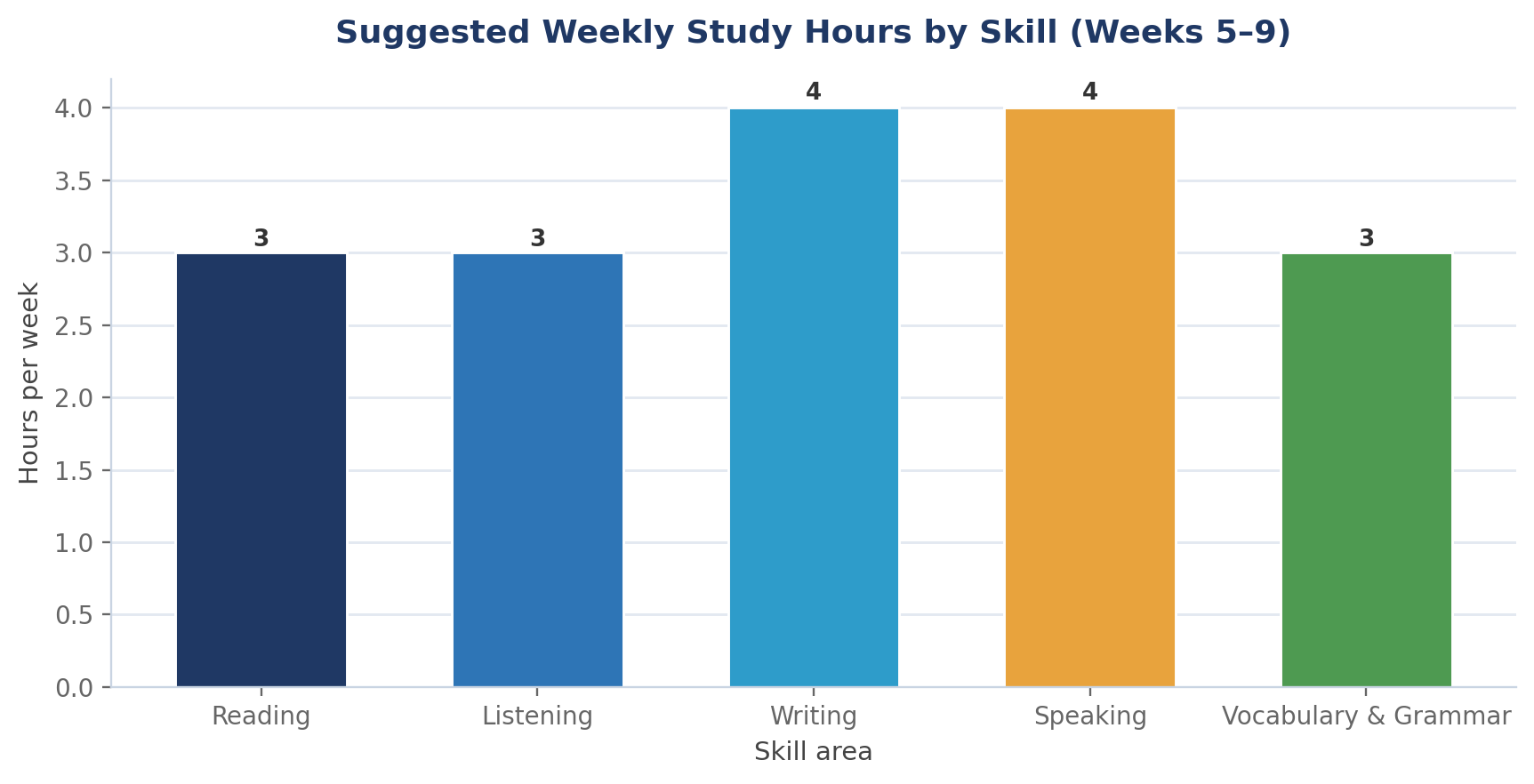
Do not confuse "hours logged" with "progress made". One focused hour beats three distracted ones, and reviewing your own mistakes is where the marks live.
Notice that writing and speaking get the biggest slices. They're the slowest to build and the easiest to avoid — which is precisely why most candidates avoid them.
Stop guessing — follow a plan that's already built
Our self-paced German B2 course (A1 to B2) walks you through structured lessons with an AI voice tutor, speaking and listening practice with AI feedback, and printable study materials that tell you what to fix. You get the map so you can spend your energy on the training.
Start your German B2 course →Create a free accountTrain Each Skill the Way the Exam Tests It
Every module rewards a different instinct. Match your practice to the demand and your scores climb fast.
For reading, learn to spot signal words — allerdings, dennoch, folglich — because B2 questions love the twist after the aber. For listening, train with German radio and podcasts at natural speed; the exam does not slow down for anyone.
Practise Like the Exam, Not Like a Hobby
From week five, run one timed mock every weekend. Sit at a real desk, no phone, no pauses. Then spend the next day dissecting your errors by category: vocabulary, grammar, or careless misread. That diagnosis is your real syllabus.
If you want a free baseline, the official Goethe-Institut practice materials are the gold standard — start there before paid resources.
Dodge the Classic B2 Traps
Brilliant candidates fail for boring reasons. Watch for these:
The single biggest German B2 study plan killer is passive study: reading about grammar instead of using it. Comprehension feels like progress; production is progress.
Make It Stick: The Daily Habit
Consistency beats intensity every time. A repeatable daily block keeps German warm in your head:
Build your own account and track your weekly streak to keep the momentum visible: create your free account.
Turn 12 weeks of theory into exam-day confidence
Our self-paced German B2 program (A1 to B2) pairs structured lessons with AI voice-tutor feedback, so every week you see exactly what improved and what to attack next. Study at your own pace, any time.
Get your German B2 pass plan →Create a free accountFrequently Asked Questions
How long does it take to prepare for Goethe-Zertifikat B2? Most learners who are already comfortable at B1 need roughly 10–14 weeks of consistent, focused study. If you're starting further away, add time rather than cramming — B2 rewards depth, not panic.
Should I take the modules separately or all at once? Modular sitting is a genuine advantage: you can pass speaking first, then carry that confidence into writing. Many candidates spread the four modules across two exam dates to reduce pressure.
Do I need a teacher, or can I self-study for Goethe B2? Self-study works if you have ruthless feedback loops — recorded speaking and honest error logs. A structured German B2 course simply replaces guesswork with a sequence that builds language skills step by step.
Is the Goethe-Zertifikat B2 recognised worldwide? Yes. It's a widely recognised certificate aligned with the Common European Framework of Reference, accepted by many universities and employers across German-speaking countries.
References & Further Reading
- Goethe-Institut: Goethe-Zertifikat B2 — official exam overview, modules, and format.
- Goethe-Institut: Practice materials for the B2 exam — free official sample papers and audio.
- Council of Europe: Common European Framework of Reference for Languages — the B2 level descriptors behind the exam.
- Deutsche Welle: Learn German (Nicos Weg & B2 resources) — free listening and video material at B2 level.
- Goethe-Institut: German courses and exams worldwide — registration, exam centres, and course info.