Japan is the easiest country in the world to eat brilliantly in — and one of the easiest to accidentally embarrass yourself in. Not because the rules are harsh, but because they are specific, and nobody explains them until you have already done the wrong thing.
Good news: the culture is welcoming, the food is extraordinary, and a handful of phrases plus six etiquette rules will carry you through almost any meal. Here is the whole picture, from itadakimasu to the bill.
What this guide covers
- How a Japanese meal is structured
- The phrases you need before, during and after eating
- Etiquette rules that genuinely matter (and the myths)
- Regional dishes worth travelling for
- The vocabulary that makes menus readable
How a Japanese meal is structured
A traditional meal follows a pattern rather than a menu. Once you recognise it, ordering becomes intuitive.
The magic is balance: several small dishes rather than one large plate. Even a convenience-store bento follows the same logic, which is why a ¥500 lunch can feel complete.
The phrases you actually need
Two of these do more social work than the rest: すみません gets attention politely, and 大丈夫です is the soft Japanese "no" that works in almost every situation.
Etiquette: what genuinely matters
Forget the myths about bowing depth. These six rules are the ones people actually notice.
Everything else is flexible. Nobody will mind which hand holds the bowl, and blowing your nose at the table is a bigger breach than any chopstick nuance you have read about.
Chopstick rules, practically
There is no shame in asking for a fork. Staff will bring one without a flicker, and eating comfortably beats performing competence.
Regional dishes worth travelling for
Regional pride is real. Asking a local what their prefecture is famous for is one of the best conversation openers you will find in Japan.
Ready to turn reading into real Japanese? Start your self-paced course today.
Start the Japanese course →Create a free accountOrder with confidence, not gestures
Menu Japanese is a language of its own — kanji names, set-meal wording, polite requests. A personal AI voice tutor teaches structured lessons you can study at your own pace, any time, so you spend your trip eating rather than pointing.
Button: Explore the Japanese Course Pass →
Reading a Japanese menu
The vocabulary that unlocks almost every menu:
Notice 生 — one character meaning "raw" that also means "draft beer" on a drinks menu. Context is everything.
Practical notes for your first week
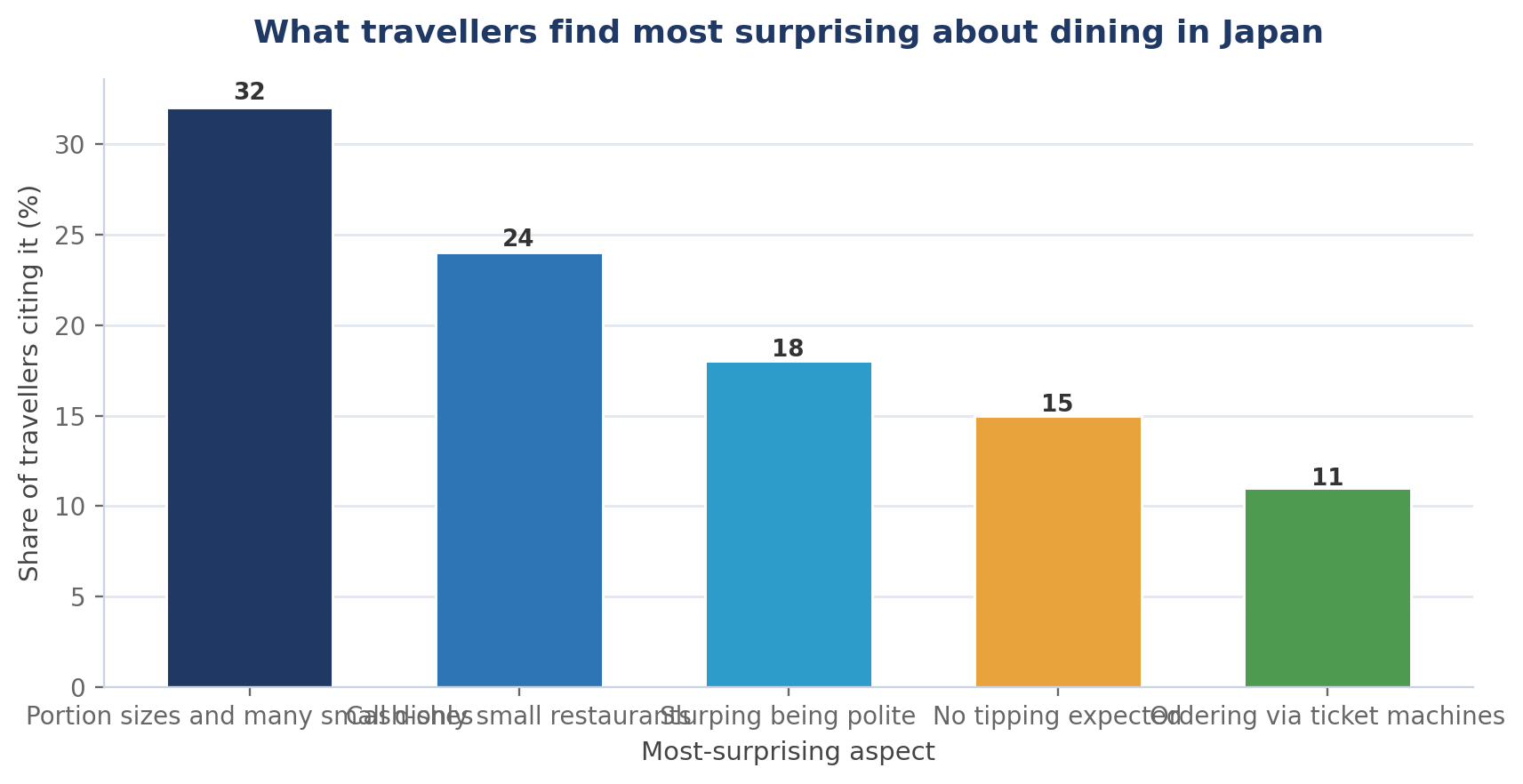
Cash still matters in small restaurants and ramen shops, many of which use ticket machines: buy the ticket, hand it to staff, sit down. Tipping is not expected and can cause mild awkwardness. And hot towels (oshibori) are for your hands, not your face, at least on the first visit.
Most importantly: the staff in a small restaurant will happily help you. Japan's hospitality culture is generous to anyone making an effort with the language — and as always, that effort begins with a few words.
Ready to turn reading into real Japanese? Start your self-paced course today.
Start the Japanese course →Create a free accountLearn the phrases before you land
Create a free languageskills.net account for starter Japanese modules, restaurant vocabulary and audio you can practise on the flight over.
Button: Create your free account →
Frequently Asked Questions
Do I need to speak Japanese to eat well in Japan? No, but a few phrases transform the experience. すみません, これをください and おすすめは何ですか cover most situations.
What should I say before and after a meal? いただきます before eating and ごちそうさまでした afterwards. Both are simple, expected and warmly received.
Is slurping really polite? Yes for noodles. It shows enjoyment and cools the noodles. It would, however, be odd with rice or soup.
Should I tip in Japan? No. Tipping is not customary and can confuse staff, who may return the money. Service is priced into the bill.
References & Further Reading
- Japan National Tourism Organization — Travel, food and regional guides
- Japan Foundation — Japanese language and cultural programmes
- NHK World — Easy Japanese and lifestyle programming
- JASSO — Study in Japan and daily-life guidance
- Council of Europe — CEFR levels and intercultural competence