Japan has a reputation for impenetrable etiquette. It is not impenetrable — it is simply specific. There are rules, they are mostly consistent, and locals do not expect visitors to know all of them. What they do notice is effort.
Learn six of the rules properly and you will be treated as a considerate guest rather than a tourist. That is a much better trip.
What you will get from this guide
- Bowing, shoes and the entrance rituals that matter
- Train, street and restaurant manners
- Gift-giving, business cards and tipping
- The handful of Japanese phrases that smooth everything
Bowing: depth carries meaning
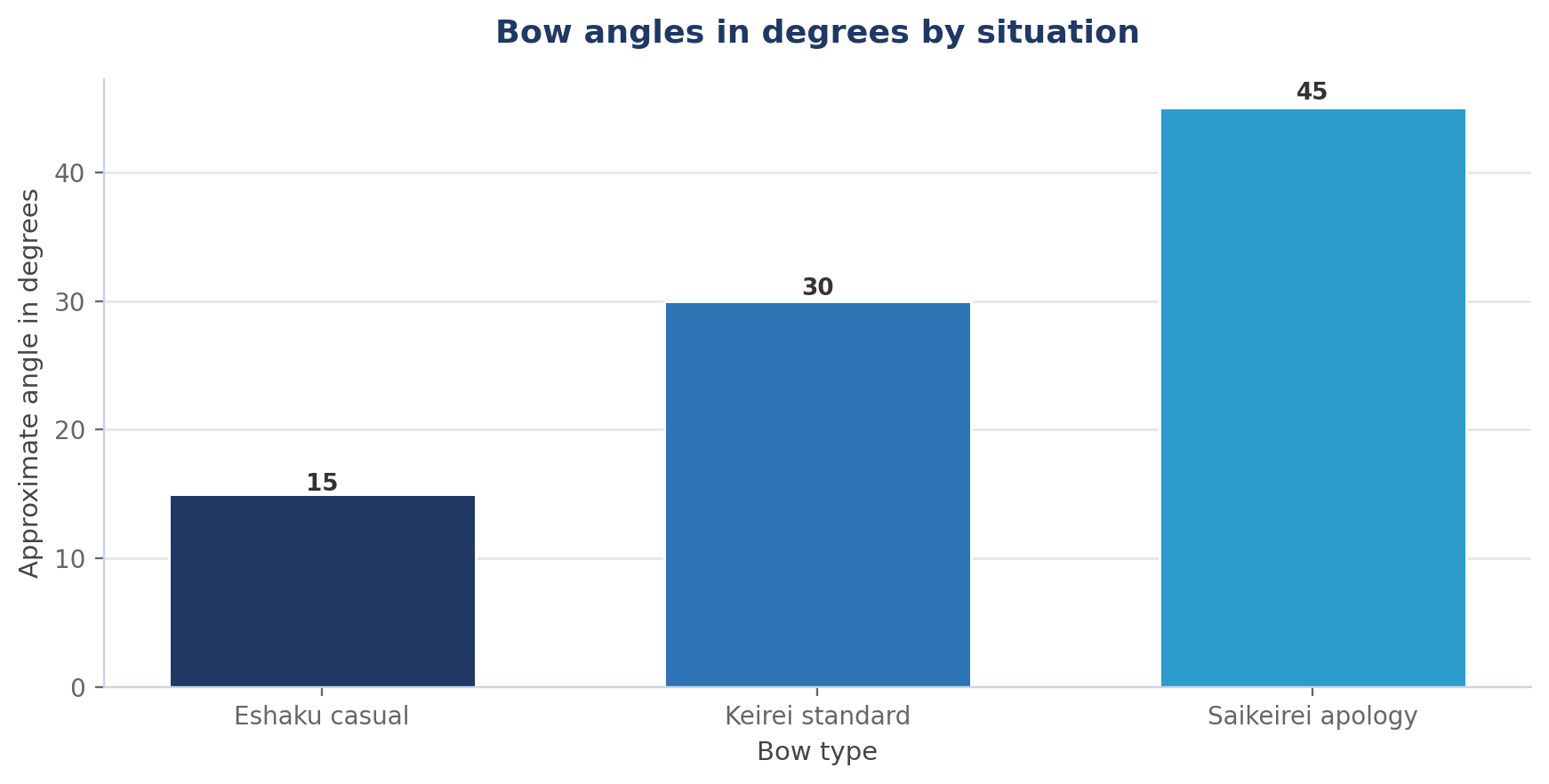
Bowing is not a single gesture. The angle tells the other person what you mean.
For visitors, one rule is enough: a modest bow, about 15 degrees, with your hands at your sides, works in almost every situation. Do not bow while offering a handshake — pick one. And never bow with your hands in your pockets.
Shoes, entrances and the home
That last bathroom-slipper rule trips up more visitors than any other. The slippers live in the toilet room and do not travel.
Trains, streets and public space
The escalator rule is regional: Tokyo stands left, Osaka stands right. Get it wrong and you will be gently corrected by the flow of humanity behind you.
Understand the culture through the language
Etiquette is easier to grasp when you can hear the register behind it — the difference between sumimasen and mōshiwake arimasen. A personal AI voice tutor teaches both together, at your own pace.
Learn Japanese with an AI voice tutor →Create a free accountEating and drinking
The chopstick rules carry real weight, because they echo funeral rites. The tipping rule is simpler: good service is a standard, not a favour, and leaving coins can feel like an implication that the staff need help.
Gifts, business cards and thanks
Sumimasen is the most useful word in Japan. It gets attention, apologises, thanks, and excuses you — often all at once.
Shrines, temples and onsen
The phrases that carry the manners
Manners in Japan are largely verbal. The right phrase at the right moment counts for more than a perfect bow, because it shows you understood the situation, not just the choreography.
Travel with a little Japanese, not just good intentions
Knowing sumimasen, gochisōsama deshita and when to use them transforms how you are received. Self-paced lessons with an AI voice tutor build the phrases until they arrive automatically.
Start Japanese for travel →Create a free accountFrequently Asked Questions
Do I need to bow in Japan as a visitor? A modest bow is appreciated but not required. A friendly nod and a polite phrase are enough; locals do not expect foreigners to perform full etiquette.
Is tipping rude in Japan? Yes, generally. Good service is standard, and tipping can suggest the staff need extra help. It is also rarely accepted.
Should I take my shoes off in restaurants? Only where there is a step, a shoe rack or a slipper rack at the entrance. If in doubt, look at what other customers are doing.
What is the most important Japanese etiquette rule? Awareness of others: keep your voice down, queue properly, and do not inconvenience strangers. Almost every rule flows from that.
References & Further Reading
- Japan National Tourism Organization — Travel etiquette and practical guidance
- Japan Foundation — Japanese-language and cultural resources
- NHK — NHK World Japanese lessons and cultural features
- Council of Europe — CEFR and intercultural communication
- Japan Foundation — Survey on Japanese-language education worldwide