The changing room is the fastest German exam you will ever take. Welche Größe?, Das steht Ihnen!, Umkleidekabine links — a shop assistant fires three sentences and you nod at a blue jacket you are not even sure you like. German vocabulary for clothes and colours is small, high-frequency and instantly useful. Learn it tomorrow, use it on Saturday.
What you will get from this guide
- The core clothing words with article, plural and pronunciation
- Colours plus the endings that change them
- Verbs for getting dressed, trying on and returning
- Shopping phrases and colour idioms that make people smile
Clothing Words, With Everything You Need
The trick with German nouns is to learn three things at once: article, noun, plural. Skip the plural and every shopping conversation becomes a guessing game.
One piece of good news: die Hose is singular in German, even though it covers two legs. Die Hosen only appears when you own several pairs.
Colours, Plain and Simple
Why the Colour Word Keeps Changing Clothes
Colour adjectives wear endings, like every German adjective before a noun. The ending depends on the article in front. Do not memorise rules yet — memorise three patterns.
Rule of thumb: if the colour sits directly in front of a noun, it probably needs an ending.
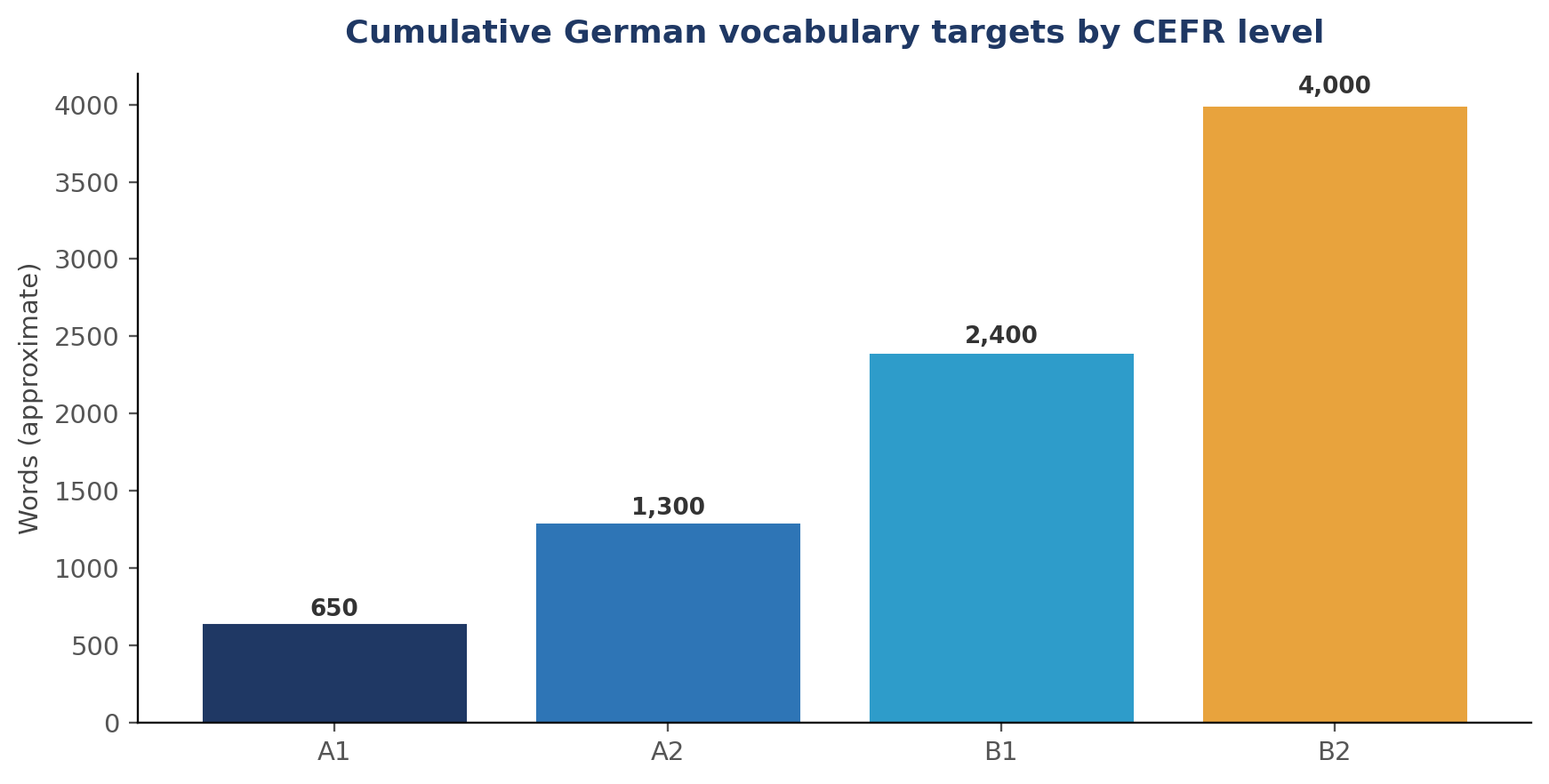
Clothes and colours alone cover a few hundred of those A1 words, and they appear in nearly every A1 exam dialogue.
Words you can hear, not just read
A list on paper dies in a real shop. A personal AI voice tutor drills clothes and colours in spoken dialogues until Welche Größe haben Sie? stops sounding like a blur.
See the German course →Create a free accountDressing Verbs: Separable, and Happier Apart
Notice the split verbs. Anziehen and anprobieren push their prefix to the end of the sentence. That little an at the finish is one of the first German word-order rules you will ever meet, and it shows up constantly in shops.
Shopping Phrases That Do the Work
Memorise the questions as whole blocks of sound. You do not need to build them from grammar — you need to recognise them when a stranger asks.
Materials and Patterns
Colour Idioms Worth Knowing
These are common in everyday speech. Use one correctly and a German speaker will look at you differently — in a good way.
Learn It in Seven Days
Day one, ten clothes words out loud with their articles. Day two, the colours plus three items you own. Day three, dress your family in German. Day four, the verbs, said while actually getting dressed. Day five, the shopping phrases as a role-play with a friend. Day six, two colour idioms. Day seven, walk into a shop and use one sentence for real.
Turn the word list into speech
A personal AI voice tutor gives you speaking practice with instant feedback to correct your pronunciation before it sets. Start free and study at your own pace this week.
Create a free account →Create a free accountFrequently Asked Questions
Do German colours change depending on the noun? Only when the colour stands directly in front of a noun. Die Jacke ist blau never changes; die blaue Jacke does.
What is the biggest mistake with clothes vocabulary? Dropping the plural and the article. Learn das Hemd, die Hemden together, or you will not know which word to use in a sentence.
How do I ask for a different size politely? Haben Sie das eine Nummer größer? — Do you have this one size bigger? Short, polite and understood everywhere.
Is die Hose singular or plural? Singular in German. One pair is die Hose; two pairs are die Hosen.
References & Further Reading
- Goethe-Institut — German courses and word lists, level descriptions and A1 vocabulary scope
- DW Learn German — Deutschtrainer A1, free audio vocabulary by topic
- Duden, articles, plurals and spelling for every German noun
- DWDS — Digitales Wörterbuch der deutschen Sprache, corpus examples of colour idioms in real text
- Deutsche Welle — Germany's public international broadcaster, slow news and everyday German listening