Spanish A1 is where thousands of learners quit — not because it is hard, but because nobody tells them what "finished" looks like. They drift through apps, collect stray words, and never reach the first plateau. This guide hands you the map: the exact ground A1 covers, the can-do goals that mark it, and a pace that gets you there without six months of vague effort.
What you will get from this guide
- The official CEFR definition of A1, translated into plain Spanish
- A topic-by-topic syllabus: grammar, vocabulary and skills
- A self-check list to know when you are genuinely done
- A realistic week-by-week plan from zero to A1
What Spanish A1 actually means
At A1 you are a survivor, not a conversationalist. The CEFR describes A1 as the ability to understand and use familiar everyday expressions and very basic phrases aimed at satisfying concrete needs. In Spanish terms, that means you can introduce yourself, ask and answer simple personal questions, order in a café, shop, and describe where you live.
It is the first rung, and it is deliberately small. A1 is about 500 core words and a handful of tenses. The point is not depth — it is getting your mouth moving with correct sounds and honest confidence.
The Spanish A1 syllabus, item by item
Courses vary in packaging but almost all cover the same ground. If you are auditing a class, a textbook or an app, these four tables are your checklist.
The honest test is not the table. It is whether a native speaker who slows down slightly can understand you, and whether you can handle a shop, a bus and a café without English.
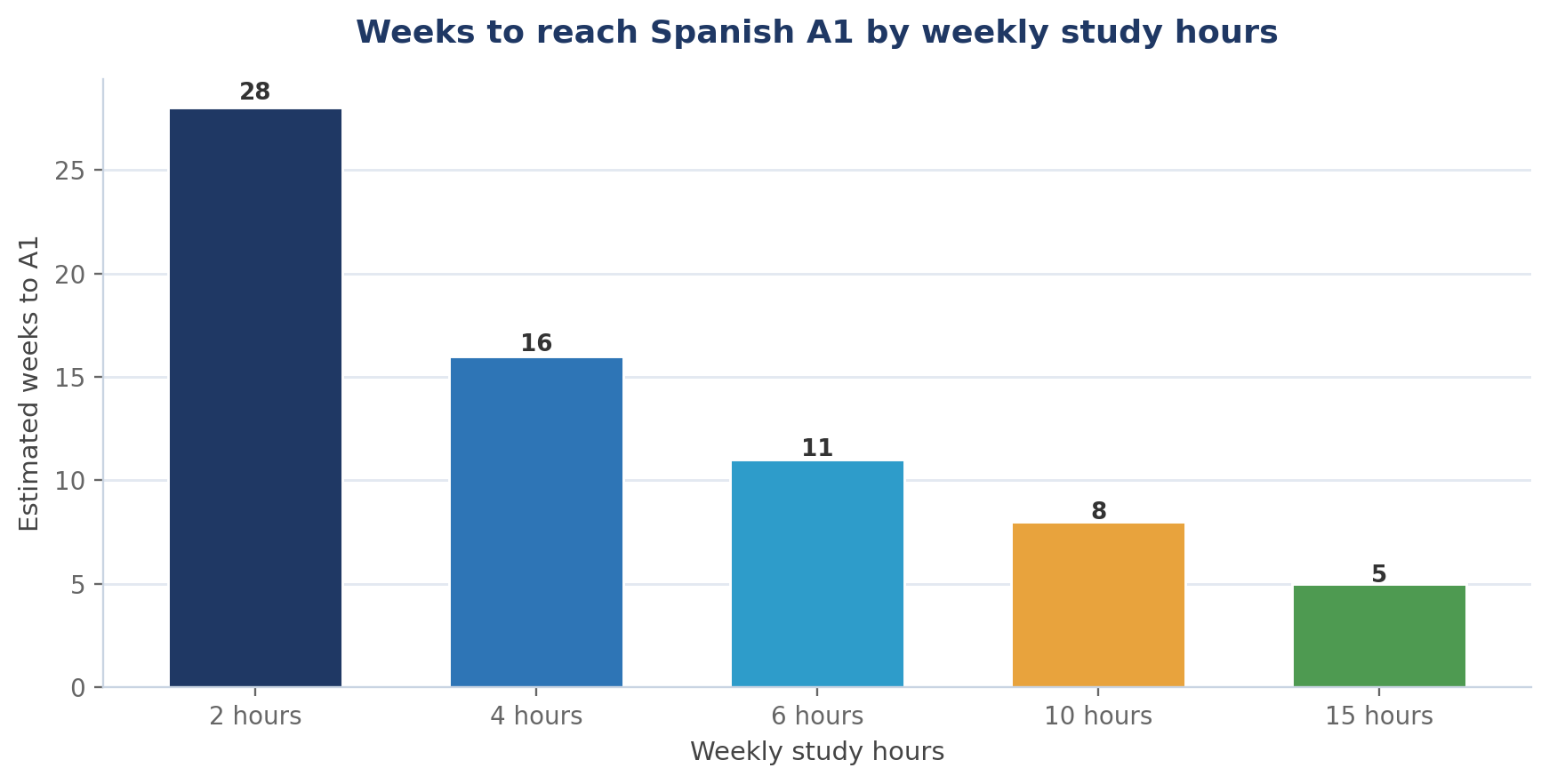
How long does Spanish A1 take?
Spanish is famously forgiving for English speakers. It sits in the FSI's easiest category, and once you know the twenty-nine sounds of Spanish, spelling stops being a puzzle — every letter is spoken. That is a real advantage French learners do not get.
Reach Spanish A1 on a schedule that fits your life
The fastest learners are not the smartest. They are the ones who show up for class and get corrected. A Course Pass gives you a personal AI voice tutor, self-paced lessons you can study any time, and structured progress you track yourself week by week.
Start beginner Spanish →Create a free accountAn eight-week route from zero to A1
You do not need to be gifted. You need a sequence. This plan assumes about an hour a day, split between active class time and short daily review.
Three habits decide whether you finish. First, speak aloud from day one, even alone — silent reading builds recognition, not fluency. Second, learn every noun with its article (la casa, not casa), because gender is easier to absorb than to repair later. Third, review your errors weekly; the same three mistakes will otherwise follow you to B1.
Do not let week three become the week you quit
The difference between reaching A1 and abandoning it is a structured routine you keep each week. A personal AI voice tutor keeps the momentum going, gives you speaking feedback early and makes the plan above actually finish.
Begin Spanish A1 →Create a free accountFrequently Asked Questions
Is A1 Spanish enough to travel? For city travel, yes, with limits. You can handle greetings, transport, food and simple shopping. For long conversations or problems, you will want A2.
How many words do I need for Spanish A1? Around 500 active words covers the official can-do goals. Passive recognition will be higher, often closer to 900.
Can I reach A1 in a month? With an intensive course and daily practice, yes — 15 to 20 hours a week makes four to six weeks realistic. Cramming without speaking will not get you there.
Should I learn Spanish before my trip? Absolutely. Even two weeks of A1 turns a stressful airport and café experience into a pleasant one, and locals respond warmly to any honest effort.
References & Further Reading
- Council of Europe — CEFR levels and A1 descriptors
- Instituto Cervantes — Spanish language courses and DELE diplomas
- Real Academia Española — Diccionario de la lengua española
- Instituto Cervantes — El español en el mundo (annual report)
- US Department of State, Foreign Service Institute — Language training hour categories