Japanese has a feature English does not: the same sentence can be produced at different levels of politeness, and choosing the wrong level can be a bigger social error than saying something grammatically wrong.
The system is not as complicated as it first looks. There are two registers you need at beginner and intermediate level — the polite form and the plain form — and the rules for choosing between them are social rather than grammatical. The confusion comes from textbooks that teach the polite form first and then present the plain form as the "casual" one, as if it were simply relaxed speech.
It is not. This article explains what each register is for and when using the wrong one actually matters.
The Two Registers at a Glance
The verb table is regular enough to be learnable in a week. The noun and adjective rows are where learners hesitate, because the polite form adds です while the plain form adds だ — and だ is often dropped altogether in casual speech.
Why the Plain Form Is Not "Rude"
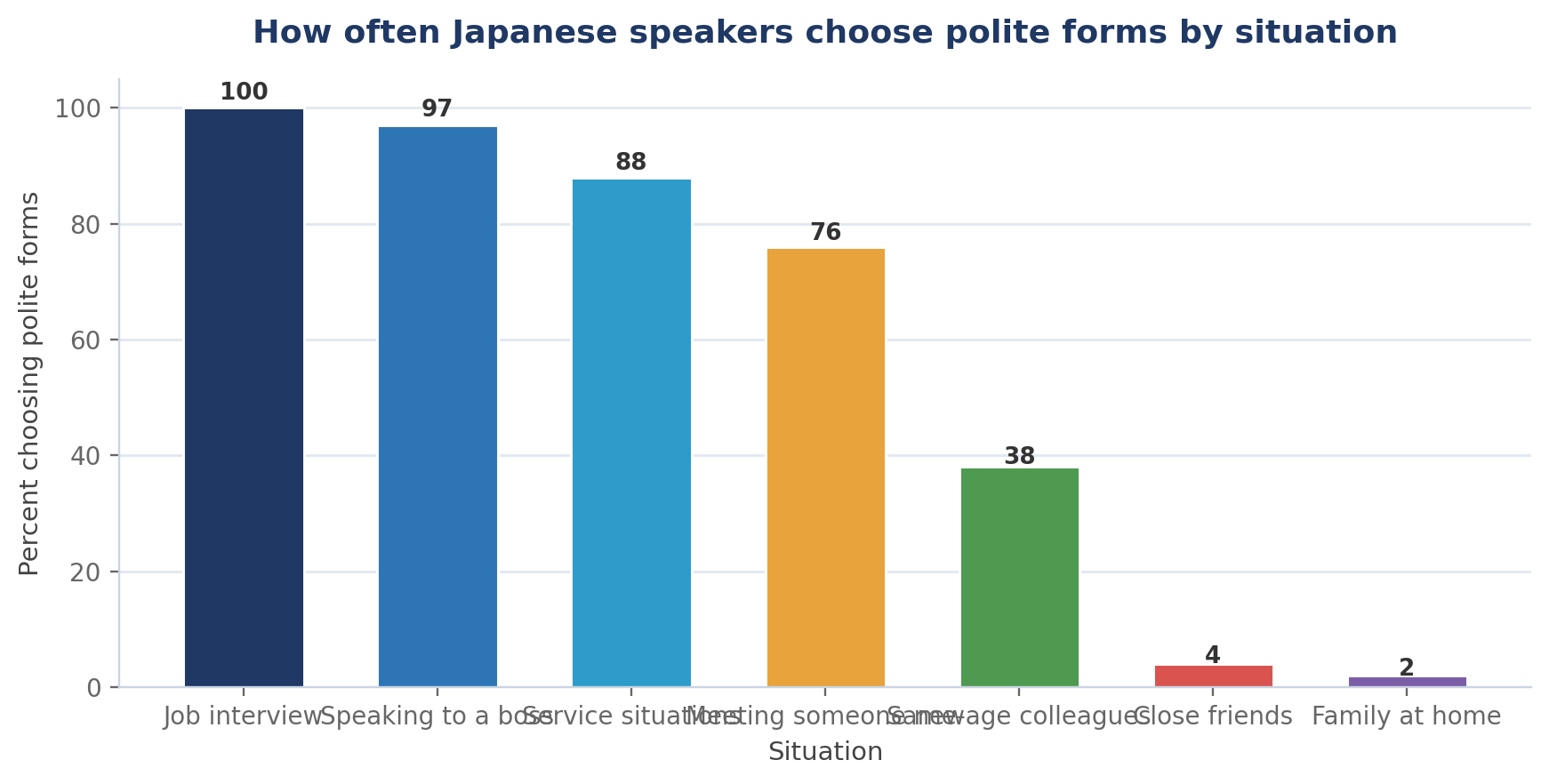
Textbooks create a false impression by calling the plain form casual. In reality the plain form is the default inside your own group, and using polite forms with close friends or family sounds distant rather than respectful.
That last row matters. A learner who arrives home and speaks polite Japanese to their host family sounds like a hotel guest, and it is a common and slightly awkward mistake.
When Polite Forms Are Required
The pattern is clear: polite forms mark distance, and distance is created by formality, hierarchy, unfamiliarity and service roles. Remove those four conditions and the polite form becomes the wrong choice.
The Hardest Skill: Switching
Knowing both registers is the easy part. Switching fluidly — sometimes within a single conversation — is what marks an advanced learner.
The uchi-soto rule behind the third row is worth understanding early. When talking to someone outside your company, you use plain or humble forms about your own colleagues — including your boss — because they are part of your group. Speaking honorifically about your own boss to a client is a genuine error.
Everyday Patterns You Can Use Today
The third and fourth rows show how much can ride on a single syllable. うん and はい mean the same thing, and using the wrong one with the wrong person will be noticed immediately.
Learn the register, not just the words
Correct forms in the wrong register still sound wrong. Our Japanese Course Pass gives you a personal AI voice tutor that models polite and plain speech and corrects your choices in speaking practice. Explore the Japanese Course Pass →
Start the Japanese course →Create a free accountFive Mistakes Learners Make
The fourth row is the one that most often surprises intermediate learners. It contradicts the intuition that more politeness is always safer: when speaking to an outsider, over-politeness about your own group is an error, not an extra courtesy.
A Practical Two-Week Plan
Day twelve is the useful checkpoint. Record your self-introduction twice — once polite, once plain — and listen for whether the plain version sounds natural or merely stripped of ます. That difference is the whole skill.
Use the right form at the right moment
Register is a social skill, and social skills come from practice. Our Japanese Course Pass gives you a personal AI voice tutor and a level-based curriculum (A1 to B2) that teaches both forms from the start. Start your Japanese Course Pass →
Start the Japanese course →Create a free accountFrequently Asked Questions
What is the polite form in Japanese? It is the register ending in です and ます, used with strangers, superiors, customers and anyone you have not yet established a closer relationship with.
Is the plain form rude in Japanese? Not in itself. It is the normal register among friends, family and close colleagues. It only sounds rude when used with someone you should be addressing politely.
Do I need to learn keigo as a beginner? Not immediately. Start with です and ます and the plain forms, since keigo builds on both. Most learners add honorific language around B1 level.
How do I know when to switch from polite to plain? Wait for the other person to switch first, or to invite it. In friendships this usually happens naturally; in workplaces, polite forms often remain the norm.