Walk into any shop in Tokyo and you will hear a rhythm — a melody of politeness that repeats a hundred times a day and yet never sounds tired. That rhythm is keigo, the honorific register of Japanese, and it is the single fastest way to sound competent, warm, and trustworthy in front of a Japanese-speaking customer. If you already speak Japanese at an intermediate level, you are standing on the doorstep of real professional fluency. All you need now is the right script. Let's build it, phrase by phrase, until it feels as natural as breathing.
Why Customer Service Japanese Feels Different
Casual Japanese and customer-service Japanese are almost different languages. Textbook sentences like "Kore wa nan desu ka" get you around town, but the moment you stand behind a counter or answer a support call, the register shifts upward. You need humble forms for yourself (kenjōgo), respectful forms for the customer (sonkeigo), and the polite baseline (teineigo) that ties them together.
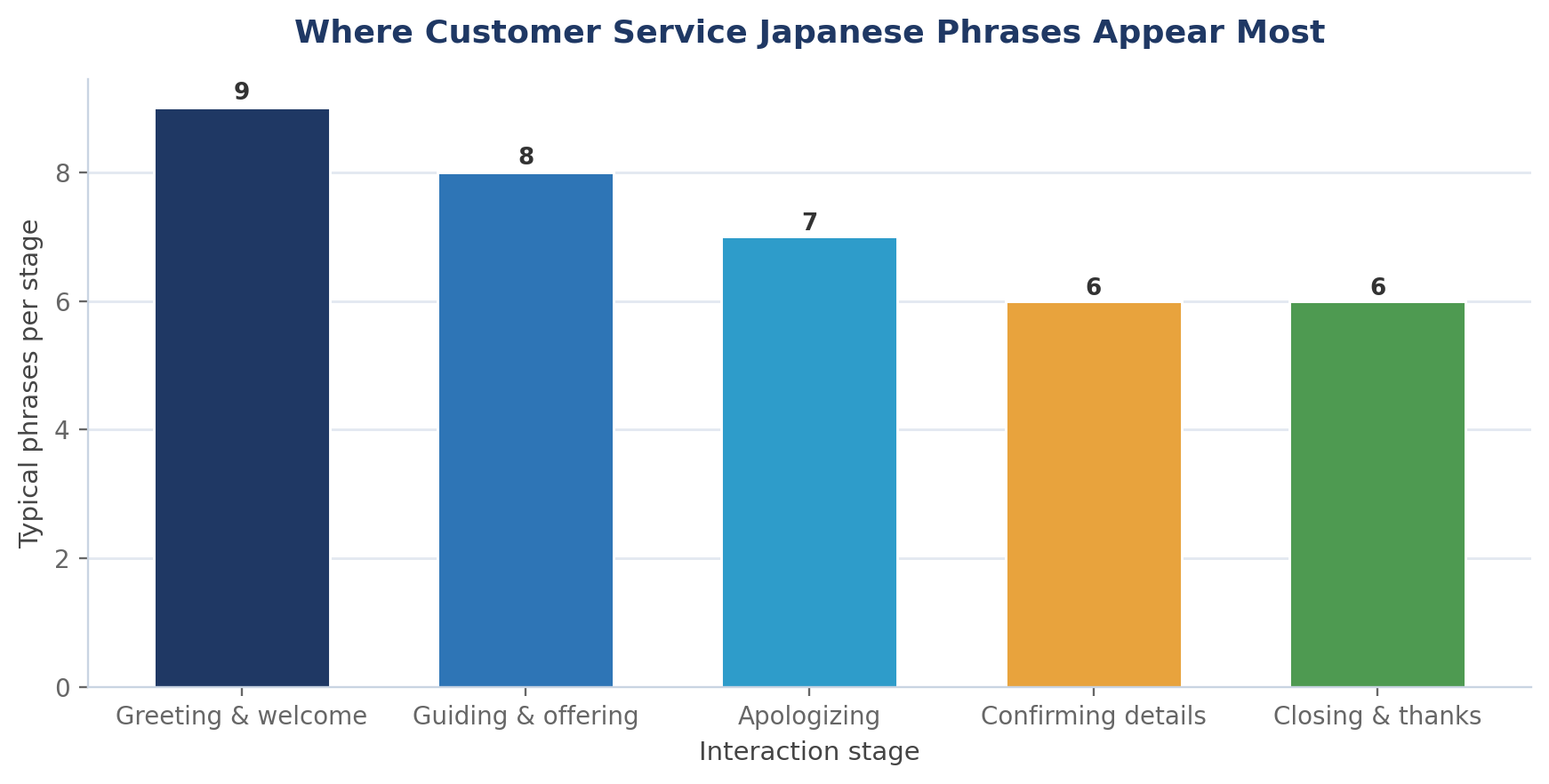
The good news? Customer service is a finite domain. The situations repeat, and so do the phrases. Learn a few dozen patterns well and you will cover perhaps 80% of daily frontline interactions — greeting, guiding, apologizing, confirming, and closing.
The Three Pillars: Teineigo, Sonkeigo, Kenjōgo
Before the phrases, meet the machinery. Every line you speak in a service role is built from one of three levels of politeness.
The trick is direction. You raise the customer and lower yourself. Say the customer goes somewhere, use sonkeigo, いらっしゃる. Say you go, use kenjōgo, 伺う. That single mental flip solves most of the confusion beginners feel.
Greetings and Openings
First impressions are scripted in Japan, and that is wonderful news for learners. You do not need to improvise brilliance — you need to deliver the expected lines cleanly and with energy.
Notice お世話になっております. It is the Swiss Army knife of Japanese business communication — an opener, a softener, a relationship nod. If you learn one phrase from this article before your next shift, learn that one.
Speak Service Japanese With Confidence
Our Japanese course drills real keigo scripts until they roll off your tongue in the moment you need them. Skip the guesswork and train the exact phrases your customers expect.
Start your Japanese course pass →Create a free accountOffering, Guiding, and Serving
Once the customer is engaged, your job is to guide without pressure and serve without friction. These patterns handle the middle of the conversation.
One gentle warning: こちらになります literally reads "it becomes this way," which makes grammarians wince. Yet it is everywhere in retail. Learn it as a set phrase and move on — customers hear politeness, not grammar.
Apologizing the Right Way
Apologies are where amateurs freeze and professionals shine. Japanese has a ladder of apology strength, and climbing the wrong rung can sound insincere.
Pair the apology with a reason and a remedy, not excuses. A customer remembers how quickly you fixed the problem far more than the poetry of your apology.
Turn Awkward Moments Into Trust
The right apology at the right moment can rescue an entire customer relationship. Our course teaches you the full ladder of keigo so you always land on the correct rung.
Unlock full Japanese access →Create a free accountConfirming and Closing
The last minutes of an interaction are the ones people remember. Confirm clearly to avoid mistakes, then close with warmth.
A subtle gem: ありがとうございました uses the past tense. Service staff thank you for what just happened, closing a completed interaction — a small grammatical cue that signals attentiveness to native ears.
Pronunciation and Delivery Tips
Phrases only work when they land smoothly. Keep these delivery notes in mind.
Building Fluency Beyond the Script
Scripts get you through the door; fluency keeps you in the room. Real customers improvise, and that is exactly why structured practice beats memorization alone. Shadow native audio, record yourself, and rehearse variations of each phrase until greetings live in muscle memory. If you want a guided path, create your free account and start with the Japanese for Work track.
Frequently Asked Questions
Do I need perfect keigo to work in Japanese customer service? No. Consistency and warmth matter more than textbook perfection, and most workplaces give you a script to follow. Focus on the polite baseline first, then layer in sonkeigo and kenjōgo.
Which single phrase is most useful for beginners? お世話になっております is the strongest single investment for business contexts, used in emails, calls, and meetings. For retail, いらっしゃいませ and かしこまりました carry enormous mileage.
How long does it take to learn service keigo? Learners who already have B1 Japanese often grasp the core service patterns within a few weeks of focused practice. Reaching automatic, native-sounding delivery typically takes months of daily use — treat this as an honest range, not a promise.
Can I use these phrases outside a work context? Many travel well, but using humble forms about yourself in casual settings can sound oddly stiff to friends. Match the register to the room.
References & Further Reading
- Japan Foundation — Learning Materials for Japanese for official teaching resources.
- NHK World Easy Japanese for audio-based beginner listening practice.
- Jisho.org Japanese Dictionary for checking politeness levels and readings.
- Tofugu — Japanese Honorifics and Keigo Guide for a deep dive into the three registers.
- Wikipedia — Honorific speech in Japanese for an encyclopedic overview of sonkeigo and kenjōgo.
Politeness in Japanese is not decoration — it is the operating system of the customer relationship. Learn the scripts, respect the registers, and deliver every line with genuine warmth. Do that, and your Japanese will not just be correct; it will feel like hospitality.