You can order ramen like a local. You can chat about the weather on the platform. Then you sit in a Tokyo meeting room, someone says お世話になっております, and your confidence leaves through the window.
Business Japanese is not harder vocabulary. It is a change of register — a costume the language puts on. Learn thirty phrases and the costume fits. Here are the business Japanese phrases that carry meetings from the first bow to the follow-up email.
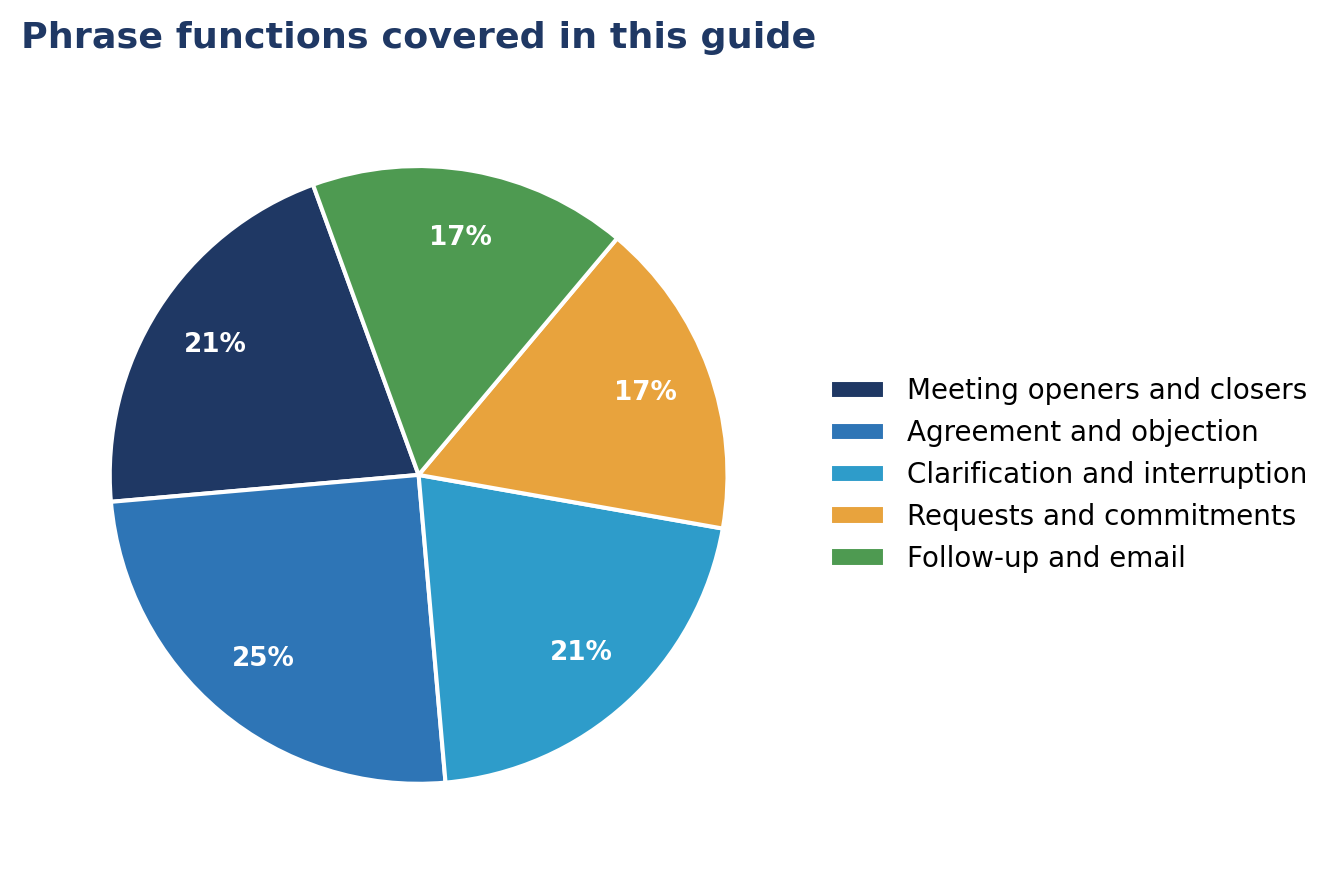
What you will get from this guide
- Openers, closers and the phrases that buy you thinking time
- How to disagree, request and clarify without losing face or credibility
- The keigo register ladder, with the polite form for each idea
The Shape of a Japanese Meeting
A Japanese business meeting runs on ritual edges: a greeting, a confirmation of purpose, the discussion, the summary, and the closing. The middle is business. The edges are trust.
The single most useful phrase in the room is お世話になっております — half greeting, half thank-you, entirely expected in every email and every first minute.
Agreeing, Disagreeing and Disagreeing Again
Japanese meetings rarely say no directly. They soften, delay and route around the refusal.
That last one is gold. It signals a problem without triggering a defence, and it invites the other side to solve it for you.
Sound competent, not like a textbook
Reading keigo is one skill. Deploying it while someone waits for your answer is another. Self-paced speaking practice with an AI voice tutor turns phrases into reflexes before your next meeting.
Start learning business Japanese →Create a free accountAsking Without Looking Lost
Asking for a slower delivery is not a weakness. Guessing wrong is. Meeting minutes, known as 議事録, are standard practice, and offering to write them earns you enormous goodwill.
The Register Ladder: Same Idea, Three Costumes
Keigo splits into respectful language for the other party, humble language for yourself, and neutral polite forms. The trick for learners is not memorising all three columns — it is picking one humble default and using it consistently without hesitation.
Email and Follow-Up: Where Business Is Won
One follow-up email in clean keigo does more for your reputation than an entire hour of clever remarks in the meeting.
Preparing for a Real Business Meeting
Write your likely sentences in advance: your self-introduction, two requests, one objection, and your closing line. Then say them out loud until the rhythm stops feeling foreign — because a phrase you have never spoken will not surface when you are nervous.
The BJT Business Japanese Proficiency Test exists precisely because this register is a separate skill from everyday Japanese, and the Japan Foundation's materials cover the communication side thoroughly. If you want feedback on your keigo before it costs you a deal, create your free account and start a self-paced course focused on meetings.
Walk in able to speak, not just read
Business Japanese fails at the moment you need it under pressure. Practise the openers, the objections and the follow-ups until they arrive without thinking.
Start your business Japanese course →Create a free accountFrequently Asked Questions
Do I need perfect keigo to work with Japanese companies? No. Consistent polite forms plus effort will carry you far. Native speakers expect learners to make errors and usually respect the attempt.
What is the difference between 承知しました and かしこまりました? Both mean "understood" humbly. かしこまりました is more formal and is typically used towards customers and senior external partners.
Should I use さん or 様 in business? Use 様 for clients and external contacts, and さん for colleagues inside your own company. Reversing them sounds either cold or pretentious.
Is a business Japanese exam worth taking? The BJT can help if you need proof of workplace-level communication for employers or visa-related processes, but real practice matters more than the certificate.
References & Further Reading
- Japan Foundation — Japanese-language education and communication resources: https://www.jpf.go.jp/e/
- BJT Business Japanese Proficiency Test (Japan Kanji Aptitude Testing Foundation): https://www.kanken.or.jp/bjt/
- Agency for Cultural Affairs — keigo guidelines for workplace Japanese: https://www.bunka.go.jp/
- JETRO — doing business in Japan, business culture and practice: https://www.jetro.go.jp/en/
- JLPT official site — general proficiency levels for comparison: https://www.jlpt.jp/e/