German B2 is the level where the training wheels come off. B1 gets you through a bakery; B2 lets you argue with your landlord's lawyer and follow a podcast about tax policy without pausing. This guide covers what B2 actually means, how the exam works, and a realistic path to get there.
What you will get from this guide
- A precise description of German B2 ability, in plain language
- Hour estimates and a month-by-month route from B1
- Which B2 exams exist, what they cost you in effort, and where B2 opens doors
What German B2 Actually Means
The CEFR describes B2 as the level of independent, fluent interaction. In practice, that means you can follow a discussion between native speakers at normal speed and hold your own turn. You understand the main ideas of complex texts, including technical discussion in your own field. You write clear, detailed text on a wide range of subjects and explain a viewpoint with advantages and disadvantages.
You are not native-like. You still produce the occasional astonishing article error at a dinner party. But you can be relied on. That reliability is what employers and universities are buying when they ask for german b2 certification.
B1 versus B2 — What Changes
The jump from B1 to B2 is the biggest wall in German learning. B1 is a plateau everyone can reach with effort. B2 requires you to be wrong out loud, at speed, for months.
The Grammar You Still Owe
B2 does not introduce much brand-new grammar. It demands that the old grammar become automatic. Four areas swallow most learners.
The pattern is always the same: the grammar is known but not fast. Speed comes from repetition under time pressure, which is exactly what structured speaking practice with AI feedback supplies.
How Many Hours From B1 to B2
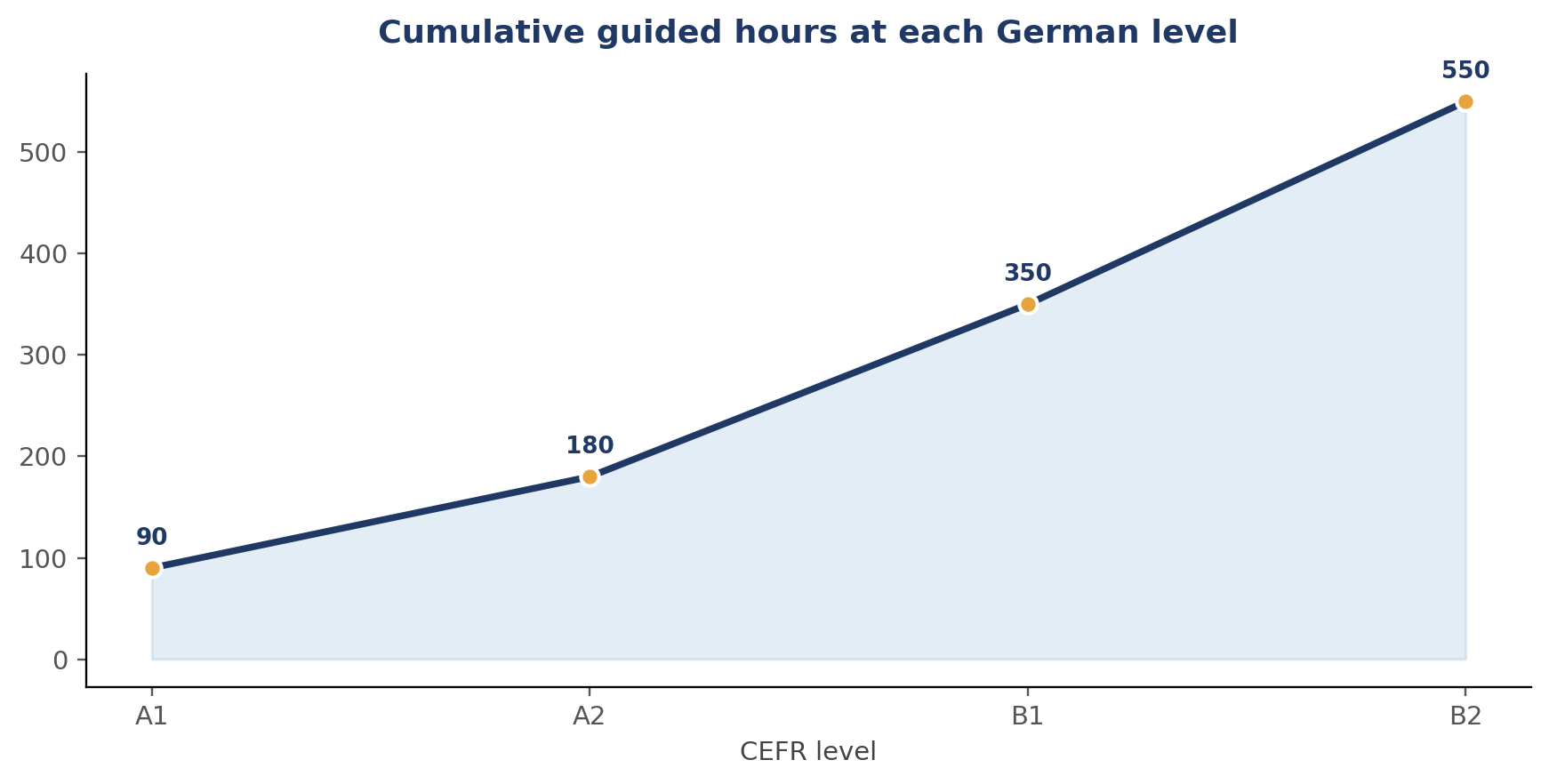
Rough planning estimates, not promises. Guided hours mean structured lesson time with your AI voice tutor; total hours include your own study.
At four hours of guided lessons plus four hours of self-study per week, B1 to B2 takes most learners between nine and fourteen months. At two hours a week, expect closer to two years. There is no shortcut that survives contact with reality.
Which B2 Exam Should You Take?
For work in Germany, Goethe or telc B2 is the safe default. For university study, TestDaF or DSH is usually what the admissions office wants — and most universities expect something at or above B2.
B2 is where structured practice stops being optional
Grammar you half-know collapses under exam time pressure. Regular AI feedback on your speaking is the difference between a B1 that lingers and a B2 that lands.
See B2 German courses →Create a free accountA Twelve-Month Route From B1 to B2
Regular full-skills reviews before exam day help. Two is the minimum. Three is comfortable. Zero leaves you guessing.
Where B2 Opens Doors
- Employment: many German employers and visa routes accept B2 as professional proficiency.
- University: satisfies some programmes directly; many require TestDaF or a higher level.
- Naturalisation: Germany's citizenship requirements have moved toward B1 and above — B2 gives you margin.
- Nursing and care roles: professional recognition bodies often require B2 speaking and listening.
- Real life: you stop translating in your head. That alone is worth the year.
Book the exam, then build the skills
A fixed date turns "I should practise more" into a plan. Start with a level check and structured lessons with your AI voice tutor.
Get your German level checked →Create a free accountFrequently Asked Questions
Is German B2 fluent? In the CEFR sense, yes — B2 is described as independent and fluent interaction. In the everyday sense, people will still notice you are not a native speaker. Both things are true at once.
How long does it take to go from B1 to B2 in German? Most learners need roughly 200 guided hours on top of B1, plus comparable self-study. At four hours of lessons a week that is about a year.
Is Goethe B2 harder than telc B2? They test the same CEFR level, but the formats differ. Goethe is modular and widely offered; telc is popular in professional contexts. Try full mock papers for both and pick the format that suits you.
Can I reach German B2 without a teacher? Highly self-disciplined learners have done it, usually with a speaking partner and a regular practice habit. For most people, structured AI feedback shortens the road considerably.
References & Further Reading
- Council of Europe, Common European Framework of Reference for Languages: Companion Volume (2020) — level descriptors for B2
- Goethe-Institut, Goethe-Zertifikat B2 exam regulations and practice materials — goethe.de
- telc gGmbH, telc Deutsch B2 examination specifications — telc.net
- TestDaF-Institut, test format and scoring documentation — testdaf.de
- Foreign Service Institute, language learning difficulty categories — state.gov