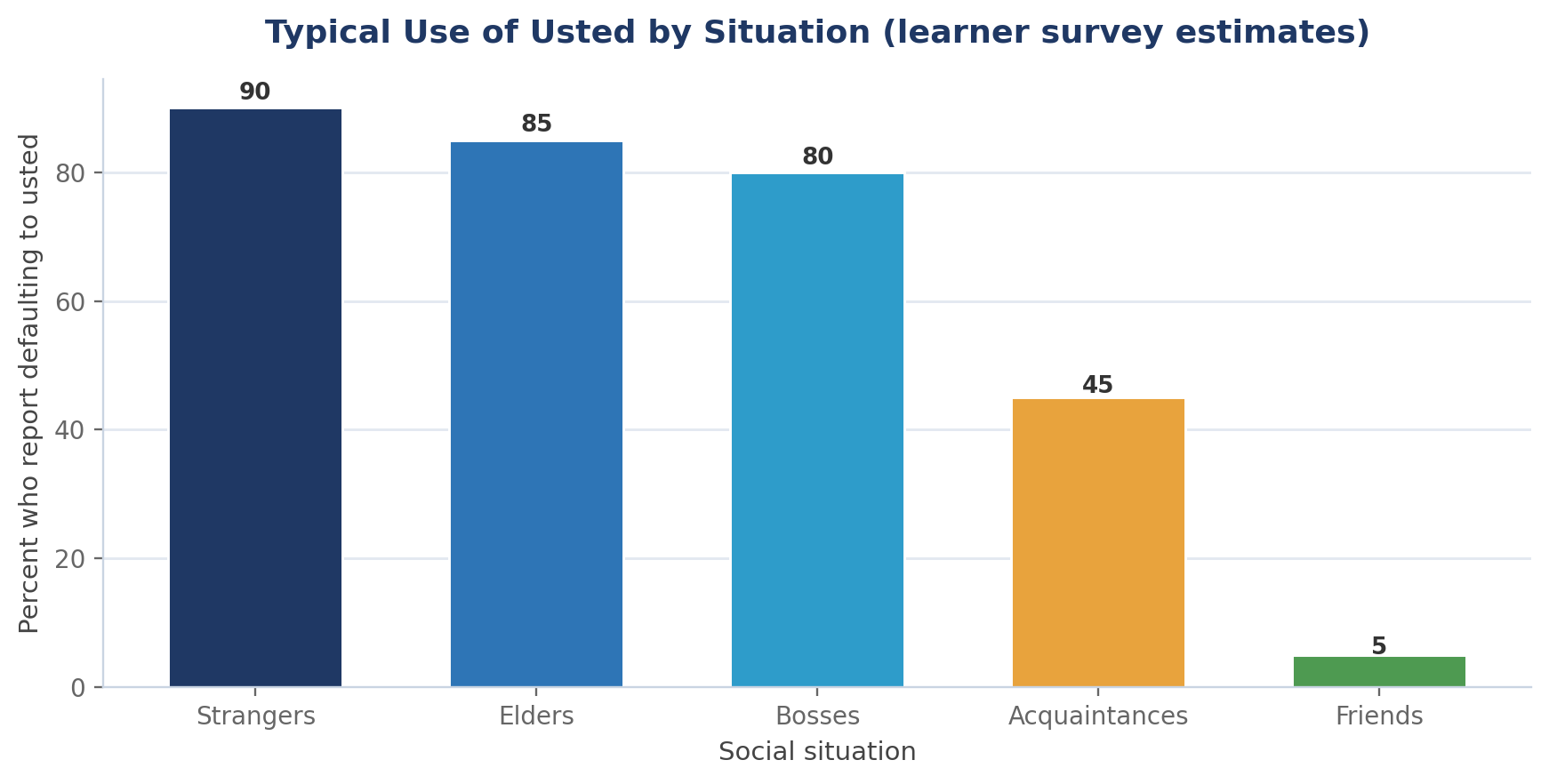
Spanish hands you two doors for every greeting: a warm, familiar one and a polished, respectful one. Pick the wrong handle and you can sound stiff to a friend or shockingly rude to a stranger. The good news? Tú vs usted is not a maze — it's a map, and once you learn to read it you'll glide through cafés, offices, and family dinners like you were born speaking Spanish.
This guide breaks down polite Spanish and casual Spanish in practical, real-life terms. We'll cover the pronouns, the verbs, the regional quirks, and the exact moments where each register wins. By the end, you'll know instinctively when to reach for "tú" and when "usted" is your safest, classiest move.
The Core Difference: Tú vs Usted
At the heart of Spanish politeness sits a single choice: tú (informal "you") or usted (formal "you"). Both mean the same thing. What changes is the distance you're placing between yourself and the person you're speaking to. Tú closes the gap. Usted politely keeps it.
Here's the twist that trips up beginners: in most of Latin America, vosotros barely appears, and ustedes does double duty for both formal and casual groups. In Spain, you'll hear vosotros constantly among friends.
When "Usted" Is the Polite Spanish Move
Usted is your armor of respect. Reach for it when you want to signal courtesy, professional distance, or deference to age and authority. It is never wrong to be slightly too polite — it's charming. Being too casual, however, can genuinely offend.
A quick rule of thumb: if you'd call someone "sir" or "ma'am" in English, usted is likely your friend.
When "Tú" Feels Natural and Right
Casual Spanish is the language of closeness, and using it well is a superpower. Friends, classmates, siblings, and same-age colleagues will expect tú. Overusing usted with a peer can feel icy — as if you're holding them at arm's length.
In Spain especially, casual registers dominate daily life. Two twenty-somethings meeting for the first time will almost always say tú within seconds.
Stop guessing, start speaking
Our Spanish course drills tú and usted until choosing the right one becomes pure instinct.
Get your Spanish course pass →Create a free accountVerbs Change Too — Not Just Pronouns
Politeness isn't only about which "you" you pick; the verb conjugations shift right along with it. This is where polite Spanish and informal Spanish truly diverge, and it's worth drilling.
Notice how the usted forms mirror the he/she forms. That's no accident — usted grew out of an old third-person courtesy construction, which is exactly why it feels politely distant.
Regional Differences You Should Know
Spanish is gloriously varied. Politeness norms that feel obvious in Madrid can feel different in Buenos Aires or Bogotá.
In Costa Rica and parts of Colombia, you'll even hear usted between close friends and family — not cold at all, but tender. This is a great reminder that politeness in Spanish is a living, breathing thing. If you're just starting out, our guide to building a daily Spanish habit pairs beautifully with mastering registers.
How to Switch Registers Gracefully
Someone will eventually say, "Puedes tutearme" — "You can use tú with me." That's an invitation, and accepting it warmly is a social gift. Here's how to navigate the switch without awkwardness.
- Wait for the cue. Let the older, senior, or unfamiliar person offer informality first.
- Match their lead. If they use tú, mirroring it is almost always welcome.
- When in doubt, stay usted. You can always loosen up later; you can't un-insult someone.
- Watch for "tutearme." That verb is your permission slip to drop the formality.
- Read warmth, not just words. Kindness + usted is respect; distance + usted is cold.
The art isn't memorizing rules — it's reading the room. Fluency means knowing which of the two doors to open.
Speak with confidence, not confusion
Master polite and casual Spanish with real conversations and expert feedback at your side.
Unlock your Spanish course pass →Create a free accountCommon Mistakes to Avoid
Learners make the same handful of slips again and again. Sidestep them and you'll sound far more polished.
Consistency is the quiet secret. A sentence that wobbles between registers sounds unsure, while a steady voice — even if a touch too formal — sounds confident and courteous.
Frequently Asked Questions
Is tú or usted more common overall? It depends heavily on region and relationship. Spain leans casual faster; Mexico and Colombia lean polite longer. As a learner, defaulting to usted with new people is the safer, warmer bet.
Can using tú ever be rude? Yes — with strangers, elders, or authority figures who expect respect. It can read as presumptuous or overly familiar. When unsure, usted protects you.
What does "tutéame" mean? It means "use tú with me." It's a friendly invitation to speak more casually, and accepting it warmly is exactly the right response.
Does vosotros matter if I only visit Latin America? Not much. In Latin America, ustedes covers all plural "you." Focus on tú vs usted first; add vosotros if Spain is on your itinerary.