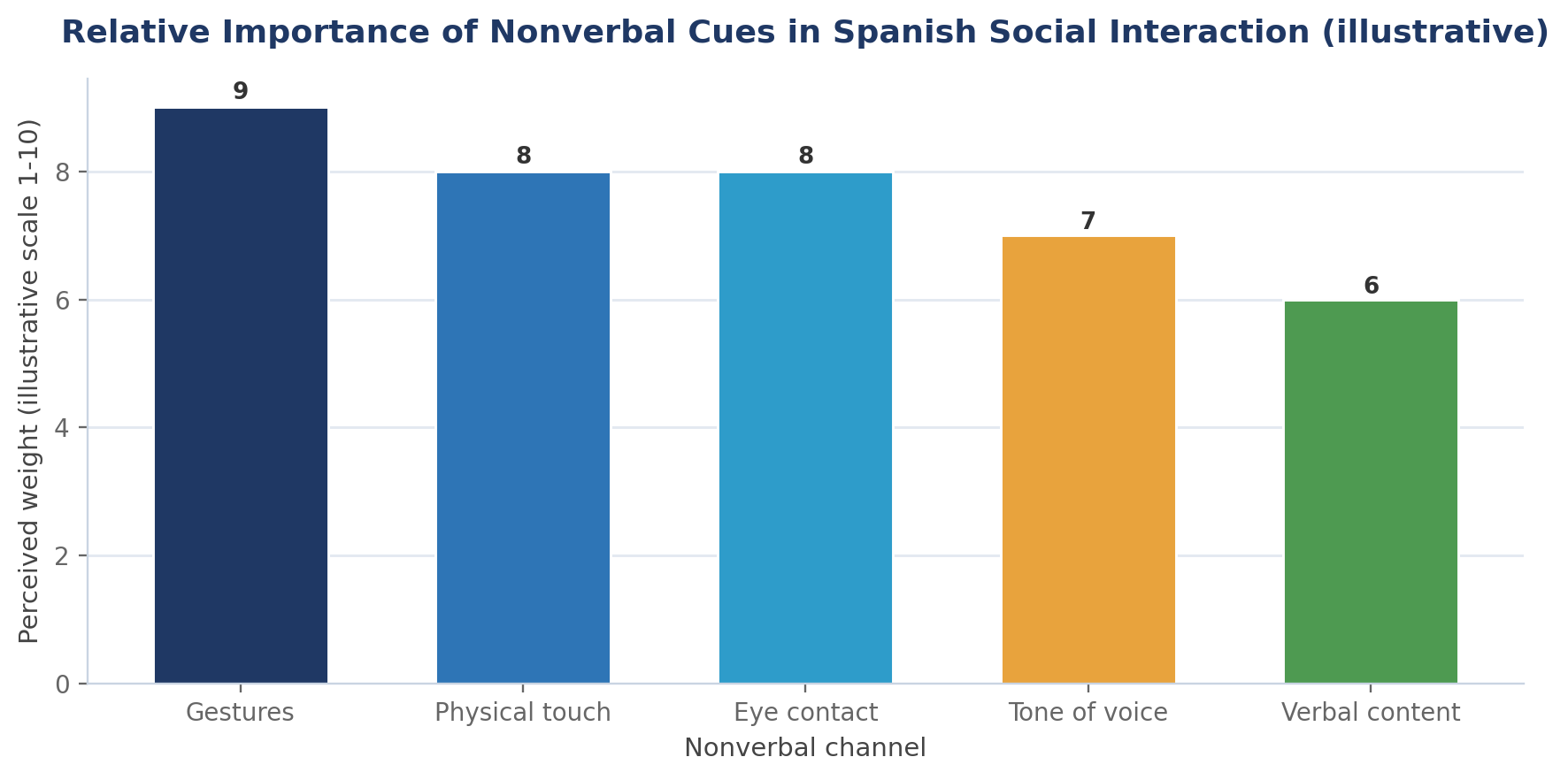
Spain is a country where the conversation never really ends — it just changes rooms. People talk with their hands, their eyebrows, their shoulders, and an enthusiasm that can feel like a warm wave the moment you land. If you have ever wondered why a stranger kissed your cheeks, why dinner starts when your stomach is already asleep, or what on earth that hand gesture meant, you are in exactly the right place.
Learning Spanish customs is not about memorizing a rulebook. It is about discovering the rhythm behind the words — the unspoken grammar of a culture that prizes warmth, honesty, and human connection above almost everything else. Master that rhythm and doors open: invitations, friendships, and conversations that go far beyond hola and adiós.
Let's decode it together.
The Language of Touch: Dos Besos and Personal Space
Spain is a contact culture. Physical closeness is not a breach of privacy — it is a form of speech. The famous greeting is dos besos (two kisses), one on each cheek, starting with the left. Between women, and between men and women, this is standard in social settings. Two men usually shake hands, though close friends may hug or slap shoulders enthusiastically.
Here is the practical breakdown:
Personal space runs tighter than in Northern Europe or North America. Standing close is normal; stepping backward can read as coldness or rejection. If you are not a touchy person by nature, think of it as learning a new dance step — awkward at first, natural within a week. Smile, lean in, and let the culture carry you.
Spanish Gestures You Will See Everywhere
Spanish body language is famously expressive, and a handful of gestures do the work of whole sentences. Watch for these in cafés, markets, and family kitchens:
Context is everything. A gesture that is warm in one moment can be cutting in another. When you are unsure, watch the face — Spanish speakers broadcast emotion openly, so you rarely have to guess for long.
Ready to turn reading into real Spanish? Start your self-paced course today.
Start the Spanish course →Create a free accountTurn Observation Into Real Conversation
You can read the gestures — now learn to answer them. Our Spanish course pass gives you unlimited access to structured, self-paced lessons with a personal AI voice tutor that train your reflexes, not just your vocabulary.
Button: Unlock your Spanish course pass →
Meals, Time, and the Spanish Clock
Spanish social customs orbit around food and late hours. Understanding the daily rhythm saves you from bewildered hunger and awkward arrivals.
Arriving on time for a social dinner is a rookie move. Guests commonly arrive 15 to 30 minutes after the stated time. Business meetings, however, usually start on schedule — punctuality expectations vary sharply by context, so mirror your hosts. And never rush the sobremesa, the lingering after-meal conversation. It is arguably the most important course of the meal.
Etiquette, Tipping, and Everyday Manners
Spanish social customs are warm but not rule-free. A few habits will mark you as a thoughtful visitor rather than a confused one.
Two golden rules: greet people when you enter a shared space, and accept an offer of food or drink at least once before declining. Hospitality in Spain is a two-way street — refusing everything can feel like refusing the person.
Regional Differences and Modern Spain
Spain is not one culture but many. Catalonia and the Basque Country have their own languages and identities. Greeting styles, meal times, and gesture intensity shift as you travel.
Modern Spain blends tradition with change: younger generations text more and kiss less, cities move faster, and gender norms keep evolving. Still, the essential engine — warmth, presence, and the joy of shared time — holds steady.
Ready to turn reading into real Spanish? Start your self-paced course today.
Start the Spanish course →Create a free accountRead the Room, Then Speak It
Grammar gets you sentences; culture gets you friends. Pair both with a course pass and start sounding like someone Spain actually wants to talk to.
Button: Start speaking Spanish today →
If you are ready to go deeper, create your free account and start building the cultural fluency that no phrasebook can teach.
Frequently Asked Questions
Is it rude to refuse dos besos in Spain? Not rude, just noticeably cool — offer your hand with a smile instead, and most people adapt instantly without taking offense.
Do I need to speak Spanish to understand the customs? No, but even a little Spanish transforms your experience, because phrases and gestures reinforce each other in daily life.
Is punctuality really that relaxed in Spain? For social events, yes — arriving 15 to 30 minutes late is normal; for business, arrive on time and follow your host's lead.
Which gesture should I avoid? The chin flick and certain temple taps can read as insults, so stick to open-handed gestures until you know your audience.