Turn up in Madrid at 6 p.m. and order dinner. The waiter will not laugh at you, but the kitchen will. Spain eats late, eats sociably and eats with rules nobody prints on the menu.
Learn the rhythm before you learn the words, and every restaurant in the country suddenly becomes easy.
What you will get from this guide
- The real Spanish eating clock, meal by meal
- Tapas etiquette that stops you looking like a tourist
- A regional dish map and a menú del día decoder
- Spanish phrases that get you fed politely
The Spanish Eating Clock
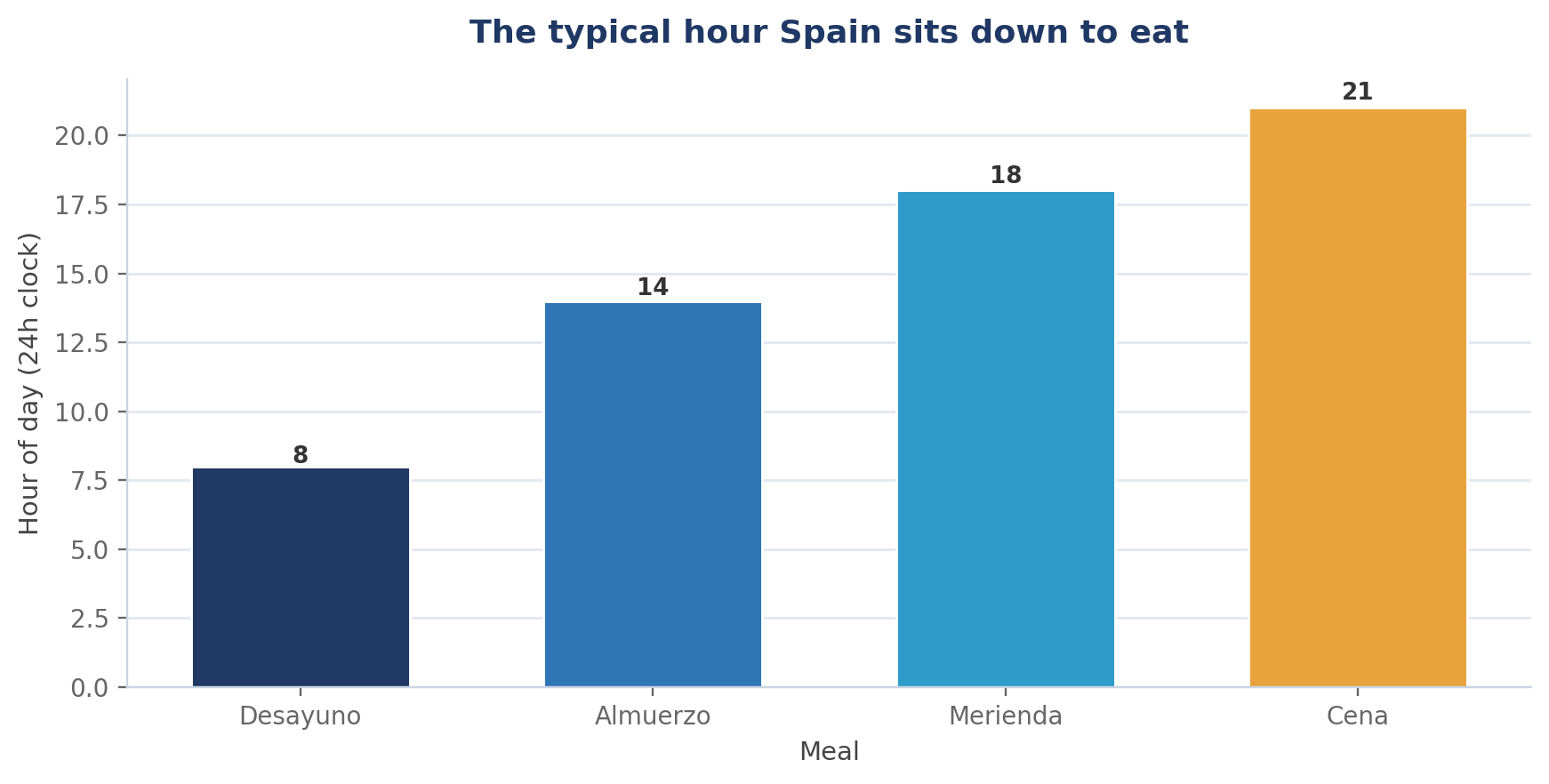
Four meals, three of them negotiable, none at the time you expect.
That 2 p.m. almuerzo is the anchor. Restaurants serve it as a fixed-price menú del día, usually three courses plus bread and a drink for a fraction of the evening à-la-carte price. Same kitchen, better value, because it is lunch, not dinner.
Tapas: The Rules Nobody Writes Down
Tapas are not a starter. They are a way of eating, and the etiquette is subtle but real.
In Granada and parts of Andalusia, a free tapa arrives with every drink. In Barcelona, it is a paid plate. Same country, opposite customs — know your city.
Regional Plates Worth Knowing
Spain is not one cuisine. It is seventeen arguments wearing a flag.
Order paella at dinner and a Valencian will quietly wince: it is a lunch dish, cooked over wood, eaten in the afternoon.
Decoding the Menu
Restaurant Spanish is its own dialect. Learn these and the menu stops being a puzzle.
Menus are easy. Conversation is not
You can point at a la plancha, but you cannot debate whether the house vermouth beats the local one. A personal AI voice tutor gets you to ordering, joking and gossiping at your own pace — food vocabulary included.
Learn Spanish for real life →Create a free accountSobremesa: The Meal That Outlasts the Meal
The coffee is finished. Nobody moves. That gap is sobremesa, and it is the true centre of Spain food culture — twenty minutes, an hour, sometimes two, of talk after eating.
Sobremesa is also the best classroom you will ever find. Order a coffee, stay put, and listen to how tables around you argue, interrupt and laugh.
Eating With a Language in Your Hand
Six phrases carry you through a week in Spain.
Pair them with the UNESCO-listed Mediterranean diet that shapes southern cooking — olive oil, fish, vegetables, and long tables — and you have the whole picture. The official Spain tourism site lists regional food festivals worth timing a trip around.
Frequently Asked Questions
Do I need Spanish to eat in Spain? In cities and coastal resorts, no. In small towns and local bars, yes — even ten phrases change how you are treated, because effort is the currency.
What time should I book dinner? 9 p.m. is early, 10 p.m. is normal, 11 p.m. is a good night out. Restaurants opening at 7 p.m. are catering to tourists, which is not automatically bad food, just different.
Is tapas dinner or a snack? Both. A couple of tapas before dinner is a snack; a crawl of five bars is dinner. Nobody in Spain will judge either choice.
What is the one dish I must try? Jamón ibérico, cut thin, at room temperature. It is the national benchmark and needs zero language skills — just point and say un poco más.
References & Further Reading
- Instituto Cervantes: cultural notes on Spanish daily life, meal times and sociable eating
- Spain.info, the official Spanish tourism portal, for regional gastronomy and food festivals
- UNESCO: Mediterranean Diet, inscribed on the Representative List of the Intangible Cultural Heritage of Humanity, 2013
- Ministerio de Agricultura, Pesca y Alimentación (Spain): Mapa de sabores and gastronomy programmes
- Foods and Wines from Spain: official promotional guide to Spanish regional products
Ready to order like a local? Try a free Spanish placement check and start with the vocabulary you will actually use at the table.
Learn the language the food lives in
Menus, markets, wine lists, sobremesa arguments — real Spanish. A personal AI voice tutor, self-paced lessons, and vocabulary you will use the next time you sit down to eat.
Start my Spanish course →Create a free account