On the sixth of January, Spanish children get their presents. Not in December. Not from a man in red. Three kings ride through town on camels, throw sweets at the crowd, and nobody blinks.
That is your first clue: Spain festivals are not decoration. They are the calendar, the argument, the family reunion and the street party at once. Learn them and you stop being a tourist with a camera — you become somebody who knows when the fireworks start.
What you will get from this guide
- The headline Spain festivals, with dates, cities and what actually happens
- Etiquette that keeps you welcome instead of in the way
- The Spanish phrases you will hear shouted around you
The Big Three Everyone Has Heard Of
Las Fallas, Valencia, March. Neighbourhoods spend a year building giant satirical sculptures, then set them on fire. The whole city smells of gunpowder and churros for a week.
San Fermín, Pamplona, 6–14 July. Eight hundred metres of street, six bulls, and runners who have trained for it. Watch from a balcony. Please.
La Tomatina, Buñol, the last Wednesday of August. One hour, thousands of people, an entire town painted red. Bring goggles. Truly.
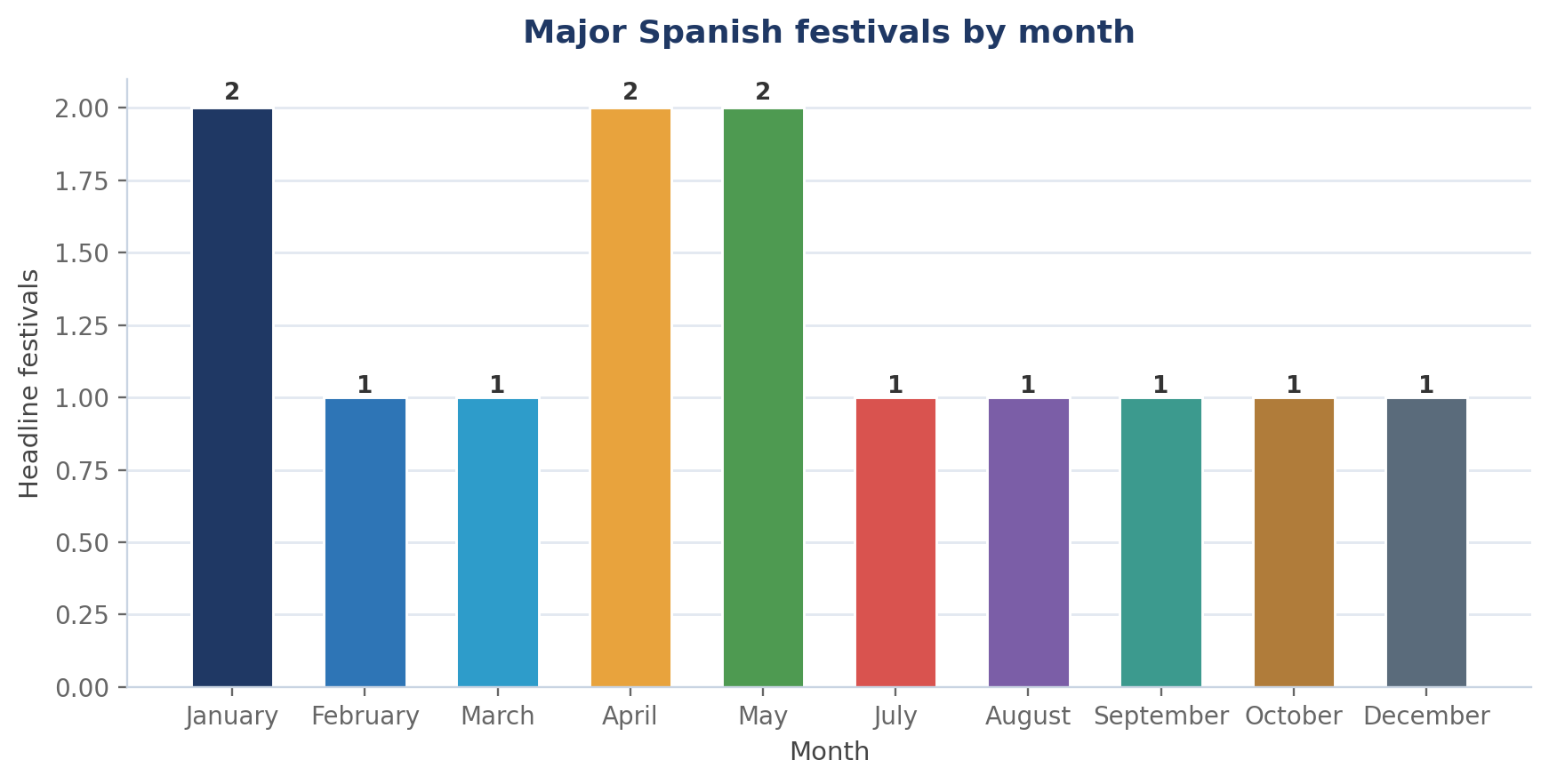
The Festival Calendar Worth Planning Around
Inside the party, not outside it
Locals explain nothing to strangers in English — but the moment you ask a question in Spanish, tables open up. A personal AI voice tutor builds that opening line before you land, at your own pace.
Learn Spanish for real life →Create a free accountThe Local Words That Unlock the Street
Festivals have their own vocabulary, and it is not in most textbooks.
Spain is not one culture, either. In Catalonia you will see and hear Catalan, and in the Basque Country, Euskera. Attentiveness beats assumptions.
National Public Holidays vs Local Fiestas
The practical trap: many Spanish cities hold two local holidays a year, and they change. Check your destination's calendar before you plan a museum day — you may arrive to find the streets full and the museum closed.
Etiquette That Keeps You Welcome
Processions during Semana Santa are religious, not tourist theatre. Keep your voice low, keep your phone down, and you will be treated accordingly.
Speak Three Sentences and Everything Changes
Ordering, asking directions, joining a table at a feria — each needs a small set of phrases and the nerve to use them. That nerve is trainable. The Instituto Cervantes runs the DELE exams that certify it, and a self-paced AI voice tutor builds it faster than any app, because you get instant speaking feedback.
If you want the fiestas to feel like home rather than spectacle, create your free account and start with a placement check.
Hear the difference by next fiesta
You already know the words for parade and fair. What you need is rhythm, slang and the confidence to use them with a stranger at midnight.
Start your Spanish course →Create a free accountFrequently Asked Questions
When is the best time to visit Spain for festivals? Spring and early autumn carry the heaviest calendar: Semana Santa and Feria de Abril in spring, La Mercè and El Pilar in autumn. Summer is hottest and busiest.
Is La Tomatina safe for tourists? Yes, within the rules — it is ticketed, timed to one hour, and the town provides water trucks. Bring goggles and shoes you are willing to throw away.
Are Spanish public holidays the same across the country? No. National holidays are fixed, but each region and town adds its own days, so the calendar shifts from city to city.
Do I need Spanish to enjoy these events? Not to watch, but yes to join in. The memorable part of any fiesta happens in conversation, and most of it is fast, colloquial Spanish.
References & Further Reading
- Instituto Cervantes — DELE certification and Spanish-language culture: https://www.cervantes.es/
- Spain.info — official Spanish tourism portal, cultural events calendar: https://www.spain.info/
- Real Academia Española — festive and regional vocabulary: https://www.rae.es/
- Instituto Nacional de Estadística — Spanish society and demography: https://www.ine.es/
- Valencia Tourist Board — Las Fallas official information: https://www.visitvalencia.com/