A four-year-old does not learn Dutch by sitting still. She learns it while hunting for her other sock. If you want to teach dutch to kids, stop building lessons and start building a Dutch hour — a stretch of the day where the language simply happens, the way it happens in Amsterdam playgrounds and Antwerp kitchens.
What you will get from this guide
- What to do at each age, from toddler to tween
- A seven-day routine you can run in your own home
- Household phrases that work without translation
- Resources from the Nederlandse Taalunie and others that are actually free
Why Dutch Is a Kinder Starting Point Than You Fear
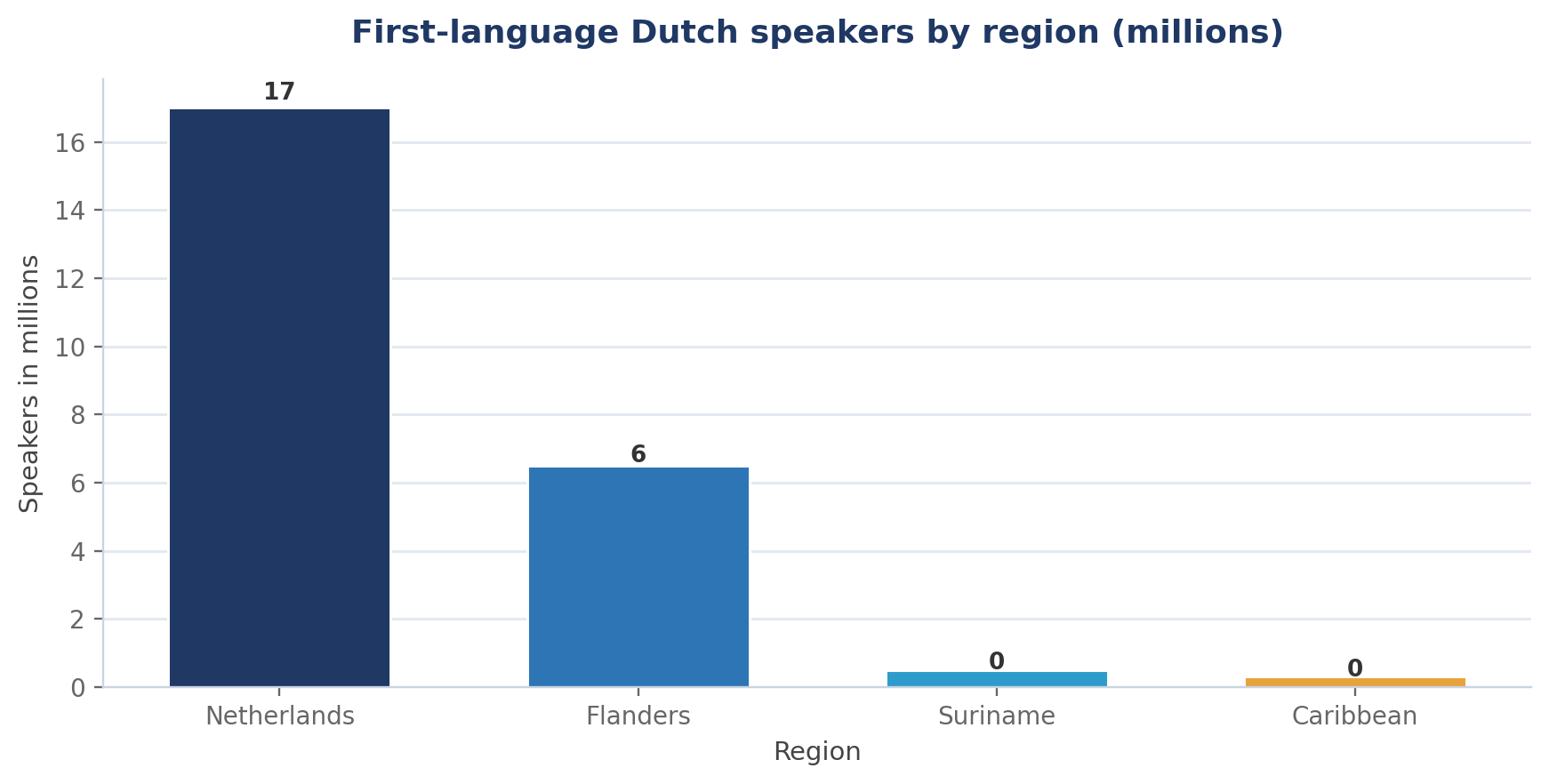
Dutch sits between English and German, and its everyday vocabulary is friendly to English speakers: huis (house), boek (book), water (water), fiets (bike). Around 24 million people speak it as a first language across the Netherlands, Flanders in Belgium, Suriname and the Caribbean Netherlands.
Kids do not care about speaker counts. They care that the words get them a biscuit. Sell it that way — every Dutch phrase should do a job.
The Age Window, Decoded
The famous "critical period" is less dramatic than it sounds: young brains are fast and fearless, but older kids catch up quickly when motivation is real.
The pattern never changes: language arrives through something the child already wants.
The Seven-Day Dutch Routine
Consistency beats intensity. Thirty minutes most days outperforms a three-hour Sunday session every time.
Write the plan on the fridge. A routine that lives on paper dies in a week.
Phrases That Survive Without Translation
Ten phrases repeated daily beat a hundred phrases repeated once.
When you want a structured Dutch voice in the room
Kids' clubs are wonderful. A personal AI voice tutor gives your child a patient Dutch voice that corrects pronunciation gently and keeps the game going, at your own pace, any time.
Explore Dutch courses →Create a free accountFree and Cheap Resources Worth Knowing
The Dutch approach abroad is blunt: subtitled TV is a teaching tool, not a treat. Children in the Netherlands grow up reading and hearing English at the same time. You can reverse the flow and use Dutch subtitles on familiar films — the child already knows the story, so the Dutch gets absorbed.
Six Myths, Ruined
What Progress Actually Looks Like
Measure against the child, not against a classmate. Language grows in plateaus, and the plateau before a jump always looks like failure.
The One Rule That Beats Everything
Never make Dutch the language of correction. If every Dutch sentence comes with a fix, the child learns that Dutch equals being told off. Let errors ride, answer in Dutch, keep the game going, and let time do the grammar.
Give your child a Dutch voice
Self-paced lessons built for young learners, with a personal AI voice tutor that makes the language feel like play. Start with a free account and see the first lesson before you commit.
Create a free account →Create a free accountFrequently Asked Questions
How many hours a week does it take to teach Dutch to kids? Roughly 15 to 30 minutes of meaningful exposure most days, plus background audio. Little and often beats long sessions.
My child refuses to speak Dutch. What now? Normal, especially when English dominates the room. Remove the demand for output: give instructions in Dutch, read aloud, let them answer in English. Speech usually follows silence by a few months.
Should I use one language per parent? It helps, but it is not mandatory. The rule that matters is one language per situation — Dutch at meals, Dutch at bedtime.
Is official NT2 material suitable for children? Mostly not. NT2 targets adults and school-age newcomers. For young children, use play, books and media first.
References & Further Reading
- Nederlandse Taalunie, the official body for Dutch language policy and materials
- NT2.nl, structured Dutch as a second language resources and exams
- Jeugdbibliotheek, free digital children's library catalogue
- NPO Zappelin, Dutch public broadcaster programming for young children
- Nuffic, international education context and language requirements