Germany shuts down more often than you expect, and celebrates harder than its reputation suggests. Show up in Munich in late September or Cologne in February and the country you read about — punctual, orderly, quiet — disappears into something far louder.
Know the calendar and you stop being the confused foreigner in the wrong city on the wrong week. Here is the year, in order.
What you will get from this guide
- The nine nationwide public holidays and the regional extras
- Month-by-month festivals worth planning a trip around
- Which holidays close shops and which do not
- The vocabulary you need to talk about them in German
The Fixed Spine: Nine Nationwide Public Holidays
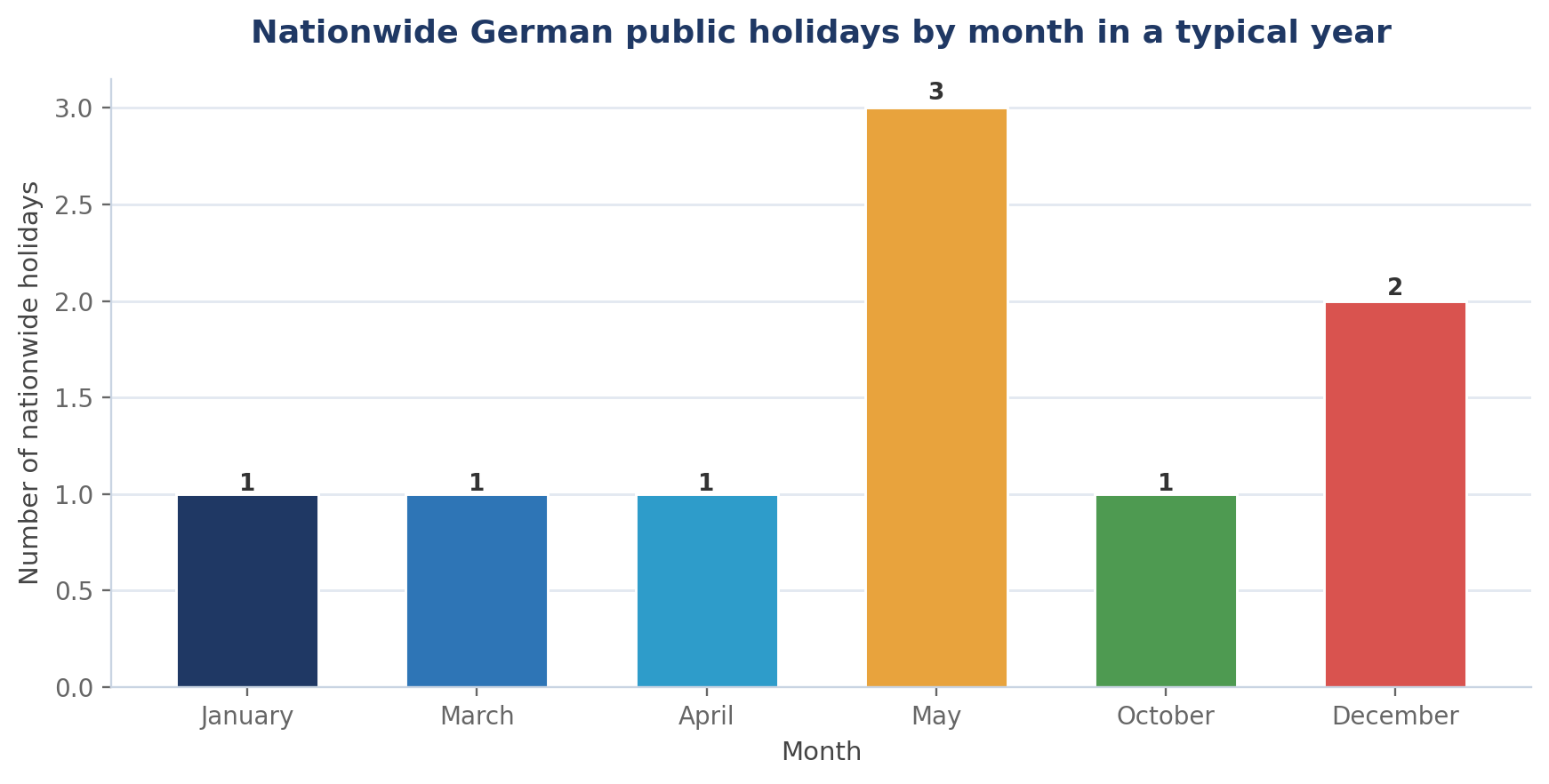
Germany has nine public holidays observed in every federal state. Beyond those, each of the sixteen Länder adds its own — Bavaria and Baden-Württemberg lead with the longest lists, while Berlin and Hamburg stay leanest.
Note the pattern. Five of the nine float with Easter, which is why the German holiday calendar shifts every year. Check dates before booking anything.
May is the champion with three. Plan a German trip in May if you want the most long weekends for your money.
Spring: Karneval, Fasching, and the Wildest Week of the Year
Carnival season begins on 11 November at 11:11 and peaks in the days before Ash Wednesday. The Rhineland calls it Karneval, Bavaria says Fasching, and the southwest says Fastnacht.
The days to know: Weiberfastnacht (Thursday, women symbolically storm town halls), Rosenmontag (the big Monday parade), and Aschermittwoch (Ash Wednesday, when it stops dead). Everything closes for Rosenmontag in the Rhineland, and no, your work meeting will not happen.
Summer: Festivals, Beer Tents, and Open Air
Summer is festival season, and Germany takes it seriously.
As for Oktoberfest: it is not Oktober. Munich's most famous festival runs from mid-September into the first weekend of October, and it has run since 1810, when it celebrated a royal wedding. It takes place on the Theresienwiese, not in some mysterious beer cellar.
Autumn: Oktoberfest, Unity Day, and Lantern Nights
October brings two very different moods. Munich drinks, and the rest of the country marks reunification.
Learn the German that goes with the German year
Order a beer, joke with a neighbour at a lantern parade, read a festival poster without a translation app. Self-paced lessons with an AI voice tutor, built around real situations, help you get there.
See the German course →Create a free accountWinter: Advent, Christmas Markets, and Silvester
Winter is when Germany is at its most photogenic. Christmas markets open in the run-up to Advent, usually from late November.
Two more dates to memorise. Sankt Martin on 11 November brings children with lanterns singing through the streets. Then 31 December — Silvester — when Berlin's Brandenburg Gate hosts one of Europe's biggest open-air New Year's parties.
What Closes, What Stays Open
This trips up newcomers more than any festival. Germany's Ladenschlussgesetz tradition means Sunday and holiday shopping is restricted.
Rule of thumb: buy groceries by Saturday afternoon, especially before a holiday weekend. Station shops at major train stations are the reliable exception.
Speaking the Season
Festival German is refreshingly small. Prost covers most toasts. Frohe Weihnachten handles Christmas, Frohes neues Jahr handles New Year, and Helau or Alaaf handles Karneval depending on which city's side you are on.
One warning: do not shout Alaaf in Düsseldorf. Locals will hear it, and they will not be polite about it.
Turn the calendar into conversation
Self-paced German lessons with an AI voice tutor teach culture alongside grammar, so you understand the joke at the Christmas market — not just the menu. Start with a free account.
Start free →Create a free accountFrequently Asked Questions
Is Oktoberfest actually in October? Barely. It starts in mid-September and ends on the first weekend of October. Locals call it die Wiesn, after the Theresienwiese fairground.
Do shops really close on Sundays? Yes, most do. Grocery stores, department stores, and boutiques shut. Bakeries, petrol stations, station shops, and restaurants typically stay open.
Which festival is best for a first visit? A December Christmas market is the safest bet — charming, family-friendly, and running in nearly every city. Karneval is the most spectacular but demands stamina.
Do I need German to enjoy these festivals? You can survive without it. You will enjoy far more with it, since the best moments happen in side conversations with locals who are suddenly talkative.
References & Further Reading
- Federal Ministry of the Interior — public holidays and their legal basis in Germany
- Goethe-Institut — cultural country studies materials on German festivals
- Deutsche Welle — reports and vocabulary features on German festivals
- Nuremberg City Council — official Christkindlesmarkt history and dates
- City of Munich — official Oktoberfest information and dates
Ready to celebrate in German? Start free at languageskills.net/register.