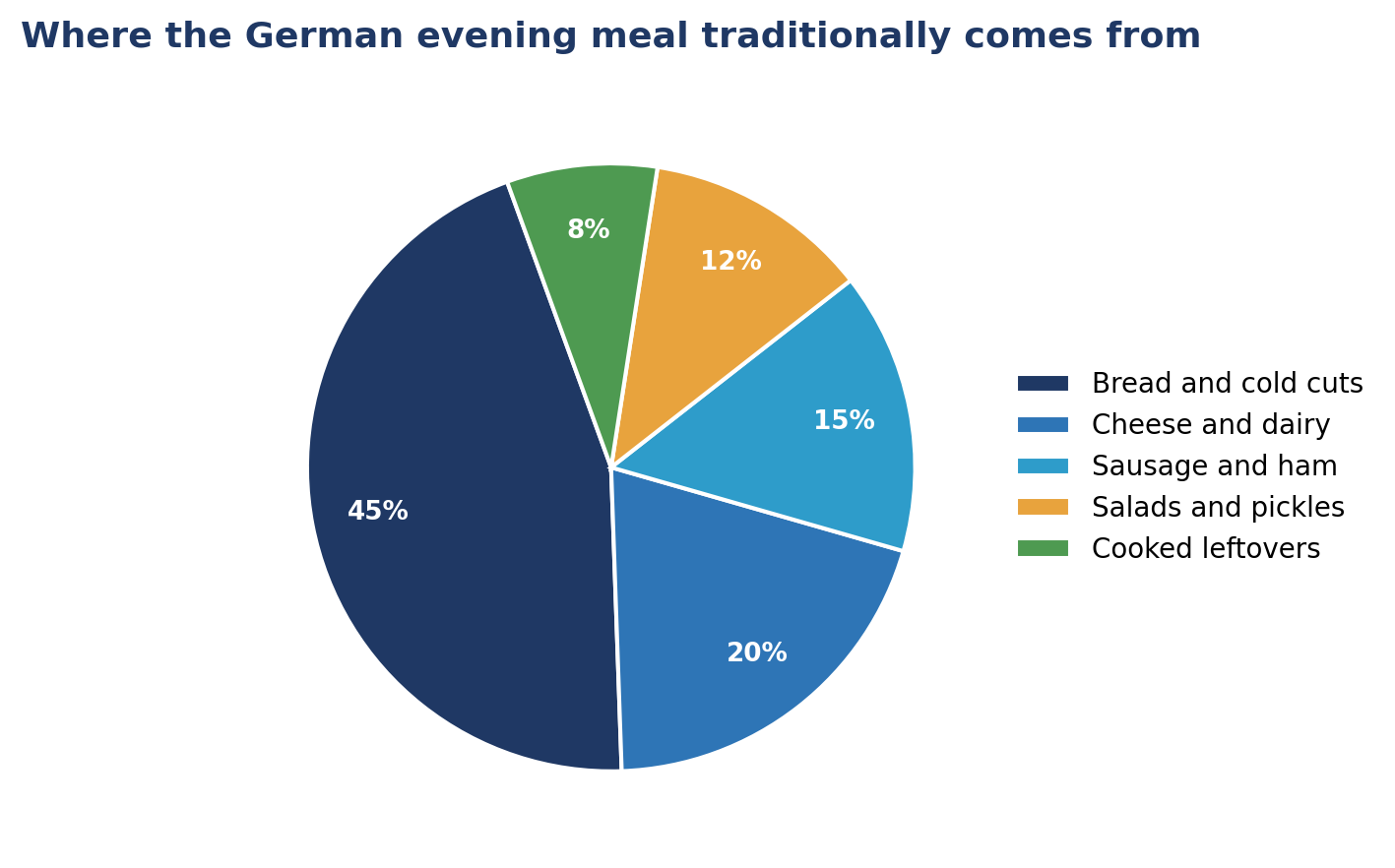
It is 6 p.m. in a German kitchen. You expected a hot dinner. Instead: cold cuts, cheese, a basket of bread, and everyone acting like this is a feast. Welcome to Abendbrot — and to the first rule of Germany food culture: dinner is not what you think it is.
Food is where language and culture collide hardest. Get the table right and your German gets easier, warmer, and a lot more delicious.
What you will get from this guide
- How German meal times actually work
- Why bread is treated with religious seriousness
- Regional dishes that change every 200 kilometres
- Phrases that make you sound like a guest, not a tourist
The German Eating Clock
Germany eats early and eats structured. Restaurants fill at 6 p.m. and empty by 9. If you book a table for 9:30, you may be the only soul in the room.
The surprise for most visitors is the swap. Lunch is hot. Dinner is cold. Bread carries the evening.
Bread: The Quiet Religion
Germans eat roughly 60 kilograms of bread per person per year by common trade estimates, and the country registers hundreds of distinct bread varieties. Rye, spelt, sourdough, sunflower seed — the shelf in a Bäckerei is a syllabus.
Bread is not a side here. It is the plate. Abendbrot without good bread is a scandal.
The Regional Map
Germany was 300-plus states once, and the food remembers. Ask for a "typical German dish" and you will get four different answers from four cities.
Bavarian white sausage comes with a rule: peel the skin, dip in sweet mustard, eat before noon, and never let it hear the church bells. Locals genuinely say this.
Beer, Wine, and the Drinking Grammar
Beer is regional identity in a glass. Cologne drinks Kölsch in small 0.2-litre glasses. Düsseldorf drinks Alt in dark, malty form. Order the wrong one in the wrong city and you will hear about it — politely, with a raised eyebrow.
Wine country runs along the Rhine, Mosel and Baden. The Mosel makes riesling so steeply grown that the vineyards look hand-carved. Germany is also the world's third-largest producer of sparkling wine by volume, mostly Sekt.
Apfelschorle — apple juice cut with sparkling water — is the non-alcoholic hero of every German table. Order it and you look like you grew up there.
Eating Out: Rules Nobody Tells You
Germany's restaurant culture is casual and efficient. A few moves change everything.
Service is professional, not fawning. Your waiter will not hover. Wave, make eye contact, and say Entschuldigung — that is how you summon help. "Getrennt, bitte" at the end saves twenty minutes of awkward arithmetic.
Water arrives sparkling unless you ask. Ask for stilles Wasser if you want it flat. Ice is a gift, not a default.
The Phrases That Win the Table
Learn six sentences and you will be invited back.
Look the person in the eye when you clink. It is not superstition alone — it is manners, and Germans notice.
If you want to hold these conversations without rehearsing in the mirror, a German course built around real situations gets you there faster than memorising menus. Reading a menu is easy. Chatting across a table is the skill.
Order, chat, and belong
A menu teaches you nouns. A personal AI voice tutor teaches you the small talk that turns a meal into a friendship. Practise at your own pace, any time, with instant AI feedback.
Start speaking German →Create a free accountFood Etiquette, Quietly Enforced
Punctuality is part of dinner. Arriving fifteen minutes late to a home invitation is not charming — it is rude. Bring a small gift: wine, flowers or chocolate.
Finish what is on your plate. Second helpings are expected, and refusing three times is a compliment too far. Say Ich bin satt once and mean it.
Sunday is closed. Shops shut, and the country eats at home or in a Gasthaus. Plan your groceries by Saturday evening. If you arrive on a Sunday with an empty fridge, you will learn this lesson with real hunger.
Frequently Asked Questions
What is a typical German dinner? Usually cold: bread, butter, cheese, cold cuts, and pickles, eaten around 6 p.m. Hot meals tend to be lunch. Restaurants still serve hot food in the evening.
Do Germans really eat bread every day? Yes. Bread appears at breakfast and at Abendbrot. Fresh rolls on a Sunday morning are close to a civic duty.
Is it rude to refuse food in Germany? Refusing once is fine. Refusing repeatedly can read as rejection. Take a small portion, eat it, and compliment the cook.
What should I say before eating? Guten Appetit — always, to everyone at the table. It is the most reliable three syllables in the country.
References & Further Reading
- German National Tourist Board — culinary Germany: https://www.germany.travel/en/leisure-and-recreation/food-and-drink/food-and-drink.html
- Goethe-Institut — German culture and language resources: https://www.goethe.de/en/index.html
- Duden — German dictionary and usage: https://www.duden.de/
- Deutscher Brauer-Bund — German brewing tradition: https://www.brauer-bund.de/
- Council of Europe — CEFR reference levels: https://www.coe.int/en/web/common-european-framework-reference-languages
From menu to conversation
You can read Schnitzel. Now learn to tell the story of your grandmother's cooking — in German. Self-paced lessons, real talk, instant AI feedback.
Book your German course →Create a free account