You have heard 99 Luftballons a hundred times. You can hum it. You cannot say what it means. That gap — melody in your head, meaning missing — is exactly where German songs to learn from do their best work.
Songs are slow, repetitive, and emotionally sticky. A chorus repeats four times, so you hear the same grammar four times without boredom. No textbook drill does that.
What you will get from this guide
- Why lyrics beat dialogue for listening practice
- Ten real German bands, graded by difficulty
- A 20-minute lyric study loop you can repeat daily
- The traps that make song learning useless
Why Lyrics Beat Textbook Audio
Textbook audio is polite. Real music is not. Singers swallow syllables, rhyme forces odd word order, and the beat drags unstressed words into a blur. That is not a bug. That is German as it actually behaves in the wild.
The catch: songs are hard at the start. Push through the first month with a translation beside you and the payoff comes fast.
CEFR roughly maps to song difficulty like this:
Ten German Bands, Graded by Difficulty
Start easy. Climb. Do not open with hip-hop on day three and feel broken.
Rammstein is a strange gift. Till Lindemann enunciates like a newsreader. The rolled R and harsh consonants are easy to separate — you can actually hear word boundaries.
A Real Line, Decoded
Take Silbermond's Symphonie:
Now watch the grammar surface on its own. Ich schreib dir — the verb sits second. ein Lied — an article change. dir is dative, not dich. You just met the dative case inside a love song and it did not hurt.
That is the whole method. Grammar you meet inside emotion sticks better than grammar you meet in a table. If you want the rules to catch up with your ear, a structured German course gives you the case system in order while the songs keep you listening.
The 20-Minute Lyric Loop
Do this with one song. Not five. One.
Repeat the same song three days running. Novelty feels productive; repetition is productive.
The Traps That Waste Your Time
Translation apps turn lyrics into nonsense. Ich hab die Schnauze voll is not "I have the snout full" — it means "I'm fed up". Word-by-word engines cannot smell idiom.
There is also the dialect problem. Berlin rap, Bavarian folk, and a Swiss accent are three different languages in a trench coat. Real news German — the kind a Goethe-Institut exam uses — is closer to Die Prinzen than to street rap. Mix music with clean audio sources so your listening ear stays flexible.
Hear it, then say it right
Songs train your ear. A personal AI voice tutor trains your tongue. Guided speaking practice turns the words you caught in a chorus into sentences you can actually use in a conversation.
Start German listening + speaking →Create a free accountBuild a Playlist That Teaches
Make three playlists. Name them honestly.
For clean, level-graded listening beyond music, Deutsche Welle's Langsam gesprochene Nachrichten is a gift — same news, slow enough to follow. Goethe-Institut also publishes graded listening material that pairs nicely with your playlist. Songs make you love the language. Graded audio makes you fluent in it. Use both.
Frequently Asked Questions
Are German songs good for beginners? Yes, if you pick slow pop with clear diction — Nena and Die Prinzen work well. Skip rap and poetry for the first few months. Use the chorus as your foothold.
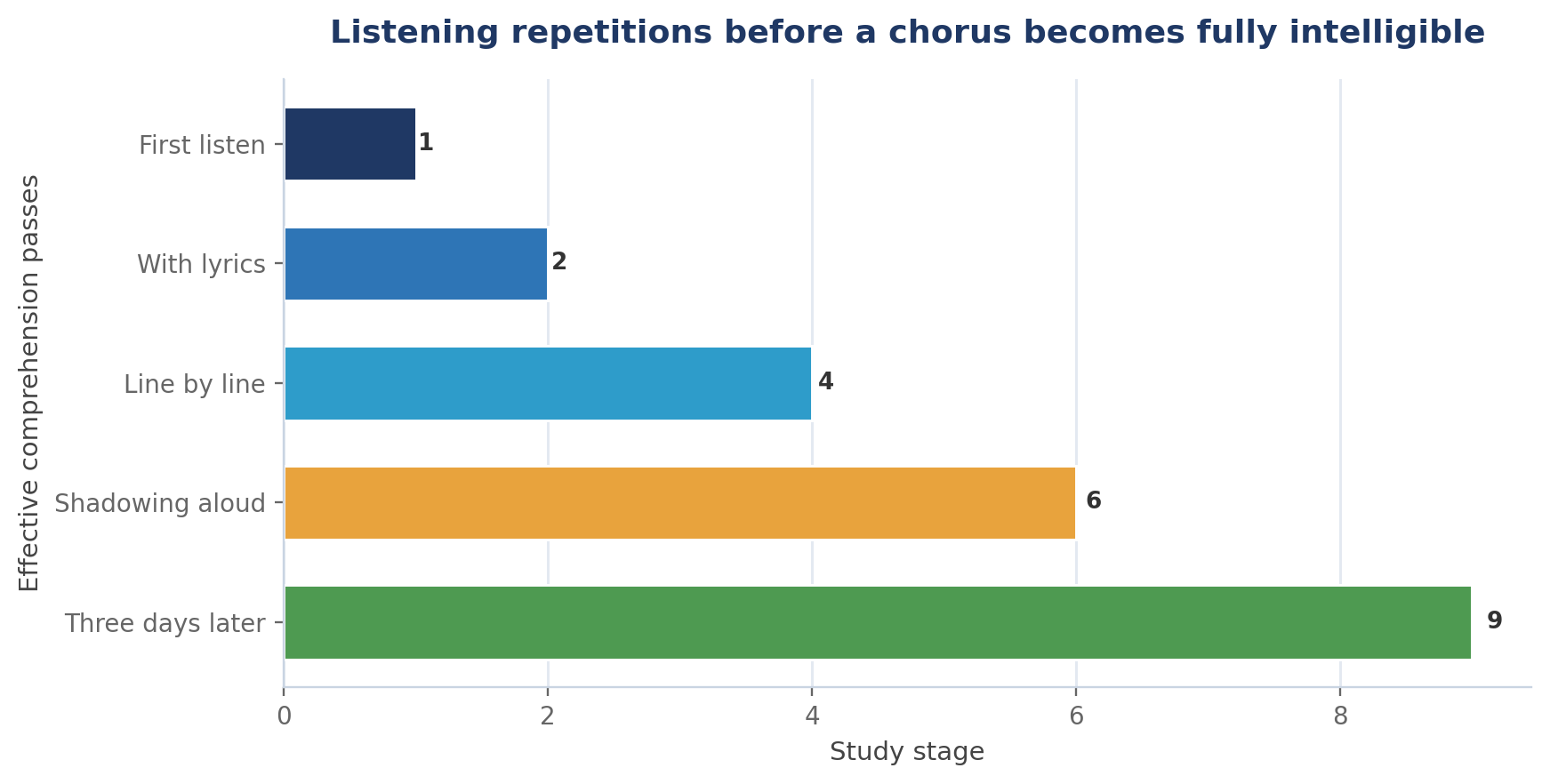
How many times should I listen to one song? Six to ten focused listens across three days beats fifty background plays. Focussed repetition builds comprehension; passive plays build mood.
Do I need to understand every word? No. Aim for 70 per cent of a verse and let context carry the rest. Chasing every word kills the pleasure and the momentum.
Can songs teach me German grammar? They show grammar in the wild — cases, word order, verb position. They rarely explain it. Pair songs with a course or a grammar reference to name what you keep hearing.
References & Further Reading
- Goethe-Institut — German learning materials and graded listening: https://www.goethe.de/en/spr/ueb.html
- Deutsche Welle — Langsam gesprochene Nachrichten: https://learngerman.dw.com/en/overview
- Deutsche Welle — Learn German with music and media: https://learngerman.dw.com/
- Duden — German dictionary and idiom reference: https://www.duden.de/
- Council of Europe — CEFR levels and descriptors: https://www.coe.int/en/web/common-european-framework-reference-languages
Turn the chorus into conversation
You already know the tune. Learn to answer it. Start self-paced speaking practice and put those lyrics to work out loud.
Start German speaking practice →Create a free account