You've decided to learn Japanese. Congratulations — genuinely, that's a fantastic decision. Now comes the budget conversation. The internet is drowning in free Japanese resources, and half of them are excellent. The other half will teach you to say "I am a cat" and nothing else. Meanwhile, paid Japanese courses want your money and promise fluency by Tuesday.
Here's the truth nobody puts in a tidy table: free and paid aren't enemies. They're tools. The real question isn't which is better — it's what does each one actually give you, and where does it quietly stop? Let's open the hood, no drama, no gatekeeping. Just a clear-eyed look at what you really get.
What "Free" Actually Delivers
Free Japanese resources are genuinely powerful at the start. You can learn hiragana and katakana today, for zero yen, with resources like Tofugu's kana guides or the excellent app-based tools. That's real progress — a huge win.
Notice the pattern? Free tools are phenomenal components. They are rarely a complete journey. You'll collect twelve tabs and a vague sense of guilt. That's not a discipline problem — that's a design gap.
What "Paid" Really Buys
A paid Japanese course doesn't charge you for information. Honestly, information is free now. What you're paying for is structure, sequencing, correction, and momentum. You're buying the map so you stop guessing which mountain to climb next.
That last row is the one that stings. Free is not free if it costs you a year. If you value your time at even a modest hourly rate, the "cheap" route can quietly become the expensive one.
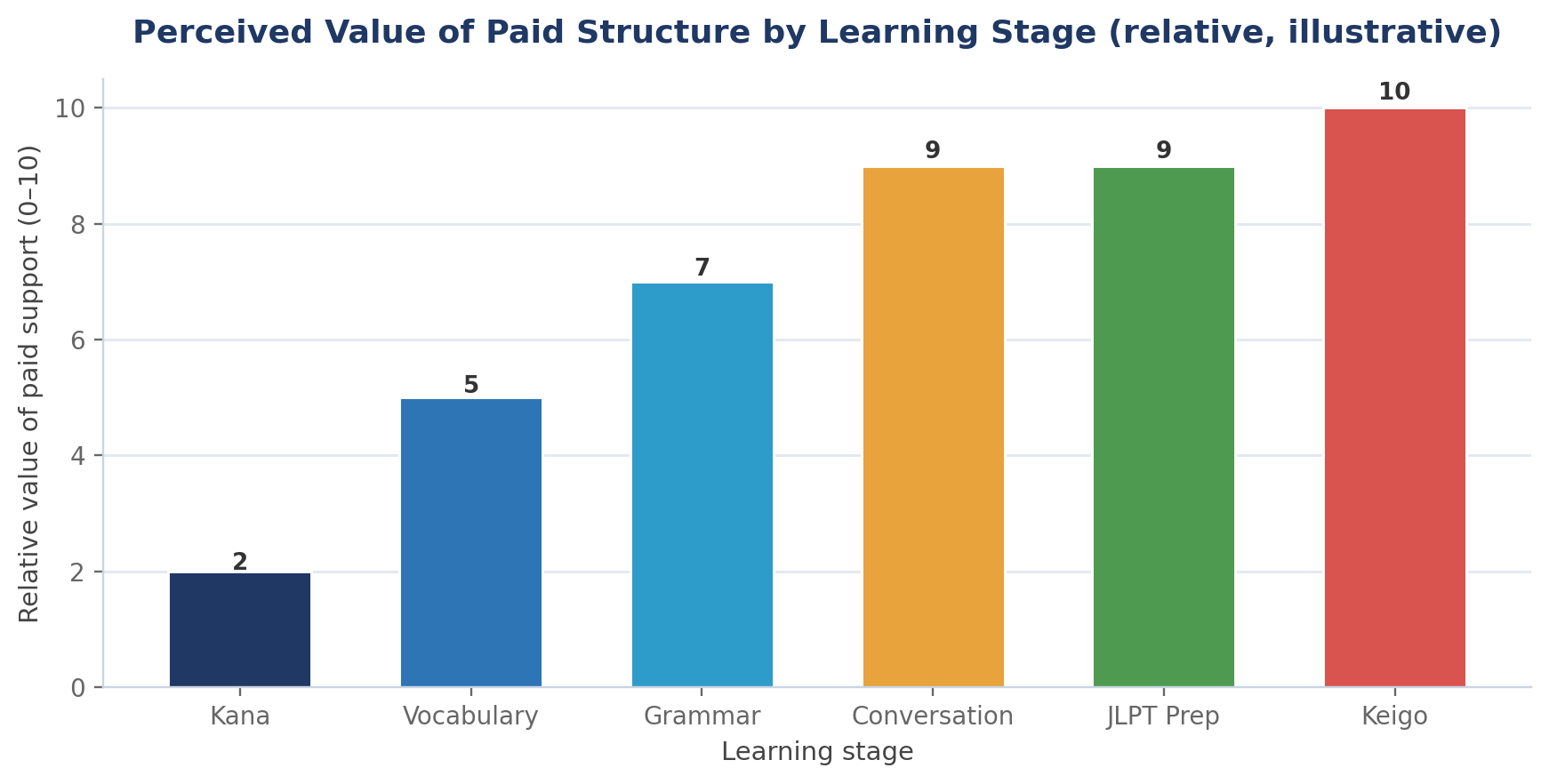
Here's the honest breakdown of where the value stacks up:
So the smart play for most learners? Free for range, paid for depth. Use free resources to explore, then invest where the plateau hits hardest.
Stop guessing what to study next
A structured Japanese course pass turns scattered free tools into one clear path, with feedback at every step. Skip the year of trial-and-error and start moving with intent.
Explore the Japanese course pass →Create a free accountThe Hybrid Strategy That Actually Works
You don't have to pick a side. The best way to learn Japanese is almost always hybrid — and this is where most people leave free progress on the table.
Run that sequence and you'll spend far less than a "premium everything" learner and progress faster than a free-only purist. That's the sweet spot.
How to Spot a Course Worth Paying For
Not every paid Japanese course deserves your money. Run it through this filter before you commit:
If a paid Japanese course passes this simple test, the question flips from "is it worth it?" to "can I afford not to?" Learning Japanese cheap is smart — but only when cheap doesn't mean stalled.
Making the Money Conversation Honest
Let's talk numbers like adults. Nobody can promise you a magic figure, and anyone who does is selling you a dream. What we can say honestly: structured learners overwhelmingly report faster early progress than self-directed ones — a pattern that shows up across language-learning research and consistent learner surveys, though results always vary by person, time available, and effort.
The real math is your time. A course that saves you even a handful of hours a month, over a year, pays for itself. That's not hype — that's arithmetic.
Learn Japanese cheap without stalling
Get structured lessons, real feedback, and a clear path from kana to conversation — all in one affordable pass. Start free with an account and upgrade only when you're ready.
Create your free account →Create a free accountFrequently Asked Questions
Is a paid Japanese course really worth it? It's worth it if you've plateaued with free tools or value your time. Free resources teach you what; a paid course teaches you in what order, with correction — which is where most learners stall.
Can I reach fluency with only free Japanese resources? Some highly disciplined learners get far, but it takes longer and demands self-correction that's hard to do alone. Free resources are best used alongside, not instead of, structured practice.
How much should I expect to spend? Costs vary enormously by format and provider, so treat any single figure with suspicion. A reasonable approach is to start free, then invest in the one area where you're plateauing — usually speaking or exam prep.
What's the best way to learn Japanese on a budget? Combine free tools for vocabulary and kana with one affordable paid course for structure. Signing up for a free account is the cheapest way to test drive the paid experience before committing.