The DELF B2 oral is twenty minutes long, worth a quarter of your total, and it is the paper where prepared candidates most often underperform. The reason is almost always the same: they prepare a presentation, when the exam is actually a debate.
The format is straightforward. You get twenty minutes to prepare using a short set of documents, you deliver a five to seven minute monologue presenting a position, and then you defend that position against an examiner who is instructed to push back. The monologue is the entrance. The debate is the exam.
This guide covers the structure, how the marks are actually distributed, and the model phrases that carry candidates through both phases.
How the Oral Is Structured
Two details change how candidates should prepare. First, the preparation time is for structure, not for writing sentences — reading a script aloud is penalised, because the exam tests spontaneous speech. Second, the debate is longer than the monologue, which means more than half your marks are earned while someone is disagreeing with you.
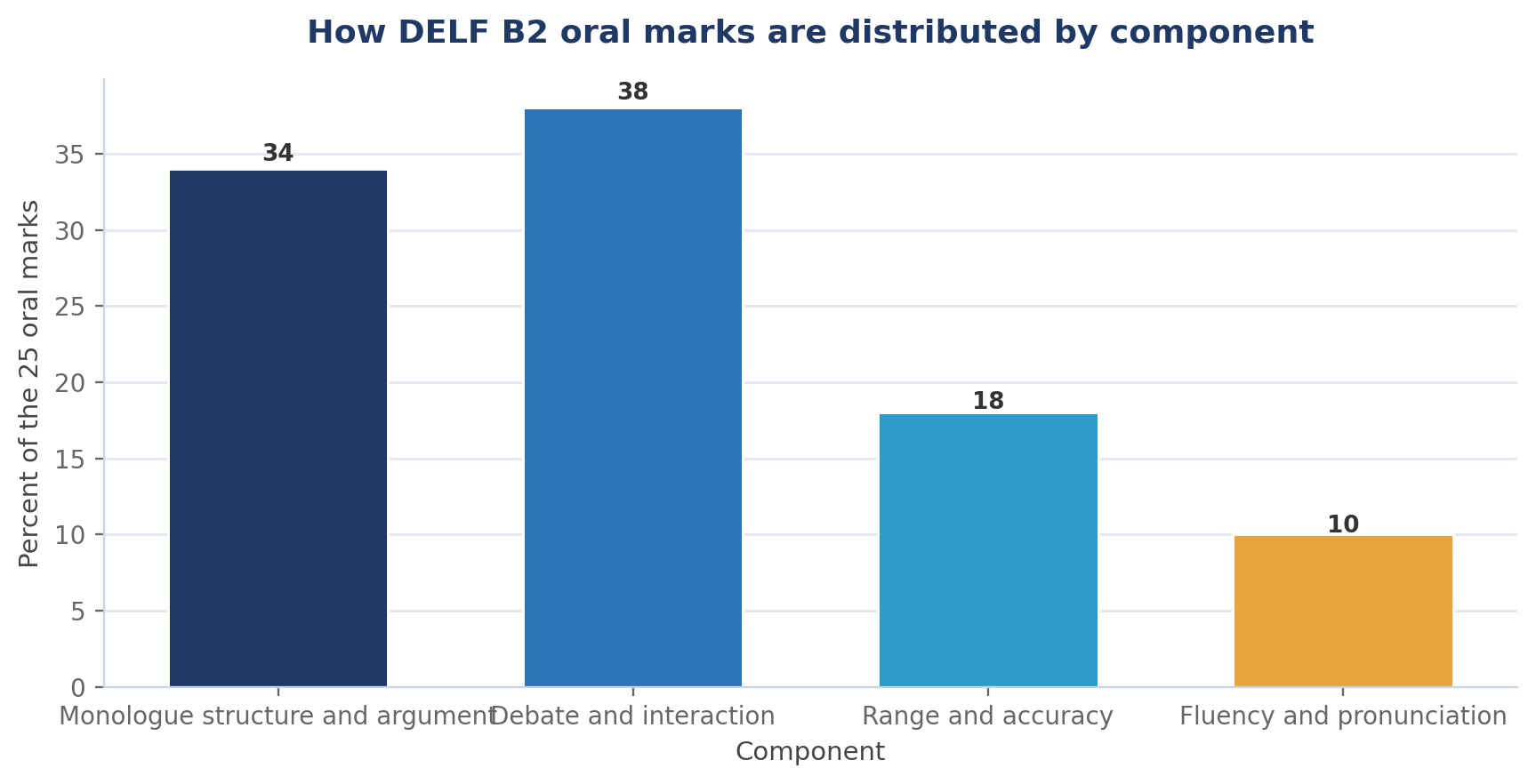
How the Marks Are Distributed
The Monologue: A Three-Move Structure
A reliable monologue has three moves, and it is worth rehearsing them until they are automatic. You are not being marked on originality; you are being marked on structure.
The conceding move in the middle is the one learners skip and the one examiners reward. Showing that you can acknowledge the opposing case before dismissing it is exactly what B2 argumentation means.
A Worked Sample: The Monologue
Here is what a strong opening two minutes sounds like on a typical topic — whether technology makes us more isolated.
Notice the shape: nothing exotic, no rare vocabulary, and every sentence doing a specific job. That is what earns marks.
The Debate: Where the Exam Is Decided
The examiner will challenge you. That challenge is not hostility; it is the test.
The single most important behaviour in the debate: never collapse. Candidates often agree with the examiner's counter-argument completely and sink their own position, which loses the marks the debate exists to measure. Concede partially, then reassert.
Practise the debate with an AI voice tutor that pushes back
Most candidates lose marks because nobody ever disagreed with them in practice. Our French Course Pass gives you a personal AI voice tutor that plays the examiner and gives you feedback on your speaking. Explore the French Course Pass →
Start the French course →Create a free accountPhrases That Buy You Time
Silence costs marks. These fillers keep you speaking while you think, and they sound natural rather than evasive.
Five Mistakes That Cost Marks
The fourth row is the cheapest fix available. Replacing repetitive connectors with cependant, toutefois, en revanche, par ailleurs, d'une part, en définitive costs an evening of practice and lifts the range criterion immediately.
A Four-Week Oral Preparation Plan
Four weeks is enough if the work is spoken rather than read. The rule to hold onto: every preparation activity must end with you saying something out loud, because the exam measures spoken production and nothing else.
Four weeks of speaking beats four months of reading
The oral is decided by what you say under pressure. Our French Course Pass gives you a personal AI voice tutor and speaking practice with feedback, so you can rehearse the debate any time. Start your French Course Pass →
Start the French course →Create a free accountFrequently Asked Questions
How long is the DELF B2 speaking exam? About 20 minutes, plus 20 minutes of preparation. The monologue takes five to seven minutes and the debate with the examiner takes ten to thirteen.
Can I use notes during the DELF B2 oral? You can use brief notes made during the preparation period, but reading a prepared script is penalised because the exam assesses spontaneous speech.
What happens if I disagree with the examiner? You should disagree — respectfully. The debate is designed to test whether you can defend a position, and conceding completely loses the marks it exists to measure.
What if I don't understand a question in the debate? Ask for clarification in French, for example Si je comprends bien votre question…, then answer. Asking politely costs nothing; silence costs marks.