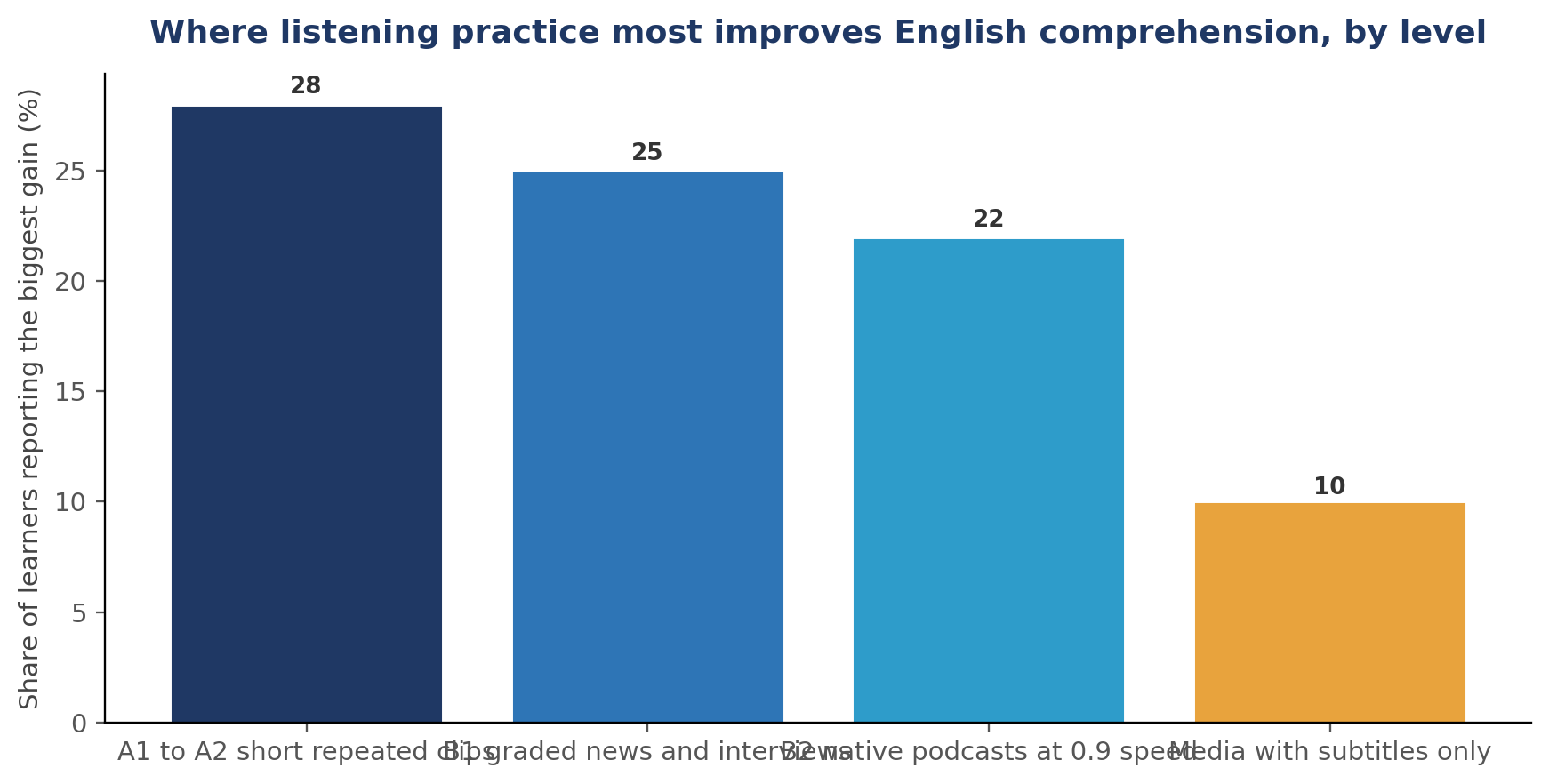
Here is the most underrated fact in language learning: listening is the skill you can practise while doing something else. Walking, commuting, washing up — the hours already exist, they are just empty.
But there is a catch. Most learners pick a podcast that is either far too easy (encouraging) or far too hard (demoralising), and neither produces progress. The trick is matching the material to your level, precisely, and then knowing what to do with it.
What this guide gives you
- What to listen to at A1, A2, B1 and B2
- How to know if a podcast is at your level
- A 20-minute listening routine that works
- The mistake that wastes most listening hours
- Free, genuinely reliable sources
How to tell if a podcast is at your level
Forget perfection. The test is simpler than most people think.
The sweet spot is 70 to 85%. That band is where your brain still has to work, but not so hard that you lose the thread — the condition under which listening actually improves. Anything below 50% teaches you to tune out.
A1–A2: the beginning
At this stage you need slow, clear speech with limited vocabulary — and ideally a transcript.
Look for shows produced specifically for learners — the British Council and BBC learning resources, and the many slow-English news series, are ideal. Ten minutes is plenty at this stage; short and repeated beats long and overwhelming.
B1: the transition zone
This is where most learners get stuck, because B1 is too advanced for learner podcasts and too early for native ones. The solution is bridging material.
At B1, use the transcript after your first listen, never during. Listening with subtitles on is reading practice wearing headphones.
B2: real English, real speed
At B2 you can and should start on native material. Choose topics you already understand — a personal interest, a subject you know professionally — so your brain can lean on context.
The one adjustment worth making: play it at 0.9× speed for the first listen, then 1.0× on the second. Your ear catches up faster than you expect.
Ready to turn reading into real English? Start your self-paced course today.
Start the English course →Create a free accountTurn listening into speaking
Passive listening builds comprehension, but it will never make you fluent — nobody ever talked their way to fluency by pressing play. Self-paced speaking practice with an AI voice tutor takes the vocabulary you have absorbed and makes you use it, with instant feedback on your speaking.
Button: Explore the English Course Pass →
The 20-minute routine that actually works
How you listen matters more than what you listen to.
That third listen is the step almost everyone skips, and it is the one that converts a difficult clip into easy listening. Repeat clips beat new clips, especially at A1–B2.
The mistake that wastes most listening hours
Passive background listening while distracted. It is comforting, it feels productive, and it produces almost nothing, because comprehension requires attention.
Background listening does have one real use: familiarising your ear with the sound of the language. Keep it for that. But it is not practice. Practice looks like five focused minutes with a transcript and a pen.
Listening is not about hearing more English. It is about hearing the same English more carefully.
Free sources worth queueing up
Bookmark three, not thirty. Depth beats variety at every level, and repeating material you already half-know is how listening quietly becomes fluency.
Ready to turn reading into real English? Start your self-paced course today.
Start the English course →Create a free accountGet a listening plan matched to your level
A free languageskills.net account includes a level check and guided listening practice, so you stop guessing which podcast is right and start improving from where you actually are.
Button: Create your free account →
Frequently Asked Questions
What is the best English podcast for beginners? Look for shows produced specifically for learners with slow, clear speech and transcripts. Aim for 70–85% comprehension, not 100%.
Should I listen with subtitles? Not during your first listen. Use the transcript afterwards to check what you missed — that is where the learning happens.
How long should I listen every day? Twenty focused minutes beats an hour of distracted background listening. Consistency matters more than duration.
Can podcasts alone make me fluent? No. Listening builds comprehension, but speaking requires speaking. Combine podcasts with self-paced speaking practice with an AI voice tutor.
References & Further Reading
- British Council — English learning resources and level guidance
- Cambridge English — Qualifications and level descriptions
- BBC Learning English — Free lessons, audio and transcripts
- Council of Europe — CEFR levels and listening descriptors
- European Commission — Multilingualism and language-learning policy