You found the perfect master's programme in Munich. Then you read the admission page and hit a wall of acronyms: DSH, TestDaF, TDN 4, uni-assist, C1 Hochschule. None of it is hard. It is just badly explained — and the deadline does not care.
What you will get from this guide
- The four certificates that actually unlock German universities
- Exact score requirements and what "TDN 4" means in plain English
- Which programmes need no German at all
- A realistic timeline from A2 to admission-ready
The Short Answer: C1, Proven Properly
For a German-taught degree, you need C1 level German with a certificate the university recognises. There is no interview that gets you around it. The certificate must come from an approved exam body.
The trick is the word usually. Each university publishes its own list. Check the exact page for your programme, not a forum post from 2016.
TestDaF: The Scores Decoded
TestDaF is the international standard, offered worldwide, and scored per section.
TDN 4 sits roughly at B2-C1, but the exam is designed to test academic readiness, not tourist German. You will read about statistics and listen to a lecture-style monologue. Some universities accept a total of 16 points across all four sections, or allow one TDN 3 if another section is TDN 5. Read the rules twice.
DSH: The University's Own Exam
DSH is taken in Germany, usually at the university itself, and typically requires you to already be enrolled in their preparatory language course.
DSH has an advantage: registration is often cheaper and you sit it after a semester of free or low-cost university language prep. The disadvantage is the gamble — you must be in Germany first, on a language-study visa, before you can even attempt it.
No, Not Every Programme Needs German
This is where most applicants waste a year. Germany has thousands of English-taught master's programmes, especially in engineering, computer science and business.
An English-taught degree gets you into Germany. It does not get you a job in Germany. Which brings us to the part nobody puts in the brochure.
The Timeline That Actually Works
Plan backwards from your application deadline, not forwards from today.
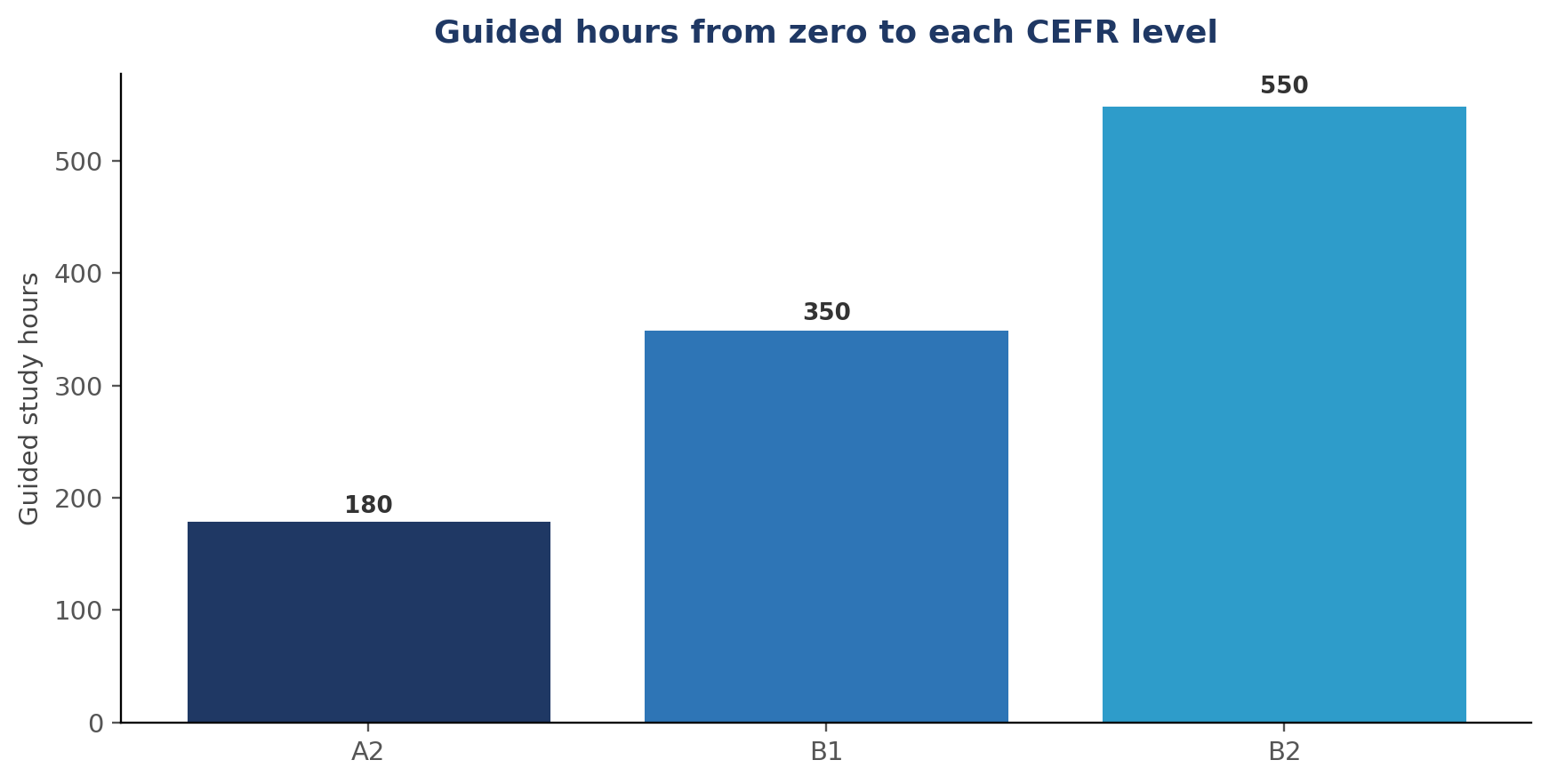
That is roughly 800 guided hours from scratch, or about 12-18 months of serious part-time study. Starting from B1 already? You are looking at 6-9 months of focused work. The single biggest variable is not talent. It is whether you are speaking every week.
Your TestDaF date is fixed. Your preparation should match it.
Our self-paced German Course Pass runs B2 tracks aimed straight at academic German — lecture listening, essay writing, and speaking tasks. A personal AI voice tutor guides you through structured lessons, week by week.
Prepare for TestDaF with a live course →Create a free accountThe Paperwork Nobody Warns You About
Language is only half the gate. The rest is administrative, and it has its own etiquette.
Public universities in Germany charge no general tuition fee, though Baden-Württemberg charges non-EU students around €1,500 per semester, and some other states have introduced similar fees for non-EU students. Budget for the semester contribution and a blocked account for the visa regardless.
Passing the Exam Is Not the Same as Functioning
Here is the trap. You can pass TestDaF at TDN 4 and still sit in your first seminar understanding nothing, because a lecture hall moves faster than an exam recording.
The students who thrive are the ones who kept practising after the certificate, not the ones who stopped at the goal line. Build the habit of speaking weekly and the transition stops feeling like a cliff.
Get the certificate, then keep the skill
Admission is the beginning, not the finish. Continue with self-paced B2 speaking practice built around academic German so your first semester feels like a step forward instead of a wall.
Get your German Course Pass →Create a free accountFrequently Asked Questions
What German level do I need to study in Germany? For German-taught programmes, C1, proven by TestDaF (TDN 4 in all sections), DSH-2, telc C1 Hochschule, or Goethe-Zertifikat C2. English-taught programmes typically require IELTS 6.5 or TOEFL iBT 90 instead.
Is TestDaF harder than DSH? They test the same level differently. TestDaF is standardised and available worldwide; DSH is set locally and taken in Germany. Many students find DSH more predictable because it is written by the university they will attend.
Do I need German for an English-taught master's? Not for admission. But without German, daily life, internships and graduate job hunting in Germany get significantly harder. Even A2 opens doors that a certificate alone does not.
How long does it take to reach B2 from scratch? Around 800 guided study hours, or roughly 12-18 months of consistent part-time study. Going from B1 to B2 usually takes 6-9 months of focused work with regular speaking practice.
References & Further Reading
- TestDaF-Institut — official exam structure, TDN scoring and worldwide test centre list.
- DAAD, Studying in Germany — the national academic exchange service's official guidance for international students.
- uni-assist e.V. — the central application portal used by most German universities for international applicants.
- Goethe-Institut, Goethe-Zertifikat C2 — official description of the highest-level German certificate.
- LanguageSkills.net German courses — self-paced B2 courses aligned to TestDaF and DSH formats.