The advert says Deutschkenntnisse erforderlich. It does not say how much. So you apply with your A2, get silence, and wonder whether the problem was the German or the CV.
Usually it is the German — or rather the mismatch between the level you have and the level the job quietly assumes. Here is what each sector actually expects.
What you will get from this guide
- Realistic CEFR level expectations by industry
- The difference between "conversational" and "hired"
- Which certificate proof employers and regulators accept
- How long it takes to reach the level your target job needs
The Short Answer, by Sector
Certificates tell an employer what a CV cannot. This table reflects the levels typically requested or required in German job postings and licensing processes — treat it as a working map, not a law.
The pattern: the more you interact with people, safety or regulation, the higher the bar. Roles where you work with things rather than people tolerate lower German.
What "B1" Really Means at Work
B1 is the line where passive German becomes useful German. At B1 you can follow a team meeting if people speak clearly, ask for clarification without derailing the conversation, and write a short, correct email.
This is why many employers write B2 in the advert even if B1 people can do the job. They are buying a margin of safety.
The Certificate Question
German employers, and more importantly German authorities, want documentation. Which certificate you need depends on who is asking.
For regulated professions, the recognition authority sets the exact requirement. Nursing generally expects B1 or B2 depending on the federal state; doctors must pass a technical language examination in addition to B2. Check the specific requirements with your recognition authority before you book any exam.
Why B2 Is the Real Hiring Gate
B2 is where you stop being a foreign colleague with German and start being a colleague who speaks German. You can disagree in a meeting without sounding clumsy. You can take a phone call from an angry supplier. You can read your own contract.
Employers feel the difference instantly. Ask yourself one question: can I handle a phone call I did not prepare for? If not, you are probably below B2.
How Employers Screen You
Before the interview, expect a phone screening in German. Ten minutes. They are checking whether you can hold a conversation under mild pressure — not grammar, but speed.
That last line in the table is underrated. A new job is hundreds of small, unclear instructions. Following them confidently is the skill that keeps you employed.
Learn the German your industry actually speaks
Ready to turn reading into real German? Start your self-paced course today.
Start the German course →Create a free accountGeneral German gets you to B1. Workplace German — briefings, phone calls, safety forms, meeting language — gets you hired. Our self-paced AI voice tutor targets the vocabulary of your sector and lets you rehearse the exact conversations that decide your interview, on your own schedule. Button: Learn job-ready German →
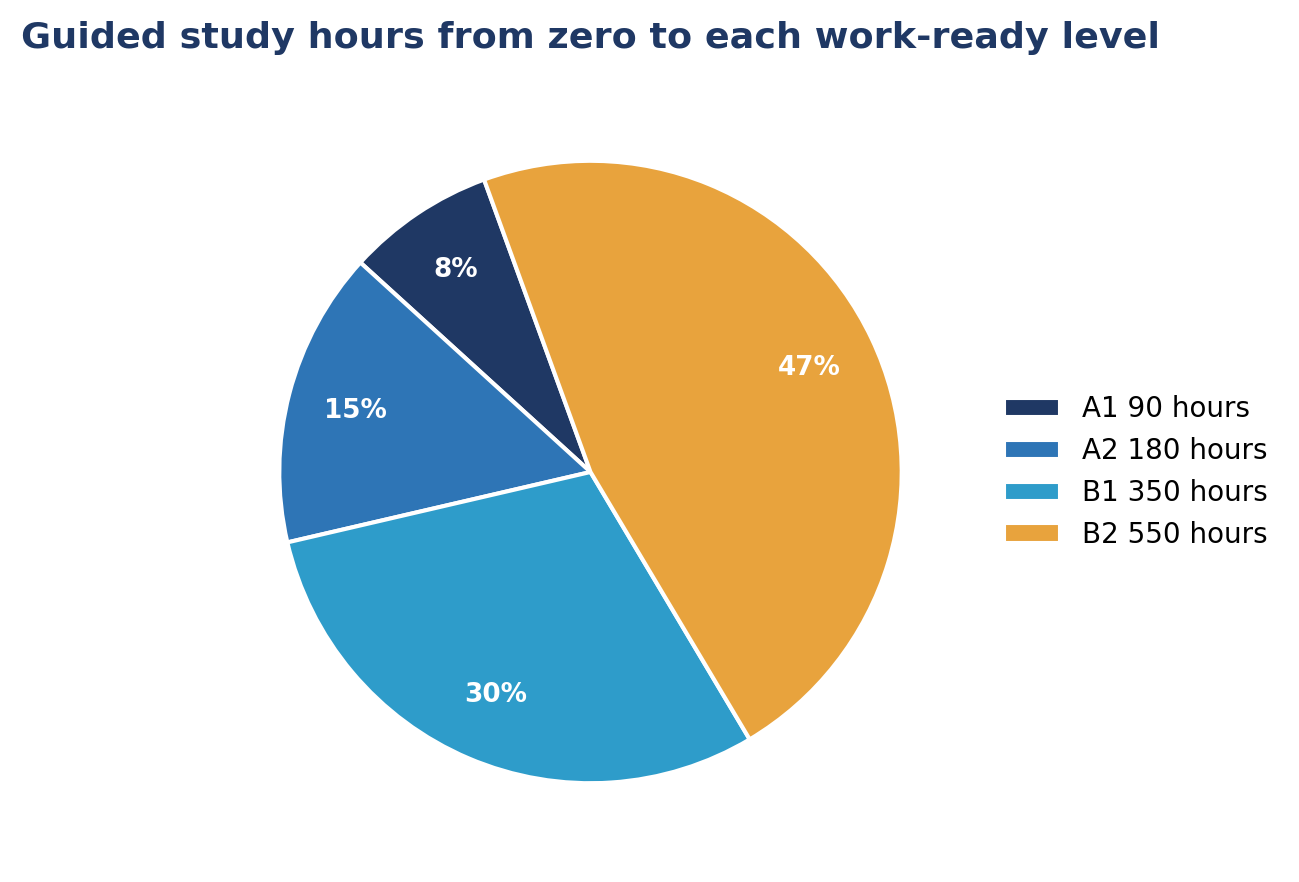
How Long Will It Take You?
Nobody can learn a language overnight, and anyone promising otherwise is selling noise.
Intensity matters more than duration. Five focused hours a week — regular guided lessons plus daily practice — beats twenty passive hours. Learners who speak out loud most weeks move noticeably faster than those who only study alone.
Four Moves That Speed You Up
First, aim at a sector. Learning general German to B2 is slower than learning nursing German to B2, because you can drop irrelevant vocabulary and drill the language you will hear on shift.
Second, book the exam early. A date on the calendar turns vague study into a countdown. Candidates report that a scheduled exam compresses months of drifting into weeks of focus.
Third, practise the phone. Phone German is harder than face-to-face German. No lips, no gestures, no context. Ten minutes of phone practice a week changes everything.
Fourth, get your level assessed honestly. Most self-assessed B1 learners are solidly A2 in live conversation. Knowing the true number saves you from applying for jobs you cannot interview for. You can book a placement assessment and get a clear answer rather than a guess.
Find your real level, then close the gap
Ready to turn reading into real German? Start your self-paced course today.
Start the German course →Create a free accountGuessing your CEFR level costs interviews. A short self-paced assessment tells you exactly where you sit against the level your target job expects — then we build the plan to close that distance, with an AI voice tutor that guides you through workplace German every day. Button: Get your speaking assessment →
Frequently Asked Questions
What German level do I need to work in Germany? It depends on the sector. IT and logistics often work with A2–B1; engineering and nursing typically want B1–B2; customer-facing, medical and legal roles expect B2. Regulated professions also set official requirements through recognition authorities.
Is B1 German enough for a job in Germany? For many technical roles, yes — provided the working language is partly English. For roles involving customers, patients, safety documentation or legal responsibility, B1 is usually a minimum rather than a destination.
Do German employers accept Goethe certificates? Yes. Goethe-Zertifikat, telc, TestDaF, ÖSD and DSH are all recognised German certificates. Which one is required depends on the purpose: telc is common for nursing recognition, TestDaF and DSH for university admission.
Can I get a job in Germany without speaking German? In some IT, research and startup environments, yes. But without German you compete for a narrower set of roles and lose access to most everyday workplace conversation. Even modest German noticeably widens your options.