Picture two people on the same Tuesday night. One is ninety minutes into a YouTube rabbit hole about German adjective endings, headphones on, pausing every four seconds. The other is mid-sentence with an AI voice tutor, saying something wrong — and hearing instant feedback say almost, try it this way before she finishes the thought.
Both are learning German. Only one of them is being corrected tonight.
That is the whole comparison in one image. Everything below is detail.
What you will get from this guide
- Where self-study honestly wins, and where it quietly fails
- What a guided course actually buys you per hour
- Cost, speed, and accountability compared side by side
- A hybrid plan that gives you the best of both without burning cash
The Honest Scorecard
Let us start with the fight card. No side wins everything, and anyone who tells you otherwise is selling something.
The pattern is obvious once you see it. Self-study wins on freedom and money. It loses on the things that decide whether you ever actually speak German: correction and pressure.
Where Self-Study Genuinely Wins
Apps are not a scam. They are just badly marketed. Used well, free and cheap resources are genuinely powerful.
That last row is the dagger. Private failure feels safe. It is also the reason a lot of learners spend three years at A2.
Where Self-Study Quietly Falls Apart
Here are the four failure modes, ranked by how often they end a German journey.
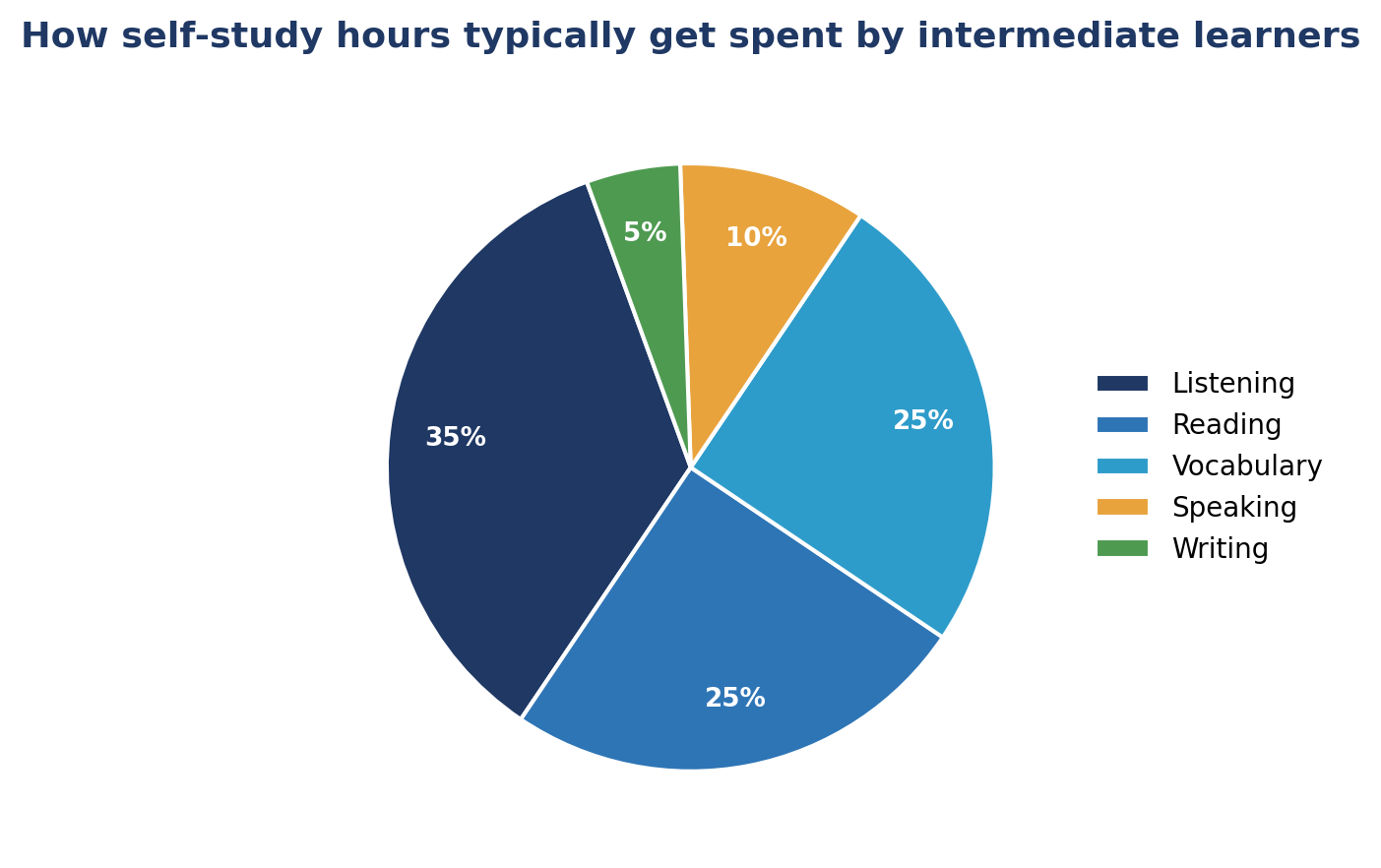
Ask yourself one question: in the last thirty days, how many minutes did you spend speaking German out loud to another person? If the answer is zero, you are not learning a language. You are studying one.
Ten percent speaking. That is the number that explains every stalled learner you have ever met.
Ten percent speaking becomes sixty percent with a guided course
Ready to turn reading into real German? Start your self-paced course today.
Start the German course →Create a free accountA guided German course does not magically make you disciplined. It simply removes the option of silence. LanguageSkills.net puts you in the speaking seat from minute one, with an AI voice tutor that gives instant feedback on your mistakes.
What a Guided Course Actually Buys You
Strip away the marketing and a course sells five things. None of them are content, because content is free on the internet.
That is it. You are not buying information. You are buying a correction loop and a structured path, and those two items are astonishingly expensive to build for yourself.
Cost and Speed, Side by Side
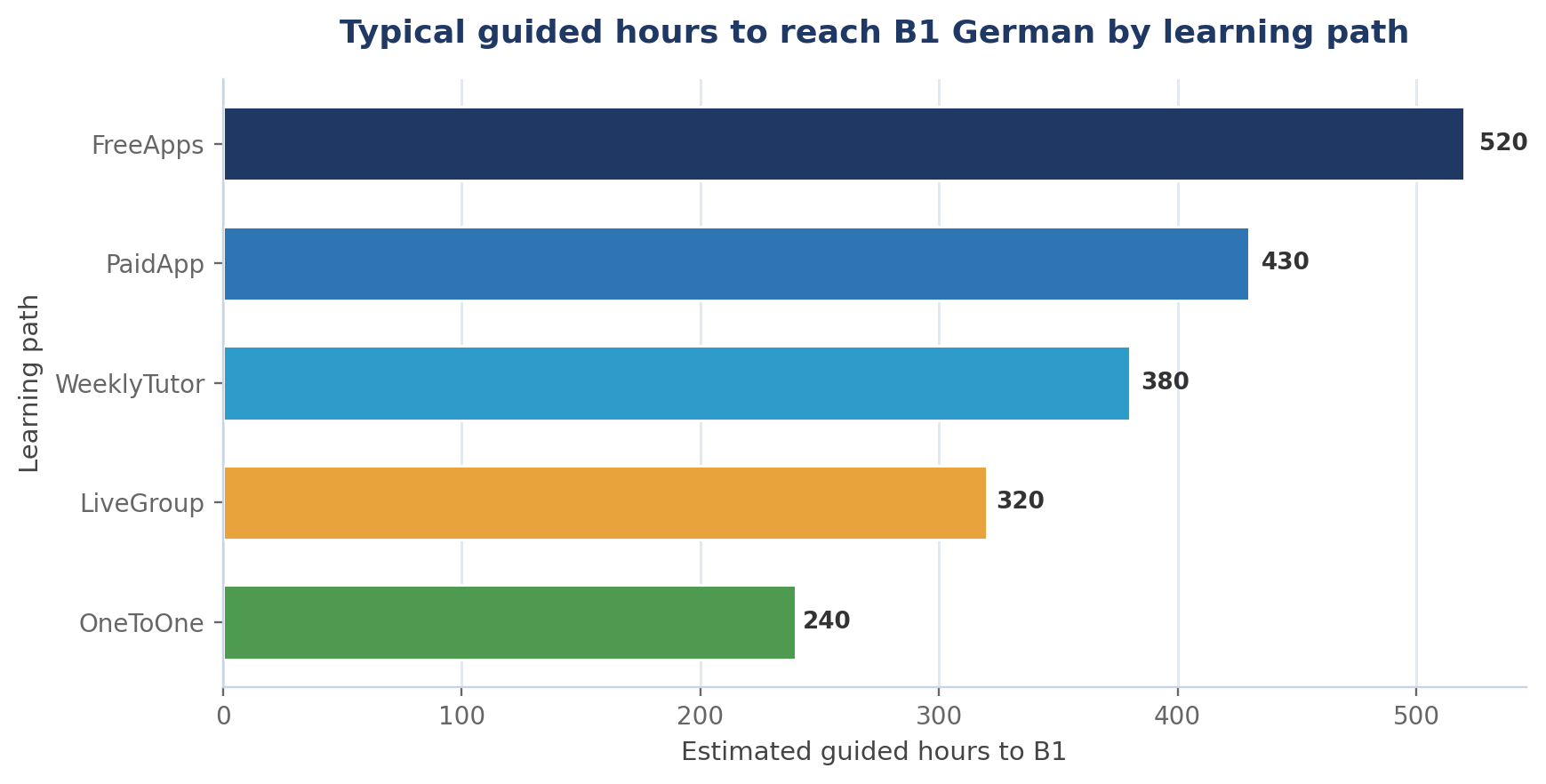
Let us do the arithmetic honestly. Prices vary by provider and country, so treat these as planning ranges, not quotes.
Notice the pattern in the last column. Money buys correction density. Correction density buys speed. There is no trick beyond that.
The Decision Framework That Actually Works
Forget "which is better". Ask which constraint is binding for you. Here is the honest routing table.
Two rules cut through most of the noise:
Answer this honestly: are you the kind of person who finishes things alone? If yes, self-study plus a monthly tutor is genuinely excellent value. If you have ever abandoned a fitness app in February, stop pretending German will be different and buy the schedule.
The Hybrid Plan Most Learners Should Run
This is the plan I would hand almost anyone: a guided spine with self-study muscle around it.
That is about five hours a week, and it beats fifteen hours of unfocused app tapping. Volume is not the variable that matters. Feedback is.
Build the spine, then let the habits hang off it
Ready to turn reading into real German? Start your self-paced course today.
Start the German course →Create a free accountMost learners do not need more resources. They need a structured weekly routine, feedback that tracks their weak spots, and a level target with a date on it. That is exactly what a LanguageSkills.net German course gives you.
Button: Find your German course →
Five Signs You Have Outgrown Self-Study
If three of those sound familiar, the question is no longer whether to get guidance. It is only which format.
Frequently Asked Questions
Is self-study enough to learn German? For reading and listening comprehension, yes, impressively so. For speaking, almost never on its own, because nothing in a solo routine forces you to produce sentences under time pressure and get corrected.
How much faster is a guided course than self-study? Typically 30 to 50 percent faster to the same level, mostly because guided feedback removes the guessing and a structured plan removes the procrastination. The exact gap depends on how disciplined you actually are alone.
Can I pass Goethe or telc exams with self-study only? Some learners do, particularly strong B1 candidates with exam-style practice. For B2 and above, a teacher who knows the exam format usually saves months of trial and error.
Are guided courses worse than self-study? Different, not worse. Guided courses give you structured feedback, listening variety, and a clear path. Self-study moves at your own pace and targets your specific gaps. Many learners combine both at different stages.
What if my schedule changes every week? Choose a self-paced AI course you can study any time. Fixed timetables are the first casualty of a chaotic calendar.
How do I know I am ready for a course rather than more self-study? If your comprehension clearly outruns your speaking, or if you have plateaued for more than three months, you are ready. A short placement test will tell you exactly where to start — book a level check and sign up here.
References & Further Reading
- Goethe-Institut — course and exam level descriptions, A1 to B2: https://www.goethe.de/en/spr.html
- Council of Europe — Common European Framework of Reference for Languages, official descriptors and guided-learning-hour guidance: https://www.coe.int/en/web/common-european-framework-reference-languages
- Deutsche Welle — DW Learn German, free structured courses and placement test: https://learngerman.dw.com/en/overview
- telc gGmbH — German certificates including telc Deutsch B1–B2 Beruf: https://www.telc.net/en.html
- Goethe-Institut — TestDaF and university admission language requirements: https://www.testdaf.de/en/
- European Commission — Erasmus+ and language learning resources on lifelong learning: https://erasmus-plus.ec.europa.eu/