The paperwork is manageable. The hard part is the moment a préfecture clerk asks a question at normal speed and you understand two words out of nine.
You can survive in France with English and hand gestures. You cannot build a life there that way. Here is the checklist, sorted by deadline.
What you will get from this guide
- The French level each administrative step usually expects
- The admin vocabulary pack you need in week one
- A 12-week preparation plan before departure
- How to build the French you need before you arrive
Step One: Know What Level You Actually Need
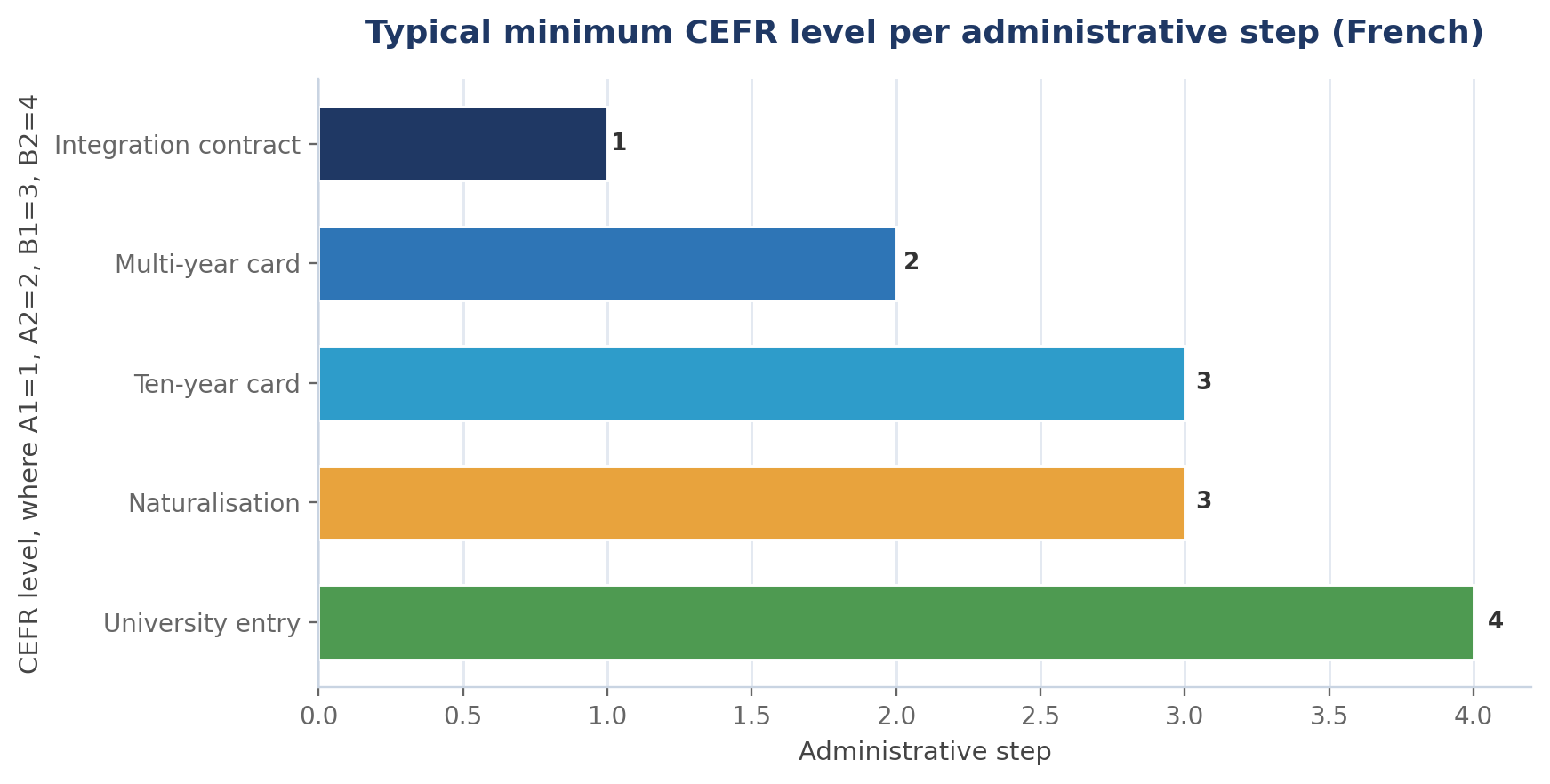
Requirements shift with politics, so always confirm your own case. This table shows the typical expectations for the most common paths.
The pattern is obvious. Every year you stay, the bar rises by roughly half a CEFR level. Waiting to learn French in France is the most expensive delay you can choose.
Step Two: The Vocabulary That Unlocks Daily Life
Textbook French teaches you the subjunctive. The mairie teaches you different words entirely. Learn these before you land.
Add ten more and you cover banking, doctors and rental applications. That is roughly A2 vocabulary, and it is the difference between a smooth month and a miserable one.
Step Three: Choose the Certificate Early
France recognises several tests. Check which one your visa route, employer or university accepts before you pay.
The DELF is the safer long-term bet because it never expires. The TCF and TEF are quicker and cheaper but need renewing, which matters when you apply for naturalisation years later.
Learn French for the life you are actually building
Generic courses teach restaurant menus. You need appointments, landlords, colleagues and clerks. Take a placement test and get a course aimed at the French you will use in your first year in France.
Get your French level checked →Create a free accountA 12-Week Plan Before You Fly
Three months is enough to arrive functional instead of silent. Two requirements: real lessons, and daily contact with the language.
Book a speaking-heavy course, not a grammar marathon. You can look up a conjugation rule in five seconds. You cannot look up an answer to a live question at a préfecture counter.
Landing: The First Thirty Days
Spelling your name letter by letter over the phone is a beginner flex. Accents matter: é and e are different letters to a French ear, and Saint-Étienne will be misspelled if you do not know the alphabet cold.
Where the Real Gap Appears
Grammar is rarely the wall. Speed is. French administration speaks at full pace with heavy reduction — je ne sais pas becomes "chais pas" in ten seconds flat.
Fix that with listening volume, not more vocabulary lists. Then rehearse the interactions out loud with an AI voice tutor that gives you feedback as you speak. Start with a placement session, confirm the current rules for your own route on service-public.fr, and check the exam formats and enrolment windows published by France Éducation International.
Arrive speaking, not guessing
A personal AI voice tutor, structured lessons, real scenarios from French daily life. Study at your own pace, any time. Build the French you need for appointments, neighbours and job interviews before you get on the plane.
Start your French course →Create a free accountFrequently Asked Questions
Do I need a certificate before I arrive in France? Not usually. Many routes test your level on arrival and offer training. Certificates become essential later, for long-term cards, naturalisation, university and some jobs.
Is A2 enough to live comfortably in France? You can handle housing, shops and routine appointments. Anything involving negotiation, contracts or humour needs B1 and upward.
Should I take DELF or TCF for immigration? Check which one your route accepts. If both work, DELF lasts forever and TCF expires after two years.
How fast can I reach B1 from zero? Ten to fourteen months with consistent guided lessons and daily listening. Two months of cramming will not do it.
References & Further Reading
- Service-public.fr, official French administration portal for residence permits and nationality: https://www.service-public.fr
- France Éducation International, DELF, DALF and TCF diplomas: https://www.france-education-international.fr/diplome/delf-tout-public
- OFII, French Office for Immigration and Integration: https://www.ofii.fr
- Campus France, study in France and language requirements: https://www.campusfrance.org
- Institut français, French courses and cultural network worldwide: https://www.institut-francais.fr