The first of May, Paris stops. Bakeries shut, traffic thins, and strangers hand each other tiny sprigs of lily of the valley. Nobody explains it. It just happens — and if you don't know the calendar, you'll stand outside a closed shop wondering what you missed.
France festivals are not decoration. They are the country's operating system. Learn eleven dates and a dozen words and the whole culture starts making sense.
What you will get from this guide
- The 11 French public holidays and what each one actually commemorates
- The big regional festivals worth travelling for
- Vocabulary for greetings, invitations and closures
- How to plan travel around the days when everything shuts
The 11 Jours Fériés: France's Fixed Spine
France has eleven public holidays, or jours fériés. Some are fixed; the religious ones float with Easter. Confusingly, only May 1 is a jour férié that must be paid as a holiday for most workers — the rest is a legal maze even the French argue about.
If you only memorise one phrase, memorise this: « C'est férié, c'est fermé. » It is a public holiday, it is closed.
Bastille Day: The Loudest Day of the Year
The 14th of July is the one everybody knows and almost nobody understands. It commemorates the storming of the Bastille on 14 July 1789 — a fortress-prison that held almost no prisoners that day, but whose fall told Paris the king had lost control.
What happens now is theatrical. Military parades down the Champs-Élysées in the morning. Bals des pompiers — fire station dances — in the evening, where firefighters open their garages and the whole neighbourhood shows up. Fireworks over the Eiffel Tower at eleven.
Vocabulary for the day: un défilé (parade), un bal (dance), un feu d'artifice (fireworks), la foule (the crowd). If someone asks « Tu viens au bal des pompiers ? », they're inviting you out, not testing your grammar.
The Winter Block: Noël and the Fêtes de Fin d'Année
French Christmas is a two-act play. Act one is 24 December — le réveillon, a long late dinner. Act two is the 25th itself, quieter.
The table depends on where you are. In Provence, thirteen desserts (les treize desserts) land after the main course. In Alsace, bredele biscuits appear weeks early. In Paris, oysters, smoked salmon and a bûche de Noël — the log-shaped cake.
New Year's differs too. On la Saint-Sylvestre you wish someone « Bonne année » — and if you see them in January, you may still say it. The French keep the greeting alive for weeks. Don't rush it.
The Movable Feasts: Easter to Pentecost
Easter is not one day. It is a season with a calendar gap that trips up planners. Easter Monday is a jour férié; Good Friday is a holiday only in Alsace-Moselle. Then Ascension arrives forty days after Easter — always a Thursday, so Friday becomes a pont (bridge), and half the country vanishes for four days.
That last one deserves its own paragraph. The Fête de la Musique began in 1982, invented by culture minister Jack Lang. On 21 June every year, amateur musicians take over streets, courtyards and bars. It is not a public holiday — it is something better. It is free, it is chaotic, and it is the single best night to practise French in public, because everyone is shouting, singing and forgiving of accent.
Regional Festivals Worth Booking a Train For
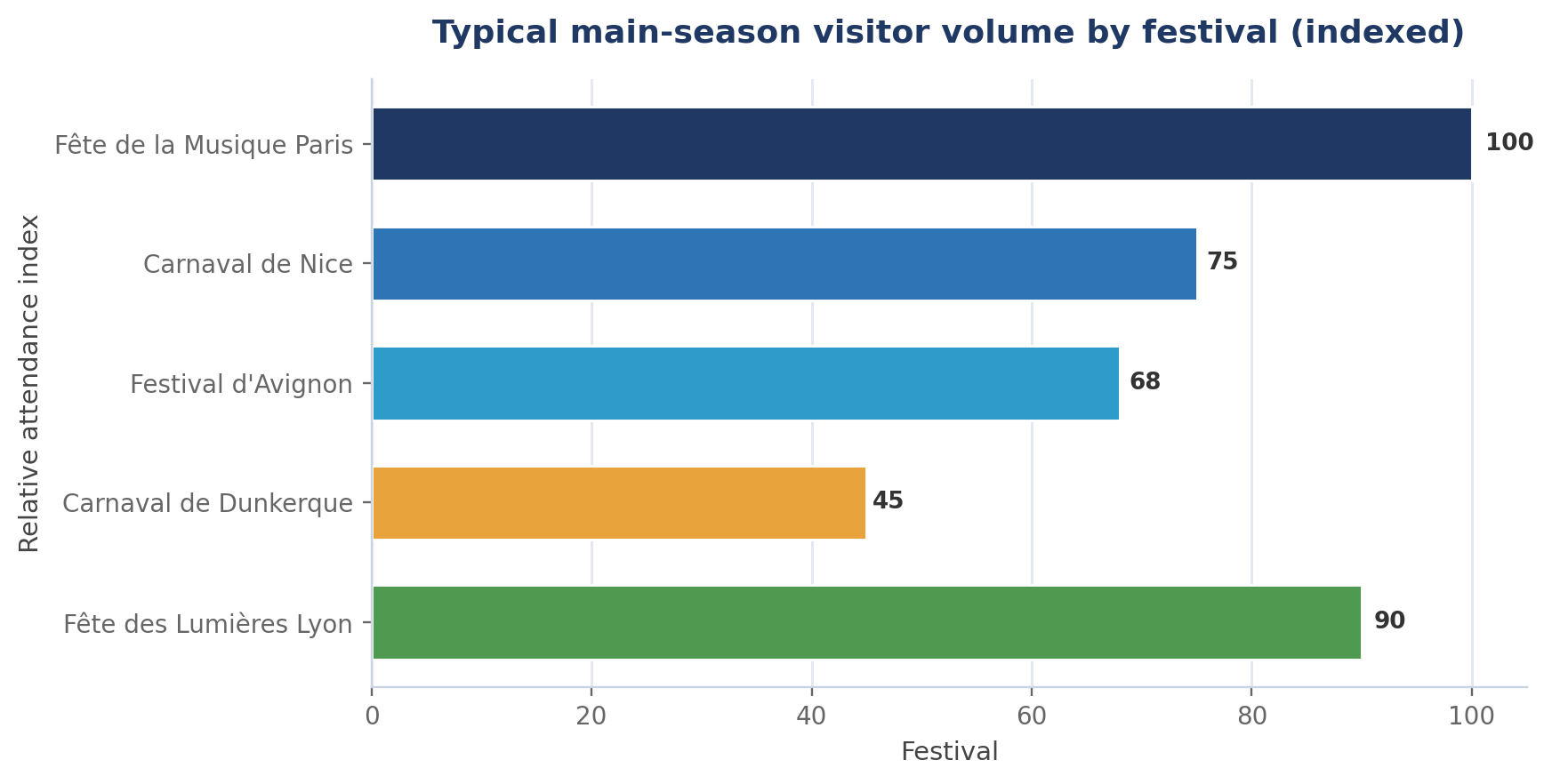
The Carnaval de Nice (February) is the polished one, with flower battles on the seafront. The Carnaval de Dunkerque is the opposite — brass bands, fish-throwing, and men in dresses, a genuinely unhinged northern tradition. The Festival d'Avignon (July) is theatre for people who take theatre seriously. And the Fête des Lumières in Lyon (8 December) turns the whole city into a projector screen, in gratitude for a plague that never came.
Turn the calendar into actual conversations
Ready to turn reading into real French? Start your self-paced course today.
Start the French course →Create a free accountReading about Lyon's lights and Dunkirk's brass bands is easy. Standing in the crowd and understanding the jokes is the real threshold. Our self-paced French course, with a personal AI voice tutor, builds exactly that ear — structured lessons and speaking practice with AI feedback, at your own pace. Button: Start your French course →
How Long Does It Take to Stop Feeling Lost?
A festival is a listening test with crowds and wine. Here's the honest ladder, measured in guided study hours aligned to the CEFR.
The jump that changes your life is A2 to B1. That's where « bonjour, un café s'il vous plaît » becomes an actual conversation with the baker about why the bakery is shut on the 1st of May.
The Vocabulary That Opens Doors
The bise rule is regional chaos: two kisses in Paris, three in Provence, four in parts of the north. Nobody will be offended if you offer a handshake instead. They will simply clock you as foreign and move on.
What Actually Matters
France festivals are how the country remembers things — revolutions, plagues, saints, music, and the fact that work should stop now and then. You don't need to master all of it. You need the calendar, ten words, and the willingness to be the person who says « Bonne fête ! » first.
Be ready before your next trip
Ready to turn reading into real French? Start your self-paced course today.
Start the French course →Create a free accountA couple of weeks of self-paced study with your AI voice tutor before a French holiday is worth more than two months of app streaks. Guided lessons, speaking practice with AI feedback, real cultural context — from réveillon to révolution. Button: Book a French course →
Frequently Asked Questions
Is Bastille Day the French national day? Yes. 14 July is la Fête nationale, marking the storming of the Bastille in 1789 and the Fête de la Fédération in 1790. Expect parades, fire-station dances and fireworks.
Do French shops close on public holidays? Most do. Supermarkets and bakeries often open in the morning only, and rules vary by town. Always check — « C'est ouvert le 15 août ? » is a perfectly normal question.
What is the Fête de la Musique? A free nationwide music celebration on 21 June, started in 1982. Amateur and professional musicians play in streets, bars and courtyards, and anyone can join in.
How do I greet someone at a French festival? Bonjour first, always. Then bonne fête or joyeuses fêtes depending on the occasion. Wait for them to offer a bise — or just shake hands.
References & Further Reading
- Gouvernement.fr — official list of jours fériés in the Code du travail: https://www.service-public.fr/particuliers/vosdroits/F2405
- Fête de la Musique official site, Ministère de la Culture: https://fetedelamusique.culture.gouv.fr/
- Ville de Lyon, Fête des Lumières programme and history: https://www.fetedeslumieres.lyon.fr/
- Ville de Nice, Carnaval de Nice official pages: https://www.nicecarnaval.com/
- Institut français, cultural seasons and French cultural calendar: https://www.institut-francais.fr/