You say the right words, in the right accent, and something still lands wrong. Usually it is everything around the words — the greeting, the hand, the tu. French customs are a code, and the code is learnable in an afternoon.
What you will get from this guide
- Who gets a handshake, who gets la bise, and who gets nothing
- The tu versus vous decision, made simple
- Table rules worth knowing before your first dinner
- Gestures and facial signals, translated
Bonjour is not a greeting. It is an entry ticket.
In France, bonjour is not optional politeness — it is the password. Walk into a bakery, a doctor's waiting room, an elevator, a shop, and say bonjour before anything else. Skip it and you will be served, slowly, with a certain frost.
The rule is short: greet the room, then make your request. Bonjour, je voudrais un café, s'il vous plaît. Ten words, zero friction.
And when you leave, say merci, au revoir. The exit counts as much as the entrance.
Greetings: who gets what
French greetings map onto relationship and setting, not mood. Getting this right matters more than grammar in the first thirty seconds.
The handshake is not coldness. It is the neutral, safe default, and in France it is used far more than in Britain or the United States.
La bise: how many, and where
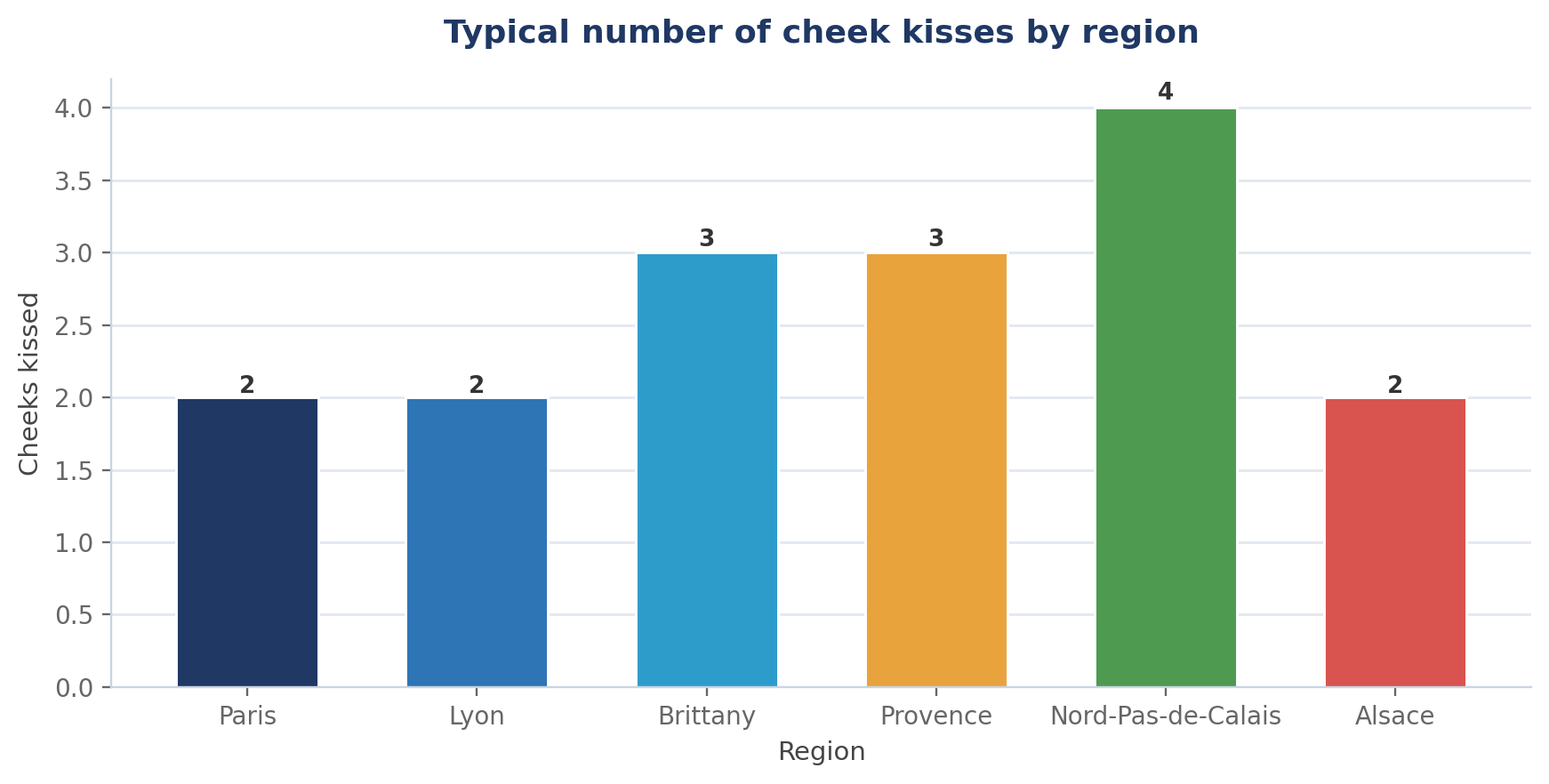
Here is the question that paralyses visitors. The answer: the number of kisses is regional, and it is also personal. Paris and most of the centre do two. Parts of Brittany and Provence do three. The far north can do four.
Practical rule: let the other person lead. They will lean in first. Mirror the number of times they move. If you get it wrong, nobody will mention it, and everyone will have already moved on.
Two details worth keeping: cheek contact, not a kiss on the cheek — the sound is made with the lips in the air. And in the pandemic years the handshake and la bise retreated in professional settings; many workplaces have not fully restored them, so follow your hosts.
Tu or vous: the decision that never stops mattering
French marks social distance in every sentence through its pronouns. Choosing wrongly is the single most common way to sound rude without meaning to.
The invitation matters. Someone saying on peut se tutoyer is offering permission. Accept it. Continue with vous after being offered tu and you will read as distant or slightly offended.
Learn the code, not just the vocabulary
Textbooks teach words. A personal AI voice tutor teaches what to say when your neighbour leans in for a third kiss. Our self-paced French courses pair language with the social rules that make it work.
Explore French courses →Create a free accountTable customs: the rules that show up at dinner
Eating is where French social codes get detailed, and where small errors are noticed.
Two things surprise visitors most. Cheese arrives before dessert, not after. And coffee comes after dessert, never with it. Ask for coffee alongside your cake and you will get a puzzled look.
About tipping: service is legally included in the bill — the words service compris are printed on the menu. Rounding up to the next euro, or leaving a euro or two for good service, is the whole custom. Fifteen percent is American, not French.
Punctuality, and when lateness is fine
French timing is situation-dependent, and reading it correctly signals that you understand the culture.
Arriving at the stated hour for a dinner invitation can catch your host still cooking. Quarter of an hour late is the sweet spot.
Gestures and face: the French non-verbal kit
French conversation runs on visible signals. Watch the hands.
Reading these is half of understanding a French conversation held at normal speed.
Frequently Asked Questions
Is it rude to smile at strangers in France? Not rude, but unusual. Smiling at strangers can read as superficial or as an invitation to talk. A neutral face plus bonjour is the safer default.
Should I hug French friends? Rarely. A hug is reserved for very close relationships and specific moments. La bise or a handshake covers almost everything else.
Do French people really hate speaking English? Less than the stereotype suggests, and far more than they dislike being addressed in English without a bonjour first. Open in French, even badly, and the response often changes.
What is the biggest cultural mistake visitors make? Skipping bonjour. It is not small talk. It is the opening move of every interaction, and its absence is felt immediately.
Arrive already fluent in the small rules
The words are half the trip. Our self-paced French courses, guided by a personal AI voice tutor, teach the language and the etiquette side by side, so your first conversation feels like a second one.
Start your French course →Create a free accountReferences & Further Reading
- Ministère de l'Europe et des Affaires étrangères, France Diplomatie — practical guidance for visitors: diplomatie.gouv.fr
- Alliance Française, language and culture programmes worldwide: alliancefr.org
- Commission nationale de la certification professionnelle and Service-public.fr — official rules on service charges and tipping: service-public.fr
- Centre national de ressources textuelles et lexicales (CNRTL), for French usage and etymology: cnrtl.fr
- Loi du 11 février 2016 relative à la lutte contre le gaspillage alimentaire — the rule behind gourmet bags in restaurants.