Spanish is one of the few languages where the spelling is honest. Four vowels into your first sentence and you can already guess the rest.
But two traps catch every beginner: vowels hidden behind English habits, and three consonants that English mouths have never made. This spanish pronunciation guide closes both in a single week.
What you will get from this guide
- The five pure vowels, with no English drift
- Every consonant that behaves differently to English
- Stress rules that predict almost every word
- A ten-minute daily drill and the regional accents to expect
Five Vowels, Five Sounds, Zero Exceptions
English vowels glide and blur. Spanish vowels are short, pure and identical in every word. This single habit is the loudest accent giveaway there is.
Say casa, mesa, sí, solo, luna in a row, holding each vowel steady. No diphthongs, no sliding, no English ay.
Nowhere does a vowel change quality because of stress. o is o everywhere.
The Consonants That Punish Beginners
Most Spanish consonants behave. These ones do not, and they carry your accent.
That c/z split is the big one. In most of Spain cine and zapato start with a th; across Latin America both use s. Neither is wrong. Pick one and stay consistent.
R, RR and the Trill Nobody Was Born With
Single r is a light tap, like the tt in American "butter". Double rr is a trill, and it lives at the start of words too (rojo, rico).
Try it slowly: put your tongue tip near the ridge behind your teeth and blow air until it flutters. Ten seconds a day beats an hour of frustration.
Pair practice matters more than theory here:
Say each pair until your listener hears the difference. That is the whole test.
Get AI feedback on what your mouth is doing
You cannot hear your own accent yet — that is the curse of the beginner. Practise speaking with your personal AI voice tutor and get feedback on the exact sounds costing you clarity.
Start speaking practice →Create a free accountStress: The Rules That Do the Work
Spanish stress is predictable, which is a gift. Two rules cover almost everything.
Written accents mark the exceptions and break vowel glides.
Get stress wrong and hablo becomes habló — "I speak" versus "he spoke". Same letters, different century.
Sounds That Hide at Speed
Real Spanish flows differently to the textbook. Three features will surprise you.
So yes, v and b are the same sound. Spelling distinguishes them; your mouth should not.
Which Accent Should You Learn?
Any clear one. Here is what changes as you cross the Atlantic.
Choose a target accent, not a perfect one. Consistency reads as fluency far more than any single sound.
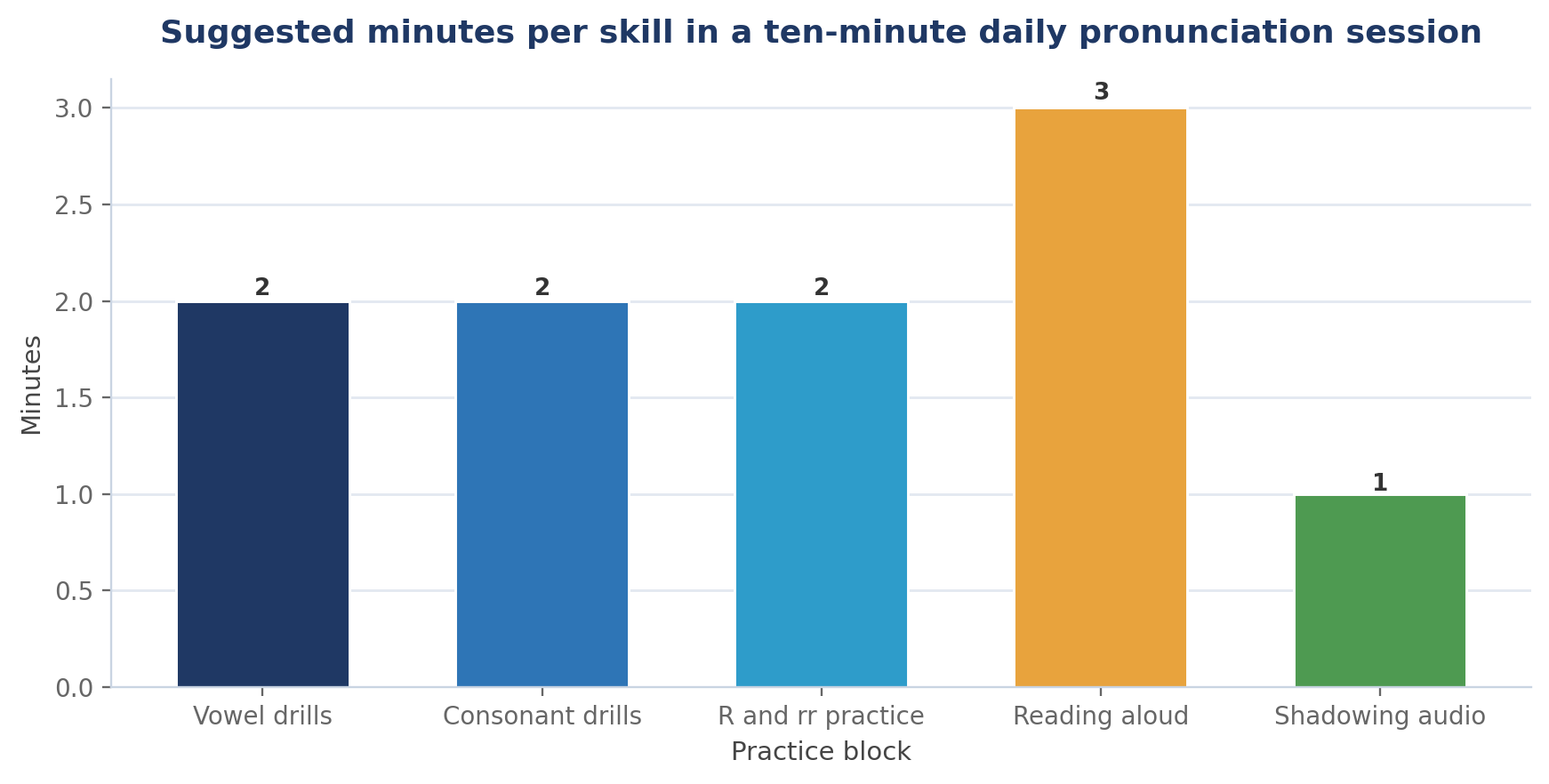
A Ten-Minute Daily Drill
Short, daily, out loud. That is the entire method.
Record yourself on day one and day ten. The difference will embarrass your day-one self. Use a dictionary with audio such as the Real Academia Española entries for reference, and read the RAE's orthography guidance if you want the rules behind the rules.
Ten minutes a day, plus an AI tutor that listens closely
Pronunciation fixes fast when feedback catches your vowels in week one. Use your personal AI voice tutor to turn these drills into real speaking practice.
Start speaking Spanish →Create a free accountFrequently Asked Questions
Is Spanish really pronounced as it is written? Almost. The rules are consistent, and once you learn the c/z and g/j patterns, you can read any word aloud correctly — even one you have never seen.
Should I learn the Spain or Latin American accent? Whichever you will use more. Both are understood everywhere, and the differences are small enough that learners mix them without being misunderstood.
How long does it take to roll the rr? For many learners, a few weeks of daily two-minute drills. Tongue position matters more than effort — blowing harder just makes a mess.
Do I need to master the trill to be understood? No. A tap or even an English r is understood in context. The trill is polish, not a requirement for fluency.
References & Further Reading
- Real Academia Española and Asociación de Academias de la Lengua Española — Ortografía de la lengua española
- Instituto Cervantes — Plan curricular del Instituto Cervantes, pronunciation and phonetics inventory
- Fundéu (Fundación del Español Urgente) — style and pronunciation guidance for modern Spanish
- International Phonetic Association — Handbook of the International Phonetic Association, Spanish chapter
- Forvo — community audio recordings of native Spanish speakers by region
Hear your own progress with your personal AI voice tutor — start speaking practice and start sounding like the Spanish you already know at languageskills.net/spanish.