The estate agent smiles. The landlord speaks at 180 words a minute. You nod, sign, and later discover the contract says actualización anual según el IPC. Moving to Spain language failures are rarely dramatic — they are small, expensive and avoidable.
Here is the checklist: the level you need for each milestone, the words that unlock the paperwork, and a 90-day plan to get there.
What you will get from this guide
- The real Spanish level required for residency, work and citizenship
- Bureaucracy vocabulary for NIE, TIE, padrón and healthcare
- A 90-day language plan mapped to your arrival date
- Phrases for offices, viewings and job interviews
How Much Spanish Do You Actually Need?
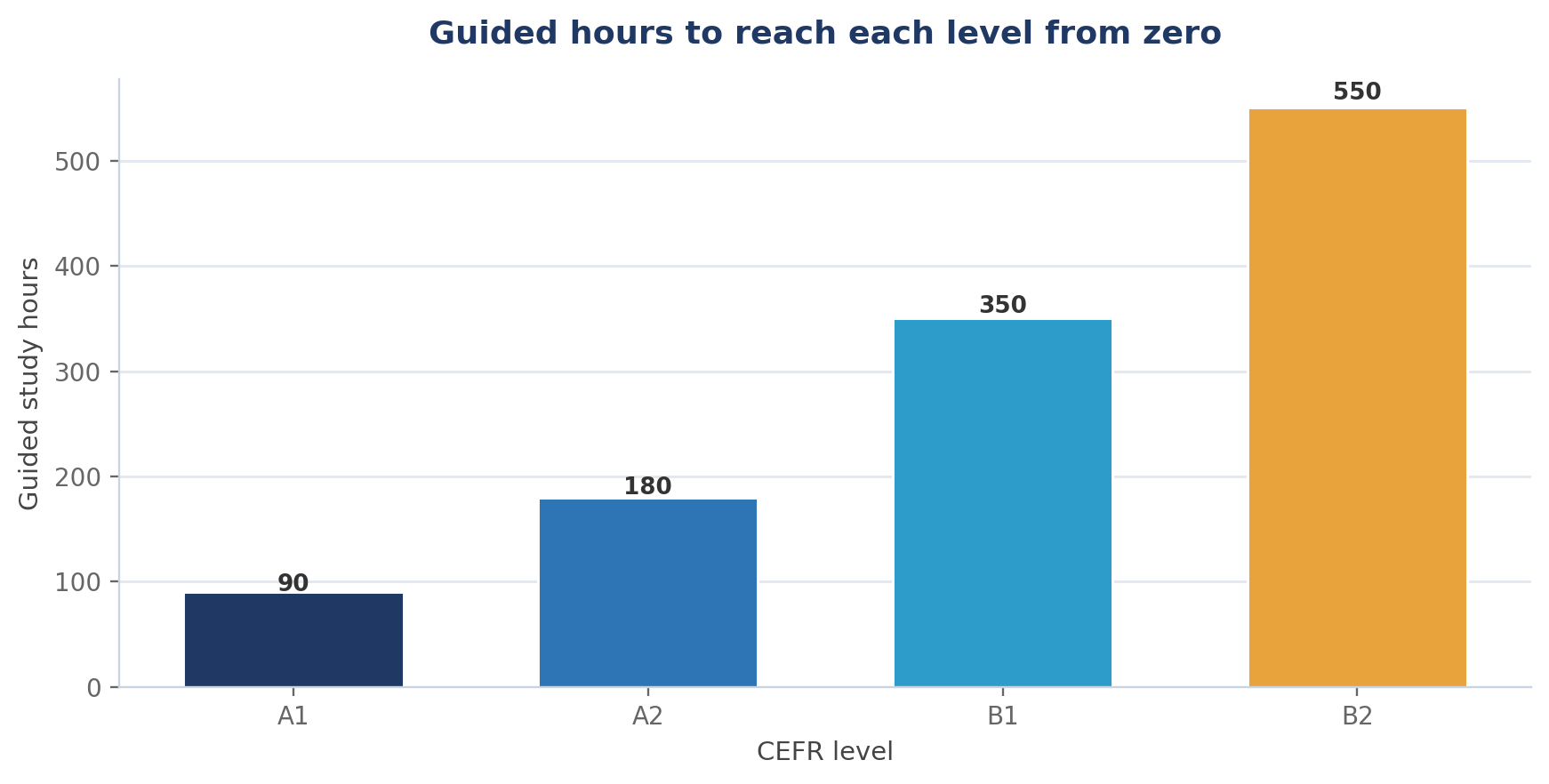
Less than you fear for daily life, more than you think for paperwork. The MCER (CEFR) bands map neatly onto real milestones.
Spanish citizenship requires DELE A2 plus the CCSE culture test. That is the legal floor, and it is lower than most people expect — but paperwork without B1 is a weekly headache.
If your flight is in six months and you are at zero, A2 is comfortable and B1 is achievable with about ten hours a week.
The Vocabulary That Runs the Country
Learn these words before any travel phrasebook. They are the locks, and each one has a specific door.
Cita previa is the one to fear. Appointments vanish in minutes, so learn the phrase, the website and the phone script early.
Your 90-Day Language Plan
Assume you arrive in three months with A1 and want B1-level comfort. Two 90-minute sessions a week plus daily practice.
Three months is enough — with structure
Most arrivals plateau at "I understand but I can't speak". A personal AI voice tutor drills the exact scripts you will need: the landlord call, the bank counter, the job interview.
Get a move-ready Spanish plan →Create a free accountPhrases for the Offices
Bureaucracy Spanish is formulaic. Memorise the frame and you can push any document across any counter.
Two habits make these work. First, always use usted in offices — it signals respect and buys you patience. Second, carry a notebook and write down every answer you do not understand. Nobody minds. Everybody appreciates the effort.
Work, Rentals and the Language Gap
Getting a job in Spain without B1 means competing for roles that do not require talking to anyone. With B1, the market widens sharply; with B2, it opens properly.
The pattern is consistent: the language is not the tax, it is the discount. Every level you gain drops the price of living there.
Paperwork You Should Sort First
Register on the padrón within weeks of arriving — nearly every other process asks for it. Then take your NIE appointment, then the TIE, then the health card.
Check official requirements directly, because rules shift: the Instituto Cervantes DELE pages hold the current exam structure, dates and levels, while administracion.gob.es publishes forms and procedure guides. Do not trust a forum post from 2018.
Frequently Asked Questions
Can I move to Spain with no Spanish at all? Yes, but your first months will be handled by translators and helpful strangers. Most arrivals regret the delay more than the difficulty — starting with 90 hours of A1 before you fly changes everything.
Do I need DELE B1 for residency? No. Ordinary residency does not require an exam. DELE A2 plus the CCSE is required for nationality. Individual employers and some professional recognition bodies ask for specific levels.
How is CCSE different from DELE? DELE tests language. CCSE tests knowledge of Spanish constitution, culture and society. Nationality applications need both. Both are administered through Instituto Cervantes.
Which Spanish should I learn — Spain or Latin American? Learn the variant of the country you are moving to. Castilian vosotros and coger el metro will serve you far better in Madrid than in Mexico City.
References & Further Reading
- Instituto Cervantes: DELE diplomas, levels and exam dates
- Instituto Cervantes: CCSE — Prueba de Conocimientos Constitucionales y Socioculturales de España
- Gobierno de España: administracion.gob.es procedure guides and official forms
- Reglamento de Extranjería, Real Decreto 557/2011, on the rights and obligations of foreign residents
- Spain.info: practical information for residents and long-stay visitors
Want a plan that matches your arrival date? Take a free placement test and start with the vocabulary your first appointment will demand.
Move with a mouth that works
A personal AI voice tutor and self-paced lessons built around real Spanish life — the rental call, the bank desk, the interview room. Study any time, at your own pace, from A1 to B2.
Start my Spanish course →Create a free account