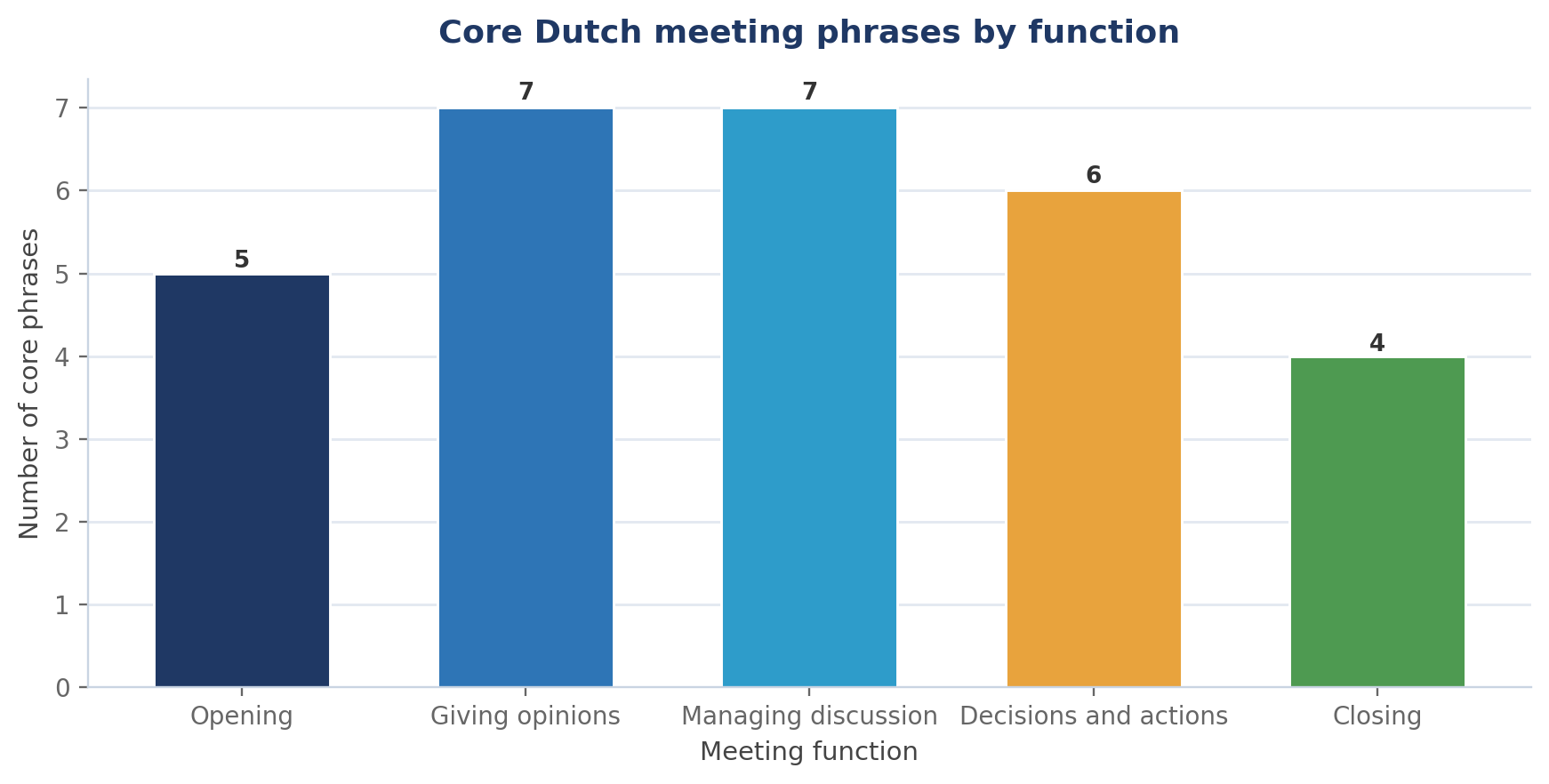
Dutch business culture has a reputation for bluntness, and it is largely deserved. Meetings are shorter than in many countries, opinions are stated plainly, and hierarchy matters less than you might expect. In the Netherlands, saying Ik denk dat dit niet werkt is not rudeness. It is participation.
That directness is actually good news for learners, because the language you need is practical and repetitive. Learn forty phrases and you can function in a Dutch meeting.
What you will get from this guide
- The phrases for each stage of a Dutch business meeting
- How to give opinions, agree and disagree politely
- The cultural rules that govern Dutch directness
- The workplace vocabulary you will hear constantly
Opening a meeting
Dutch meetings typically start on time and get to business quickly. Small talk exists, but it is brief — a couple of minutes about the weekend, then the agenda.
Giving opinions
The Dutch preference for directness means Ik ben het niet met u eens is a normal, professional sentence, not an attack. Softening it into vagueness can actually read as evasive.
Managing the discussion
Dutch meetings move through decisions fast. Expect concrete questions about owners and deadlines — and expect them directed at you.
Practise the meeting, not just the vocabulary
Business Dutch becomes usable when you practise at real speed. A personal AI voice tutor guides structured lessons that rehearse the exact situations: giving opinions, disagreeing politely and chasing deadlines — at your own pace, any time.
Learn business Dutch →Create a free accountDecisions and follow-up
Written follow-up matters as much as the meeting. Dutch workplaces expect confirmation by email, and a short, clear message in Dutch is a strong professional signal.
Dutch directness, decoded
The unwritten rule: Dutch colleagues criticise the idea, not the person. Respond to the content, not the tone. Learners who take directness personally spend months feeling bruised for no reason.
Workplace vocabulary you will hear daily
Note het overleg. It appears constantly and means more than "meeting" — it is the general culture of consulting colleagues before deciding. In many Dutch organisations, skipping overleg is a bigger mistake than having a bad idea.
The u and je question at work
In most Dutch companies, teams move to je quickly, and staying on u with peers can feel stiff. Watch what others do and match it.
Walk into the meeting already comfortable
Self-paced lessons with a personal AI voice tutor mean your first real meeting is not your first attempt at the language. Rehearse the actual phrases before they matter.
Start business Dutch training →Create a free accountFrequently Asked Questions
What level of Dutch do I need for work meetings? Around B1 is enough to participate in routine meetings; B2 makes you comfortable leading discussions, defending proposals and handling disagreement.
Is Dutch business culture really that direct? Largely yes, particularly in the Randstad. Opinions are stated plainly and hierarchy is flatter than in many countries. It is not rudeness.
**Should I use u or je in Dutch meetings?** Start with u for external contacts and follow the room internally. Most teams use je with each other quickly.
Do Dutch workplaces expect English instead? Many multinationals operate in English, but Dutch is a major advantage in smaller companies, government roles and client-facing positions, and it is warmly received.
References & Further Reading
- Nederlandse Taalunie — Dutch language resources and policy
- Nuffic — Working and studying in the Netherlands
- Council of Europe — CEFR descriptors for professional communication
- Dutch for Children — Dutch learning materials
- NPO — Dutch public broadcaster: audio for listening practice