A Dutch job interview is not a charm contest. Hiring managers here want evidence, clarity and a straight answer to a straight question. If you can deliver that in Dutch at B2 level, you will out-interview candidates with better accents and weaker substance. This guide gives you the exact questions, the sentence patterns to answer them, and a practice routine you can run in two weeks.
Why the Dutch Interview Feels Different
Dutch workplace culture is famously flat. Your interviewer may be the team lead who will sit next to you, not a distant executive, and they will expect you to push back politely when something is unclear. "Ik zie dat anders" ("I see it differently") is a normal, respected move, not an act of rebellion. What is not respected is vagueness. Vague answers read as either inexperience or evasion, and either one ends the conversation.
This is genuinely good news for language learners. You do not need poetic Dutch. You need clean, structured, confident Dutch. Short sentences with a clear subject and verb beat long ones with beautiful subclauses every single time.
Speak Dutch Under Pressure, Not Just on Paper
Our Business Dutch track drills the exact phrases recruiters expect, with AI voice-tutor speaking practice and instant feedback so the words arrive automatically. One course pass unlocks interview simulations, CV vocabulary and salary negotiation scripts.
Start your Dutch course pass →Create a free accountThe Questions You Will Almost Certainly Get
Dutch interviews follow a predictable arc: introduction, skills check, behavioural questions, your questions. Prepare these six and you cover most of the ground.
Answer "Vertel eens iets over jezelf" in three beats: what you do now, one proof point, why this role. Ninety seconds. Then stop talking and let them ask.
Answering With STAR in Dutch
STAR (Situatie, Taak, Actie, Resultaat) is the safest structure for behavioural questions, and Dutch interviewers recognise it instantly because it is taught in Dutch management courses too. Name each beat out loud if it helps — "De situatie was..." — then keep each beat to two or three sentences.
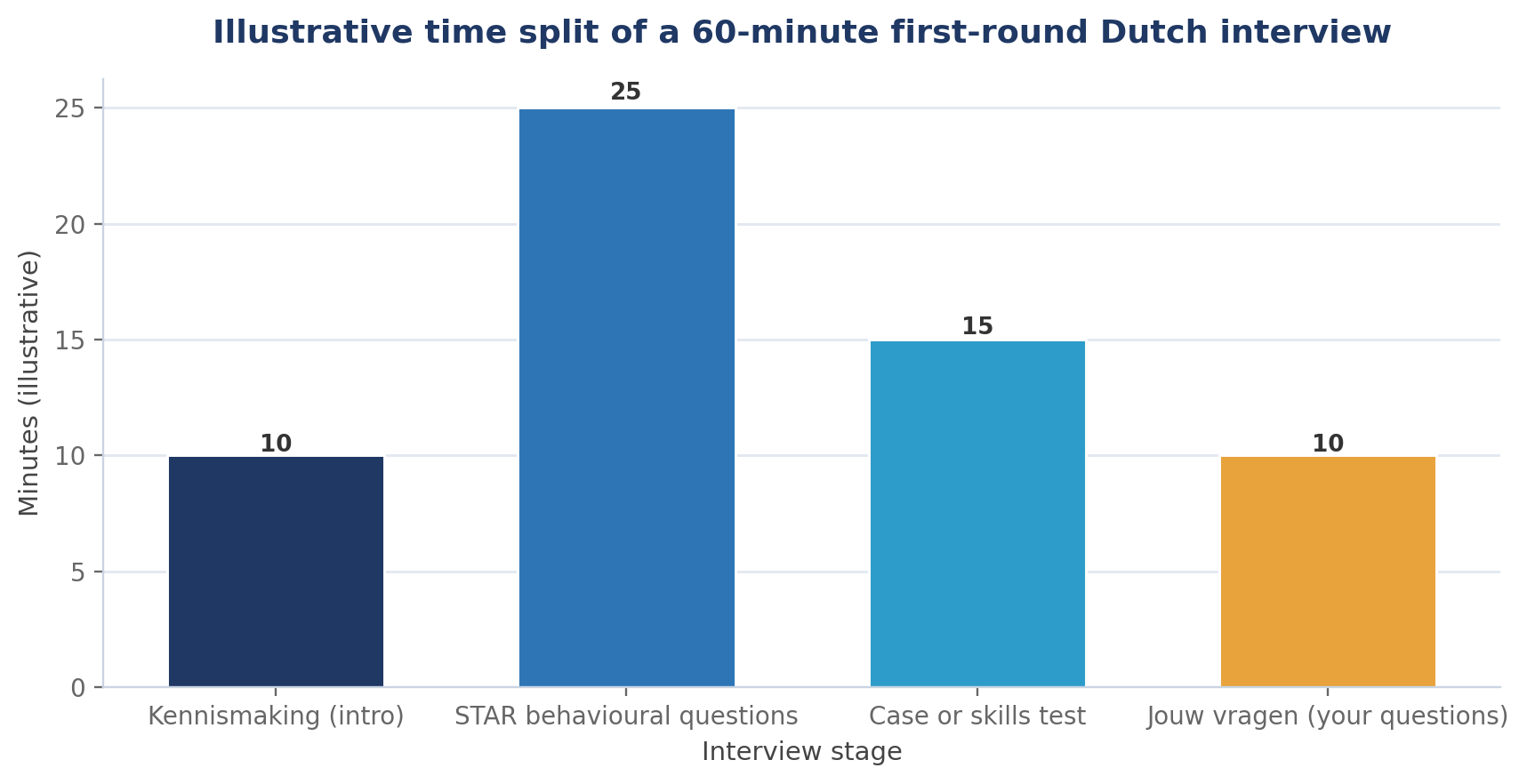
Here is a realistic shape of a first-round interview, based on the typical agenda recruiters describe rather than a measured statistic:
Signal phrases earn you points, because they show control: "Om te beginnen...", "Wat ik toen deed was...", "Uiteindelijk leidde dat tot...".
Your CV in the Dutch Style
The Dutch CV is two pages, reverse-chronological, and mercifully short on adjectives. Pop it on top of the box. Dutch recruiters scan for facts, so give them facts. A sober photo is still common and generally accepted, and a short "profiel" of three lines replaces the American objective statement.
Turn B2 Grammar Into Interview Confidence
Grammar you can recite but not speak is useless in a 30-minute conversation — our AI voice tutor makes you produce it until it is automatic. Grab a course pass and rehearse your own CV and STAR stories out loud, in Dutch, before the real thing.
Practise your Dutch interview →Create a free accountSalary, Contracts, and the 30% Ruling
Salary talk is refreshingly blunt. Dutch hiring law discourages asking your current salary before making an offer, and employers expect you to name a range with a reason attached. "Ik zit te denken aan een range van €55.000 tot €60.000, op basis van mijn vijf jaar ervaring in logistiek" works beautifully. Ask about the CAO (collective labour agreement), the number of holidays (typically 25 days plus public holidays), and whether a 13th month or holiday allowance (vakantiegeld, usually 8%) is included.
If you are relocating from abroad, mention any tax ruling you may qualify for early, and confirm the details with the Dutch Tax and Customs Administration rather than with a blog — rules and eligibility change. See the official business.gov.nl hiring guidance for employment-contract basics.
A Two-Week Practice Plan
Ready to build the vocabulary faster? Create a free account at languageskills.net/register and start with the Business Dutch placement test.
Frequently Asked Questions
Should I answer in Dutch or English if my Dutch is imperfect? Lead in Dutch and let them switch if they want — recruiters consistently rate the effort highly, and for many roles B2 spoken Dutch is already a competitive advantage. If you freeze, say "Mag ik dat in het Engels uitleggen?" and continue.
How formal should I be? Start with "u" and follow their lead; most Dutch teams switch to "je" within minutes. Being slightly too formal is a tiny error, while over-familiarity with a hiring manager you just met is a bigger one.
Do I need a photo on my Dutch CV? It is still common and accepted, though increasingly optional. If you include one, use a plain professional headshot and the same one everywhere.
How long should I wait before following up? Send a short thank-you email within 24 hours and then wait about a week before a polite nudge, unless they gave you a specific timeline. A one-paragraph email beats a phone call.