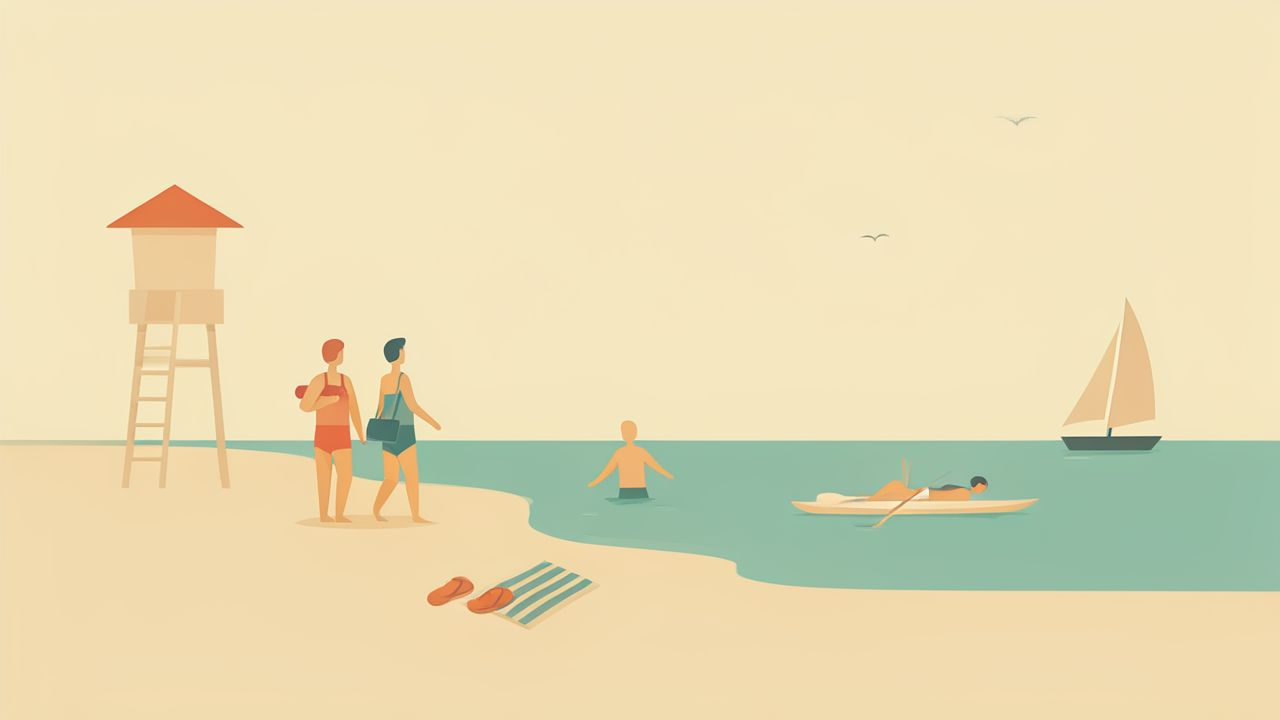
The Dutch coast is short but heavily used, and almost everything that happens on it is regulated in some way. Flags decide where people may swim, dunes are protected as nature reserves in most places, and a beach pavilion has a licence that sets what it may sell and when it may be open.
Working there means learning safety vocabulary before service vocabulary, because the first question a beach worker answers is rarely about drinks. It is about the wind, the tide or the flag, and getting that answer wrong matters more than getting an order wrong.
The Beach and Its Words
| Dutch term | English meaning |
|---|---|
| het strand | the beach |
| de zee | the sea |
| de kust | the coast |
| de branding | the surf |
| het zand | the sand |
| de duinen | the dunes |
| de strandtent | the beach bar |
| het strandpaviljoen | the beach pavilion |
A Dutch beach pavilion is a permanent structure with a terrace, a kitchen and a licence, and it is rebuilt from the ground up every few years because of coastal maintenance. Seasonal staff arrive in spring, and the season runs until the weather turns in the autumn.
Flags, Mui and Water Safety
| Dutch term | English meaning |
|---|---|
| de reddingsbrigade | the voluntary rescue service |
| de strandwacht | the beach lifeguard |
| de vlag | the flag that signals conditions |
| de rood-gele vlag | the flag meaning swimming is dangerous |
| de rode vlag | the flag meaning swimming is prohibited |
| de mui | the rip current that pulls water seaward |
| de stroming | the current |
| het zwemverbod | the swimming ban |
The most dangerous feature of the Dutch coast is the mui, a channel of water flowing back out to sea that forms and moves with the tide. A swimmer caught in one should move parallel to the beach rather than fight it directly, and that single instruction is the most valuable sentence a beach worker can give.
Swimming Diplomas and Dutch Expectations
| Dutch term | English meaning |
|---|---|
| het zwemdiploma | the swimming certificate |
| diploma A | the first and most common diploma |
| diploma B | the more demanding level |
| diploma C | the level including clothed swimming |
| het zwembad | the swimming pool |
| de zwemles | the swimming lesson |
| de veiligheid in het water | safety in the water |
| de waarschuwing | the warning |
Most Dutch children take swimming lessons and earn diploma A before they are seven, and many go on to B and C. That means a Dutch guest has a specific expectation of what a competent swimmer is, and it is higher than visitors from inland countries usually realise.
Rentals: Chairs, Screens and Boards
| Dutch term | English meaning |
|---|---|
| de ligstoel | the sun lounger |
| de strandstoel | the traditional Dutch beach chair |
| het windscherm | the windbreak |
| de parasol | the parasol |
| het strandhuisje | the beach hut |
| de watersportverhuur | the water sports rental |
| de sup | the stand-up paddleboard |
| het reddingsvest | the life jacket |
The Dutch beach chair and the windbreak are not souvenirs but equipment, because the wind on the coast is constant and often cold. Rentals are usually taken for a whole day rather than an hour, and returning a windbreak that has blown away is a common and avoidable dispute.
The Beach Pavilion and the Season
| Dutch term | English meaning |
|---|---|
| het terras | the terrace |
| de menukaart | the menu |
| de lunch | the lunch |
| de borrel | the late-afternoon drink |
| het hoogseizoen | the peak season |
| de openingstijden | the opening hours |
| de vergunning | the licence to operate |
| de afsluiting van het seizoen | the closing of the season |
A beach pavilion does most of its trade on a small number of sunny days, which makes the season financially sharp. The terrace faces the sea and the wind, so staff spend as much time moving guests out of the wind as serving them.
Dunes, Nature and the Rules
| Dutch term | English meaning |
|---|---|
| het natuurgebied | the protected nature area |
| de toegang | where access is permitted |
| het pad | the marked path |
| de verboden toegang | no access |
| de honden aanlijnen | the rule that dogs must be on a lead |
| het afval | the litter |
| de handhaving | the enforcement of the rules |
| de boa | the municipal enforcement officer |
The dunes behind the beach are protected almost everywhere, and walking off the marked path damages vegetation that holds the sand in place. Enforcement officers patrol in summer, and the fines are real rather than symbolic, so the rule is worth explaining to guests before they set off.
Weather, Wind and the Working Day
| Dutch term | English meaning |
|---|---|
| het weerbericht | the weather forecast |
| de windkracht | the wind strength |
| de windrichting | the wind direction |
| de bui | the shower of rain |
| de zonnige dag | the sunny day |
| de afgelasting | the cancellation of an activity |
| het noodplan | the emergency plan |
| de aflossing | the changeover of the shift |
The weather decides the working day on the Dutch coast, and a pavilion can go from empty to full in half an hour. Reading the forecast in the morning, and staffing to it rather than to the calendar, is what separates a well-run beach business from a chaotic one.
Watersports and Rentals
| Dutch term | English meaning |
|---|---|
| de verhuur | the rental |
| het surfboard | the surfboard |
| de zeilboot | the sailing boat |
| de kitesurfschool | the kite-surfing school |
| het wetsuit | the wetsuit |
| de kajak | the kayak |
| de sup | the stand-up paddleboard |
| de borg | the deposit |
Water sports on the Dutch coast are organised through schools and rental companies, and both work on fixed lesson times and deposits. A rental agreement names the equipment, the return time and the borg, and a customer who has not understood the deposit is a dispute waiting to happen.
Safety is written into the rental contract rather than left to the customer's judgement. Windsurfers are usually sent out only within a marked zone, lessons are cancelled when the wind is too strong, and the instructor's decision is final, which is the sentence a beginner most needs to hear. For a season on the coast, learn Dutch with the beach and water vocabulary first, since safety words come before orders.
The bars show the order of the stages; each value is a sequence number rather than a duration.
Working aan de Kust
Beach pavilions, rescue brigades, rental companies and water sports schools all hire seasonal staff, and the season runs from April to September. The work is weather-dependent, which means hours are unpredictable, and employers value reliability on the sunny days above all else.
The rescue brigade works with volunteers who are trained and certified, and it is one of the few routes into water safety work without a full professional qualification. If you want to learn Dutch for coastal work, learn the vocabulary of flags, currents and rentals first, because safety comes before service on every beach.
Dutch coastal work puts flag, current and wind vocabulary ahead of everything else. Learn Dutch with beach-safety, water-sport and rental vocabulary built into the course.
Put your Dutch to work. The LanguageSkills Dutch course is self-paced and built around real situations like these — you speak, and your AI tutor corrects you on the spot, from A1 to B2.